
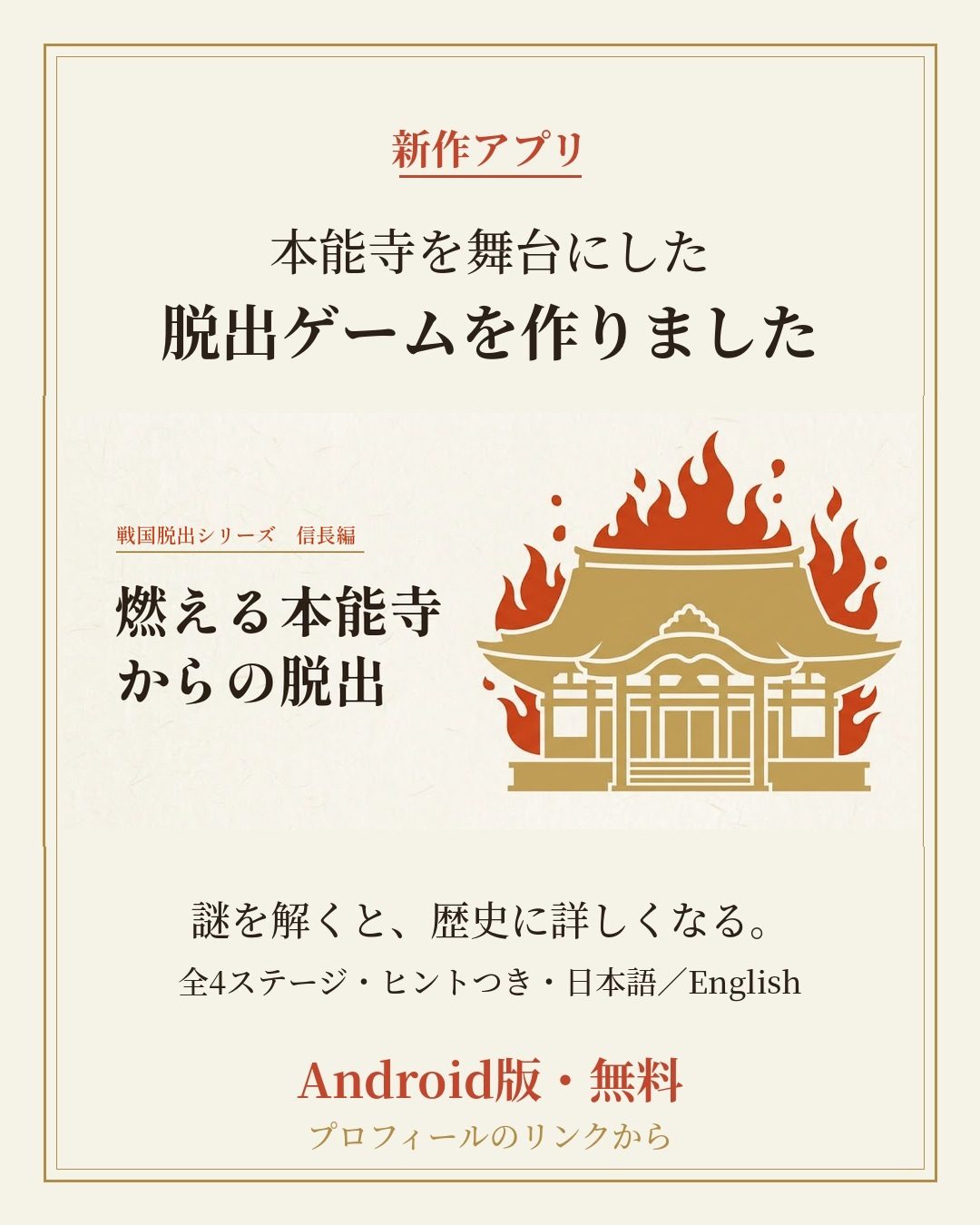
In short: a free escape game that teaches you about the Honnoji Incident
Escape from Burning Honnoji is an Android escape game made by SHIROLOG. It is set at dawn on June 2, Tensho 10 (1582), when Akechi Mitsuhide’s troops surrounded Honnoji Temple in Kyoto. You play as Oda Nobunaga and solve the puzzles of each room.
- Free to download (contains ads). For Android smartphones.
- Four stages, from the bedchamber to the inner chamber. One playthrough takes about 15 minutes. You can also pick any stage to play.
- Stuck? Press the hint button. Each press gives a slightly more specific hint.
- Available in Japanese and English. Switch on the title screen.
- Clearing a stage unlocks a “History Note” that explains what is historical and what is game fiction.
- The last room has two endings: the historical one and an alternate “what if” ending.
Basic information
| Item | Details |
|---|---|
| App name | Escape from Burning Honnoji (Sengoku Escape Series: Nobunaga) |
| Genre | Escape game (puzzle) |
| Platform | Android (smartphone, portrait) |
| Price | Free (contains ads; no ads while you are solving puzzles) |
| Stages | 4 (Bedchamber, Armory, Antechamber, Inner Chamber) |
| Play time | About 15 minutes per playthrough |
| Endings | 2 (historical and “what if”) |
| Languages | Japanese and English |
| Hints | Yes (unlimited) |
| Age rating | 7+ on Google Play (mild violence) |
| Developer | SHIROLOG (shirolog.info) |
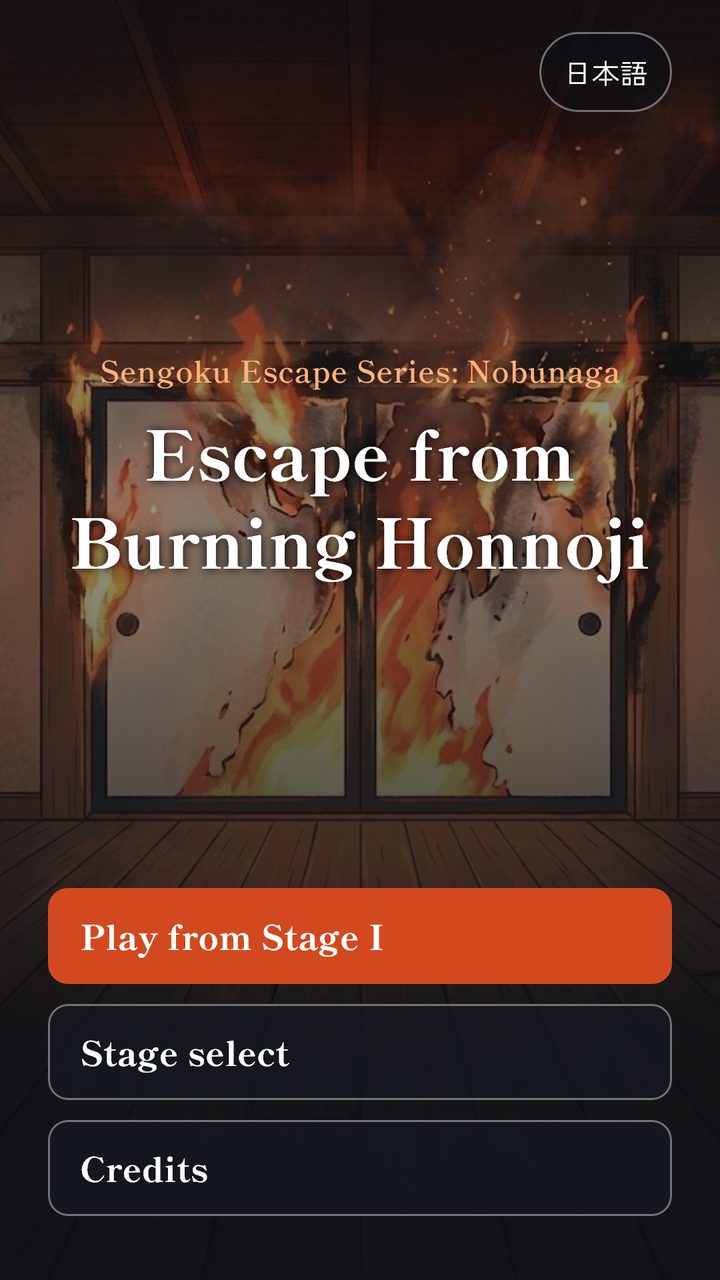
Story and the four stages (no spoilers)
Dawn on June 2, Tensho 10 (1582). In the bedchamber of Honnoji Temple, Nobunaga wakes to noise outside. You move through four rooms, from the bedchamber to the inner chamber.
| Stage | Room | What you do |
|---|---|---|
| 1 | Bedchamber | Learn who the enemy is and step into the corridor with your sword |
| 2 | Armory | Take up a bow, then switch to a spear when the string snaps |
| 3 | Antechamber | Help the court ladies escape |
| 4 | Inner Chamber | Choose the historical path or the other path |
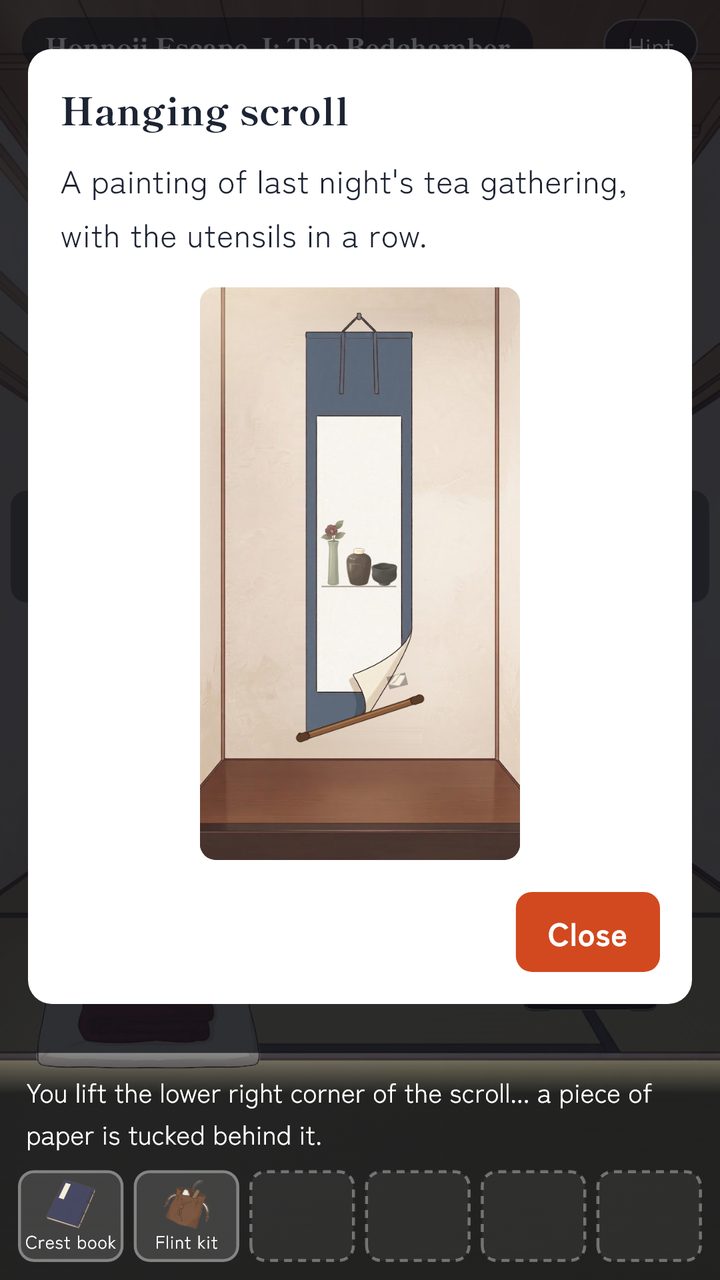
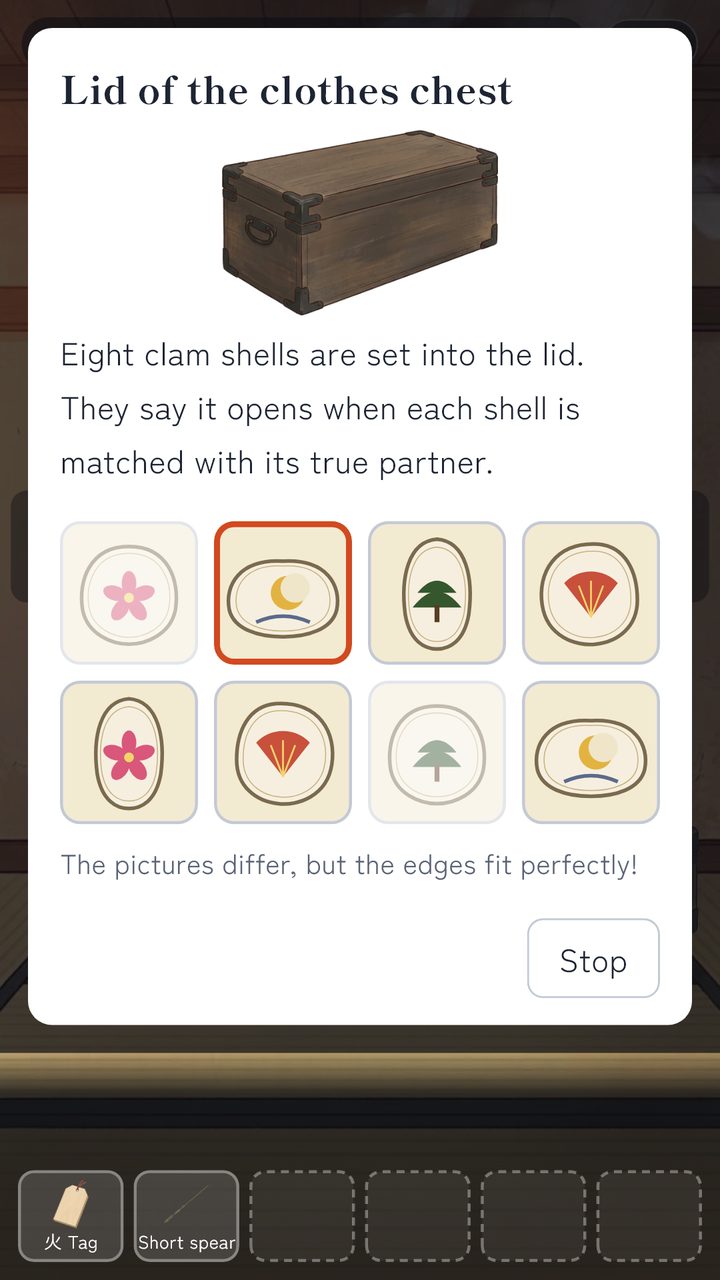
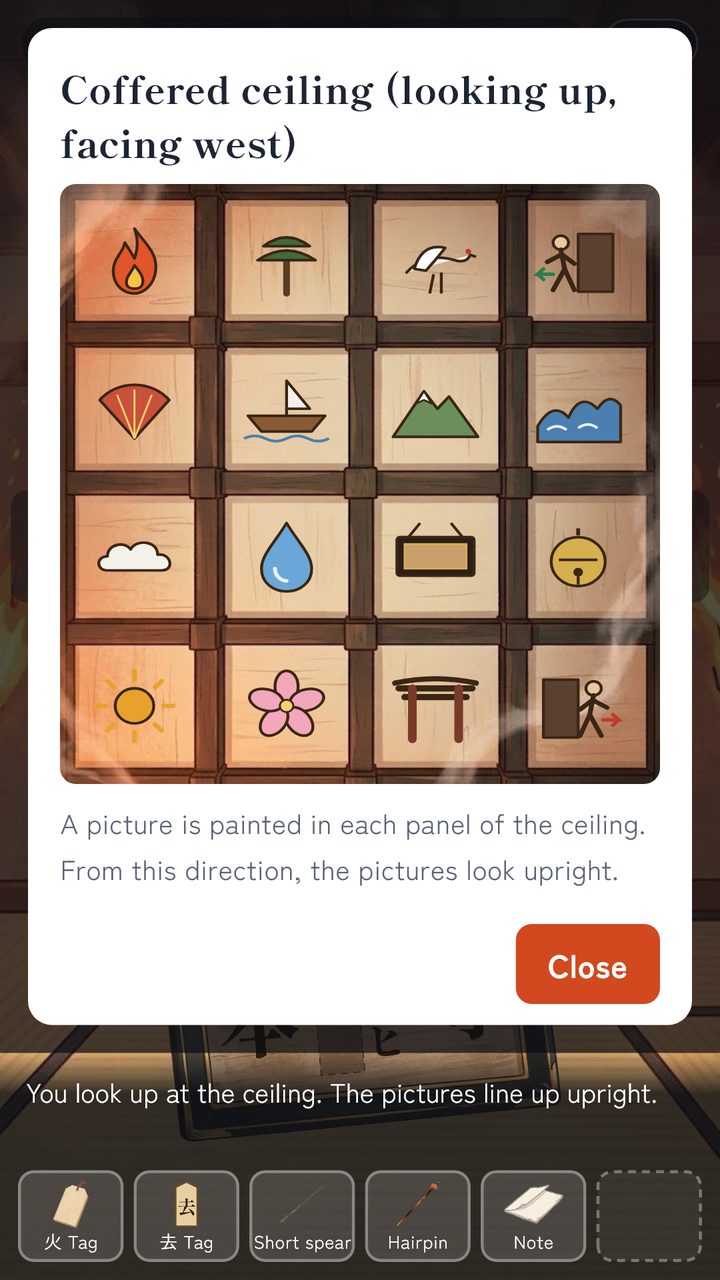
Puzzles include a paper hidden behind a hanging scroll, telling arrows apart in a quiver, matching shells on a chest lid, and the paintings of a coffered ceiling. All are based on objects found in temples and samurai residences of the period.
How to play and hints
Use the arrows on the left and right to turn, and tap objects to examine them. Items you pick up appear at the bottom of the screen. Select one, then tap something else to use it.
- Play straight through: start from Stage 1 and move on to the next room each time you clear one.
- Choose a stage: start from any room. You already hold the items from the earlier rooms.
- Use hints when stuck: the first hint tells you where to look; asking again gives the specific steps.
The clear screen shows your time and how many hints you used. Try again for a no-hint clear.
Two endings
The final room, the Inner Chamber, has the historical ending and another ending that is not historical. Connect every clue you gathered from the bedchamber onward and the other path opens. The clear screen tells you once you have seen both.
History vs. the game
The rooms and puzzles are fiction. Each stage’s History Note marks clearly where history ends and the game begins.
- History: according to the Shincho Koki chronicle, when fire reached the hall Nobunaga went deeper inside, shut the door of a storeroom from within, and took his own life. He was 49 (by the traditional count).
- Game fiction: escaping the flames is a “what if” ending. There is also no record that Mori Ranmaru used a code.
- The character “能” (no): today’s Honnoji writes the right side of 能 as 去 (“leave”), said to wish fire away after many fires. The temple did not use this form at the time of the incident.
After playing, visit the real Honnoji
At today’s Honnoji (Teramachi, Nakagyo Ward, Kyoto) you can see several things that appear in the game. The temple was moved here in 1589 (Tensho 17) on Toyotomi Hideyoshi’s orders (some sources give 1591), so it is not the exact site of the incident.
- The character 能 on the temple plaque and stone markers
- Nobunaga’s mausoleum (memorial tower)
- Memorial stones for Mori Ranmaru and other retainers who died in the incident
Our family visit in September 2025, admission fees and access are covered in this article.
→ Read our Honnoji Temple guide
FAQ
Q. Is it free?
A. Yes. Downloading and playing are free (the app contains ads).
Q. Is there an iPhone version?
A. No. It is Android only for now.
Q. Can I play in English?
A. Yes. The game supports Japanese and English. Tap “English” on the title screen.
Q. Do I need to know Japanese history?
A. No. Every clue is inside the rooms, and hints are available when you get stuck.
Q. How many stages are there?
A. Four: Bedchamber, Armory, Antechamber and Inner Chamber. One playthrough takes about 15 minutes. There are two endings, historical and “what if”.
Q. Is the game historically accurate?
A. The setting and flow follow the Honnoji Incident, but the rooms and puzzles are fiction. The History Notes after each stage explain the differences.
Q. Can I visit the Honnoji in the game?
A. Today’s Honnoji is in Nakagyo Ward, Kyoto, and the grounds are free to enter. It was moved there in 1589, so the incident happened at a different site. See our Honnoji Temple guide.

Comments