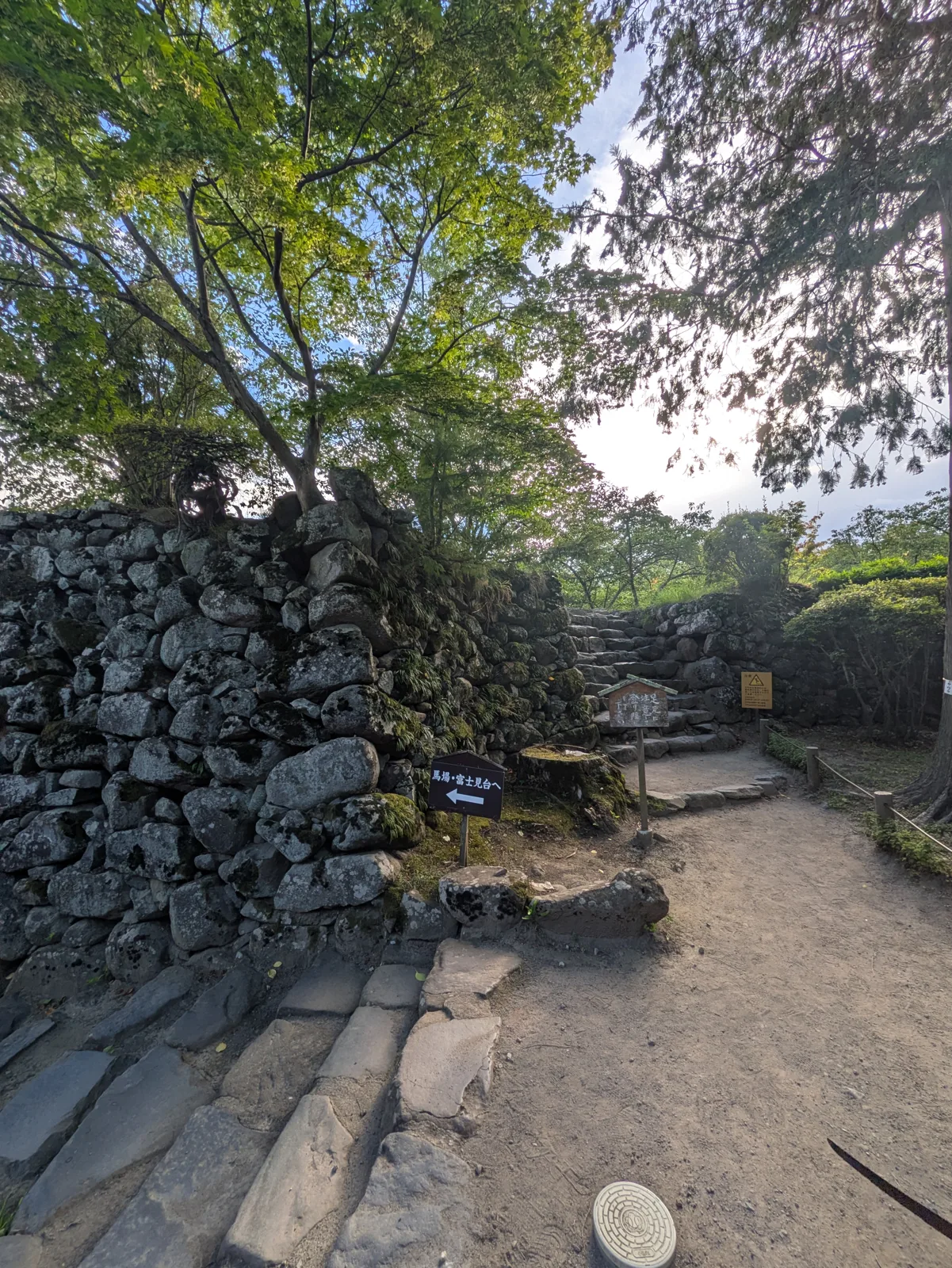
Komoro Castle (Kaikoen Park) in Komoro, Nagano, is No. 28 of Japan’s 100 Fine Castles. Its biggest feature is that the castle sits lower than its own castle town—a rare layout known as an “ana-jiro (sunken castle)“. When you walk from the station to the ruins, you don’t climb up—you go down. It’s a strange and memorable experience.
In this article, I cover Komoro Castle, which our family visited in August 2026, the day before Ueda Castle: highlights, time needed, stamp location, access, and tips for visiting with kids, all from the Shirolog point of view.
1. Basic Information Before You Go
| Item | Details |
| Castle (No.) | Komoro Castle (Japan’s 100 Fine Castles No. 28) |
| Other names / Location | Suigetsu Castle, Ana-jiro / 311 Tei, Komoro, Nagano (Komoro Castle Ruins Kaikoen) |
| Builder / Year | Said to have begun as the residence of Komuro Taro Mitsukane, then became the Ōi clan’s Nabebuta Castle, and was rebuilt by Takeda Shingen. The current stone walls, keep, and Ōte Gate are the work of Sengoku Hidehisa (under the Toyotomi regime, from around 1590) |
| Main remains | Ōte Gate and San-no-mon Gate (both Important Cultural Properties), rough-stone (nozura-zumi) walls, keep foundation, dry moats, Momiji-dani and Jigoku-dani valleys |
| Stamp location | Kaikoen Office (you can stamp without buying a ticket) |
| Admission | Walking ticket and combined ticket available (in 2026 there were reports of reduced fees during zoo renovations; please check current prices on site) |
| Opening hours | 9:00–17:00 (zoo and amusement park 9:30–16:30) |
| Parking | Paid parking lots around Kaikoen (also easy to reach by train—it’s right by Komoro Station) |
| Time needed | About 40 minutes for us (around 16:30–17:05, just before closing). About 2 hours if you include the zoo and museums |
2. [100 Castles Stamp] Getting the Stamp at Kaikoen
The 100 Castles stamp is kept at the Kaikoen Office. You don’t need to ask the staff—we could stamp it freely. You can get the stamp without buying an admission (walking) ticket, so you can still collect it even if you’re short on time or arrive just before closing.
3. [On-site Report] Highlights and Dad’s Analysis
[Wish I’d Known Before!] The Reverse Logic of a “Sunken Castle” Below the Town
Most castles are built higher than the town so they can look down on it. Komoro Castle is different: its main enclosure lies below Komoro Station and the castle town. It’s one of the rare “sunken castles” in Japan.
From the town side, the castle looks low and seemingly easy to attack. However, seen from the Chikuma River side, the castle stands on top of a high cliff. On both sides, deep valleys called Momiji-dani and Jigoku-dani act as natural dry moats. The closer attackers get, the worse their footing becomes—the terrain itself is the castle’s weapon.
The Rough-Stone Walls Built by Sengoku Hidehisa
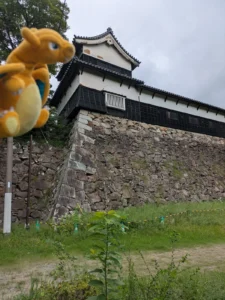
The stone walls you see today were built after Sengoku Hidehisa, a retainer of Toyotomi Hideyoshi, became lord of Komoro. They use the “nozura-zumi” method, stacking natural stones with almost no shaping, which gives them a rugged, wild look. The walls of the keep foundation sit quietly among moss-covered trees, feeling more like ruins in a forest than a castle site.
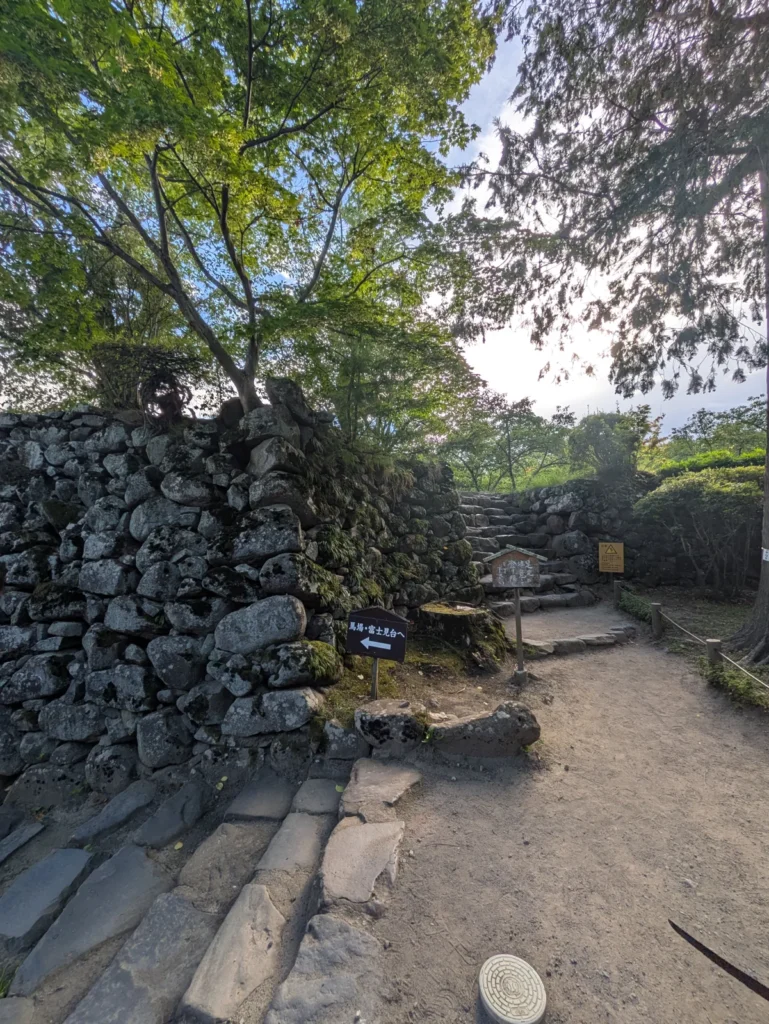
Sengoku Hidehisa also built a three-tier keep, but it burned down after a lightning strike in the early Edo period and was never rebuilt. Only the keep foundation remains today.
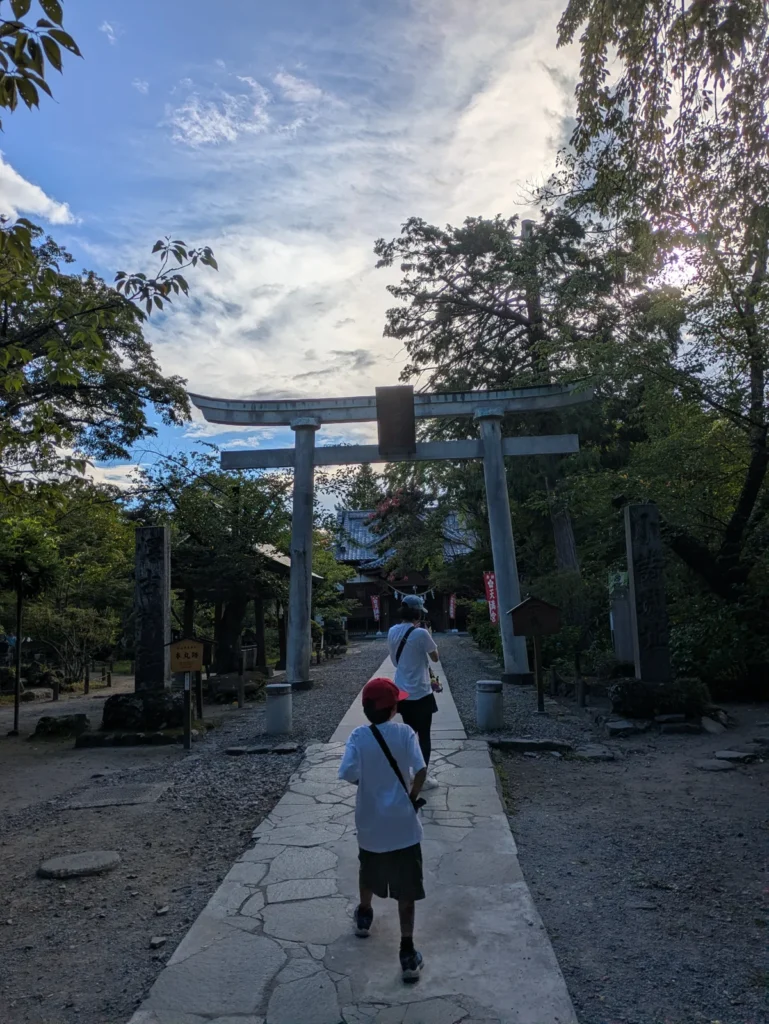
On the site of the main enclosure stands Kaiko Shrine, built by former retainers in the Meiji era. The name “Kaikoen” comes from this shrine. Walking under the torii gate toward the main enclosure in the evening light, the path was wrapped in the quiet calm of a castle ruin.
Ōte Gate and San-no-mon Gate | Two Important Cultural Properties
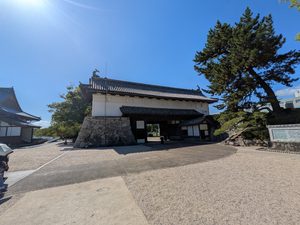
- Ōte Gate: The main gate of the castle, built by Sengoku Hidehisa. It’s a heavy two-story gate with a tiled roof, restored to its early Edo period appearance in the Heisei era. It stands on the opposite side of the station, a little away from Kaikoen, so be careful not to miss it.
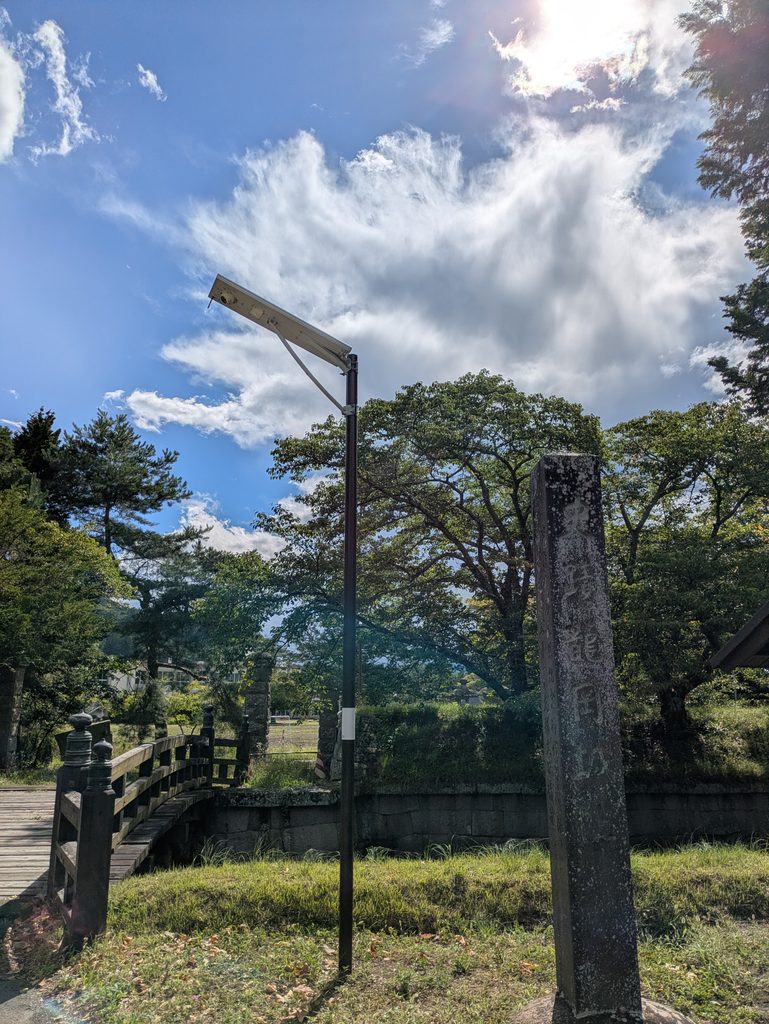
- San-no-mon Gate: The gate at the entrance of Kaikoen. With its “Kaikoen” name plaque, it’s the face of the park. The current gate was rebuilt in the mid-Edo period and still survives.
The Chikuma River Seen from the Mizunote Observation Deck
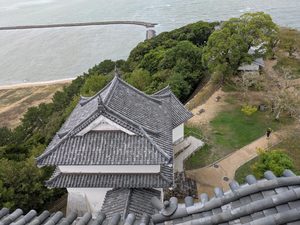
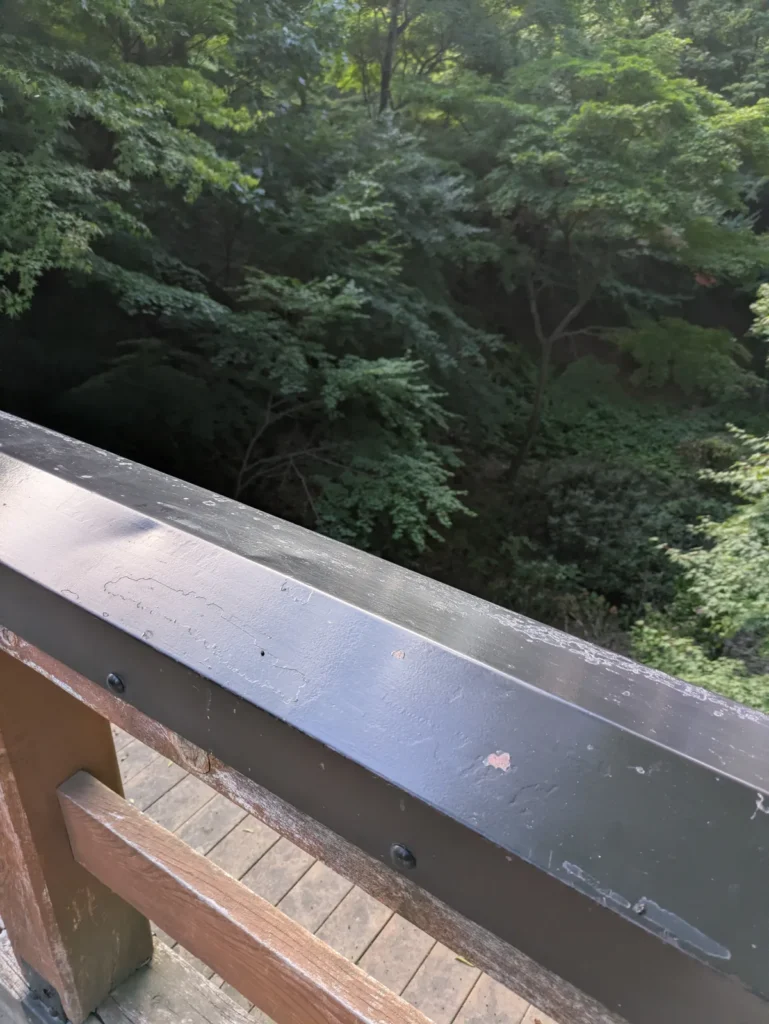
From the Mizunote Observation Deck at the back of the park, you can see the Chikuma River flowing far below. You were supposed to have “walked down” from the town, yet here you are standing on top of a high cliff. Feeling this difference in height with your own body makes the meaning of a sunken castle instantly clear.
4. [Shirolog Special] The History of Komoro Castle, Where Takeda, Sanada, and Tokugawa Crossed Paths
- Origins: The castle is said to have started in the late Heian period as the residence of Komuro Taro Mitsukane. Later, in the Muromachi period, the Ōi clan built “Nabebuta Castle” here.
- The Takeda Shingen era: Shingen rebuilt it as a base for conquering eastern Shinano. The layout is said to have been designed by his strategist Yamamoto Kansuke, and his younger brother Takeda Nobushige is said to have served as castle warden.
- Tokugawa headquarters in both Battles of Ueda: In the First Battle of Ueda in 1585 and the Second Battle of Ueda in 1600, the Tokugawa army attacked Ueda Castle from its base at Komoro Castle. In the second battle in particular, Tokugawa Hidetada set up his headquarters at Komoro Castle with a huge army of about 38,000. However, he was held back by Sanada Masayuki and his son Yukimura and arrived late for the main Battle of Sekigahara.
- Sengoku Hidehisa’s major renovation: Sengoku Hidehisa, who became lord under the Toyotomi regime, built the stone walls, keep, and Ōte Gate, creating the Komoro Castle we see today.
Inside the park, you can also find the “Kagami-ishi (Mirror Stone)”, said to have been a favorite of Yamamoto Kansuke. It’s a stone with a glossy black surface, as if polished.
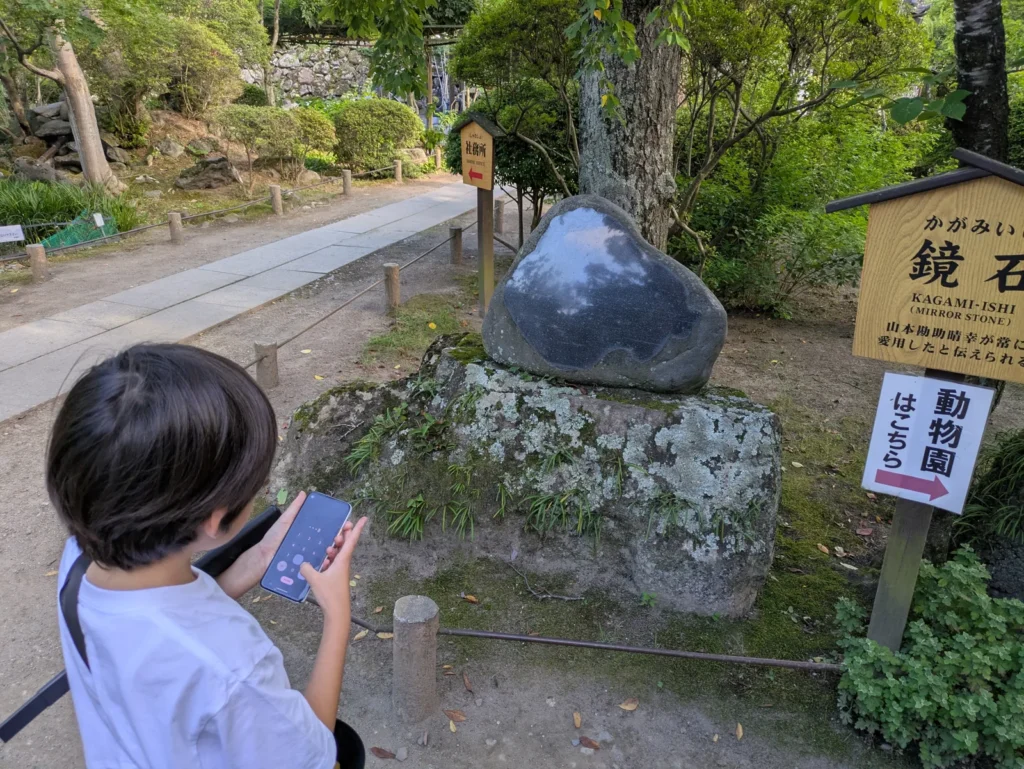
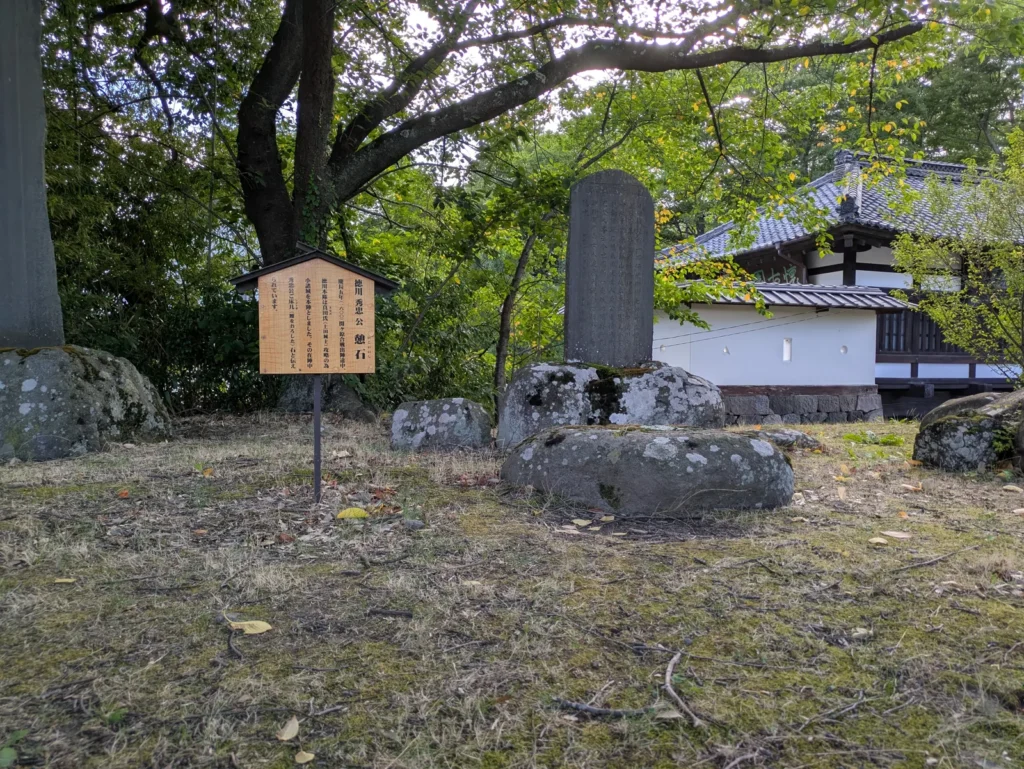
In the park there is the “Ikoi-ishi (Resting Stone)”, where Hidetada is said to have sat at that time. Stopped by the Sanada and too late for Sekigahara, what was Hidetada thinking as he sat on this stone? Seeing it before visiting Ueda Castle makes the next day’s visit even more interesting.
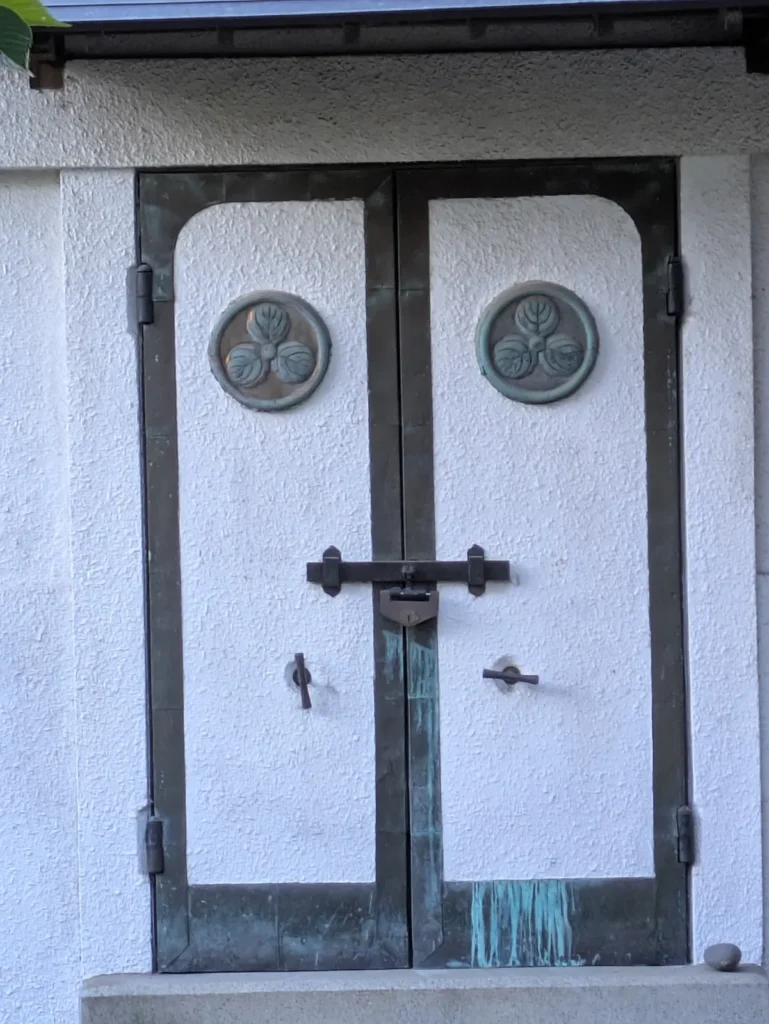
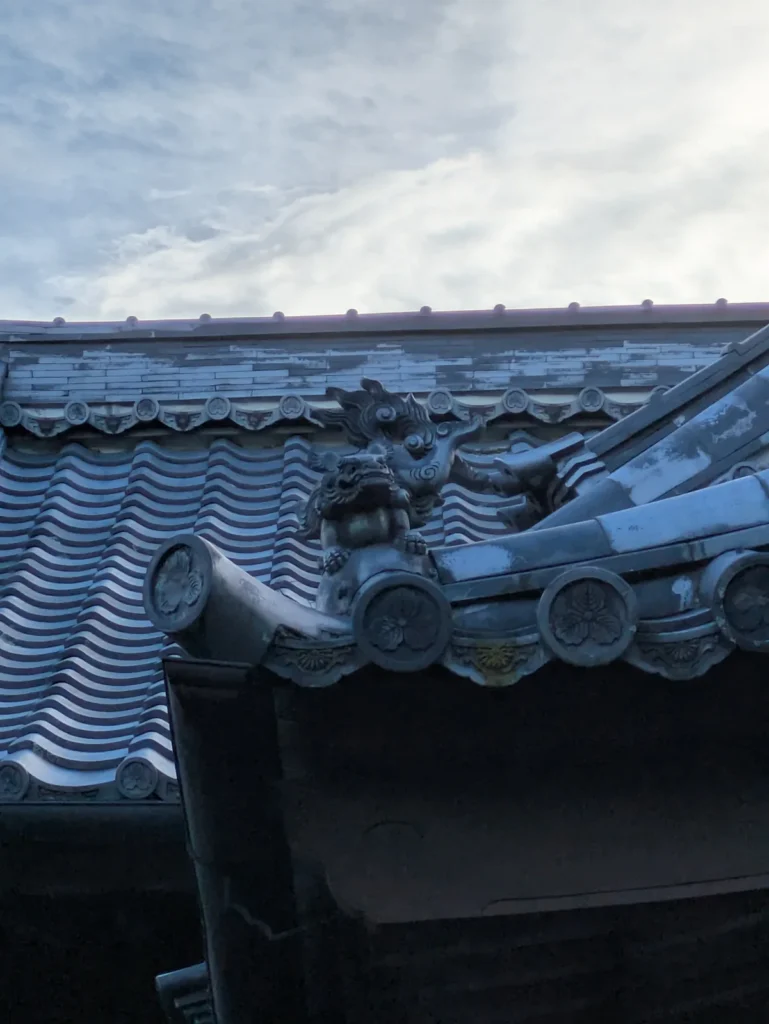
On the doors and roof tiles of buildings in the park, you can also spot the Tokugawa family’s three-leaf hollyhock crest.
As I wrote in the Ueda Castle article, Komoro and Ueda are about 20 km apart along the Chikuma River. Imagining the huge Tokugawa army marching down this road only to be outwitted by the Sanada makes visiting both castles together twice as fun.
5. Guide for Families with Kids
- Zoo and amusement park: Kaikoen has a small zoo and amusement park inside, so kids won’t get bored. They close at 16:30 (amusement park ticket machines until 16:00), so if you want the kids to play, go early in the day.
- Our son’s reaction: On the stone path, he found a female Dorcus rectus (small stag beetle)! At times he was more excited about bugs than the castle, but it was the kind of encounter only a forest-covered castle ruin can offer.
- Dad’s notes on footing: The paths are well maintained and easy to walk, but because it’s a sunken castle, the way back to the station is uphill. If you’re with small children, save some energy for the return.
6. Visiting Tip | Kaikoen in the Evening Is Recommended
Exhibition facilities such as the Chokokan Museum and the Toson Memorial Museum close at 17:00 (16:30 in winter), but you can still walk around the park after 17:00. The stone walls at dusk and the Chikuma River glowing orange are beautiful, showing a completely different face from the daytime.
- Recommended route: Zoo and amusement park (until 16:30) → Chokokan and Toson Memorial Museum (until 17:00) → stone walls and Mizunote Observation Deck in the evening. Going in this order wastes no time.
- Shimazaki Toson: The park is also associated with the poet Shimazaki Toson, known for his poem about the old castle of Komoro, and there is a Toson Memorial Museum inside.
7. Castle Trip Companions (Souvenirs)
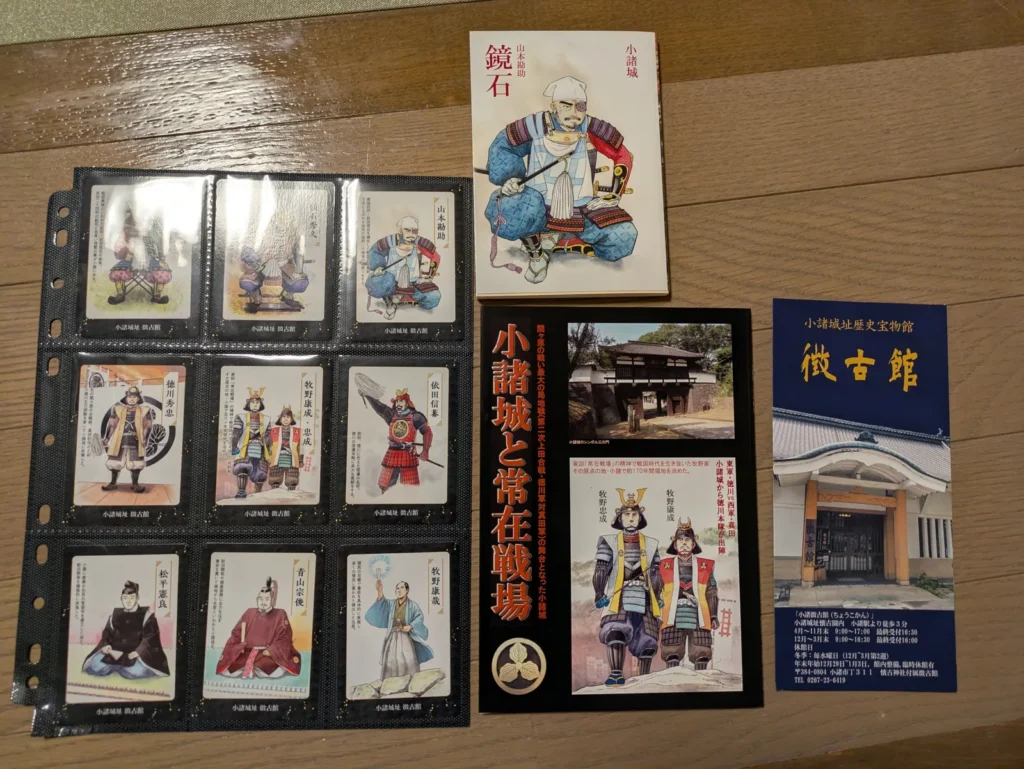
At the Chokokan Museum, we bought samurai warlord cards of figures connected to Komoro Castle, such as Yamamoto Kansuke, Takeda Nobushige, Tokugawa Hidetada, and Makino Yasunari. They’re a treasure for our history-loving son, who keeps them lined up in a card holder. The booklets “Kagami-ishi” and “Komoro Castle and Jōzai Senjō” are also great to reread after you get home.
8. Access
- By train: A short walk from Komoro Station (JR Koumi Line / Shinano Railway). Go through the underpass at the station and you’ll reach the entrance of Kaikoen.
- By car: About 10 minutes from Komoro IC on the Joshinetsu Expressway. You can use the paid parking lots around Kaikoen.
- Combining with Ueda Castle: Komoro to Ueda is about 30–40 minutes by car, or about 20 minutes on the Shinano Railway. Visiting Komoro Castle and Ueda Castle back to back on an overnight trip is the classic route.
9. Summary
Komoro Castle is packed with the reverse logic of a “sunken castle” lower than its town, Sengoku Hidehisa’s rough-stone walls, and its history as the Tokugawa headquarters in the Battles of Ueda. Kids can enjoy the zoo and bug hunting, while adults can enjoy the terrain and history—there’s something for everyone in the family.
Combine it with Ueda Castle, which we visited the next day, and Tatsuoka Castle Goryokaku in the same Toshin area, and the Sengoku history of Shinano becomes much more three-dimensional.
Nagano Castle Tour Guide: A Travel Diary of Exploring Historic Castles
-

Travel
[Family 3-Day Itinerary] Karuizawa & Eastern Nagano Castle Route | Tatsuoka, Komoro, Ueda, the Sanada Homeland and Shiraito Falls by Shinkansen + Rental Car
-
Castle
[Japan’s 100 Fine Castles No. 28] Komoro Castle (Kaikoen) | Highlights, Time Needed and Access for a “Sunken Castle” Lower Than Its Town
-
Castle
[100 Fine Castles of Japan – No.027] Ueda Castle: Decoding Sanada’s Masterful Tactics and Terrain Traps That Repelled the Tokugawa Twice
-
Castle
[Continued 100 Fine Castles of Japan – No.129] Exploring Tatsuoka Castle Goryokaku: A Rare Star-Shaped Fortress in Nagano