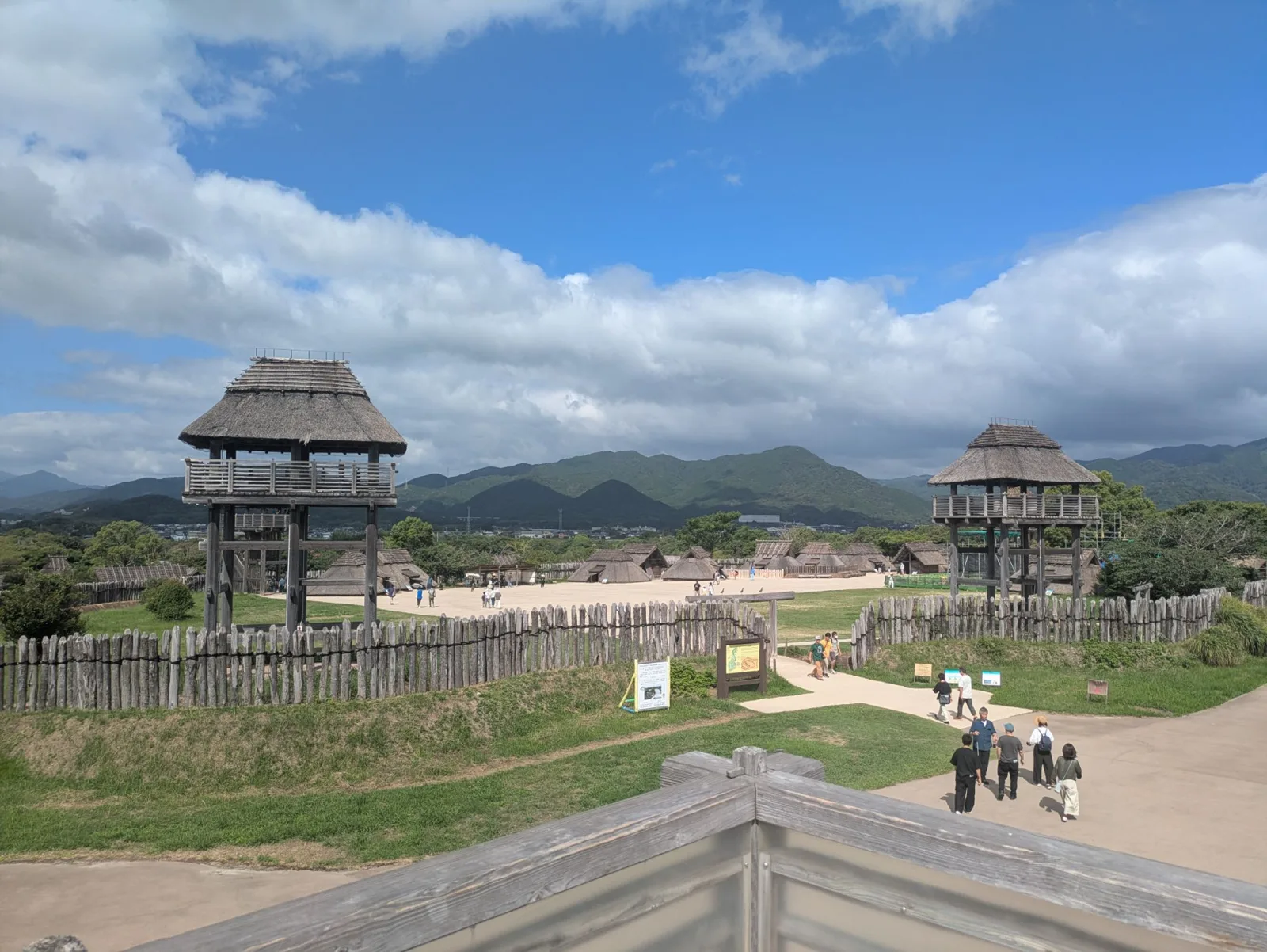
We visited Yoshinogari Historical Park (Yoshinogari Town and Kanzaki City, Saga) with our 8-year-old son during Japan’s “Silver Week” holidays in September 2026. It’s a huge moat-enclosed settlement from the Yayoi period — and, surprisingly, one of the 100 Fine Castles of Japan. There’s no keep or stone walls, but you can experience the “roots of the Japanese castle”: a village protected by deep moats and wooden palisades. The short answer: plan on about 2 hours. The 100 Fine Castles of Japan stamp is near the entrance ticket counter.
Key Points
- Time needed: We stayed about 2 hours (normal pace)
- Stamp: The 100 Fine Castles of Japan stamp is near the entrance ticket counter
- Admission: Adults ¥460 / seniors (65+) ¥200 / free for junior high students and younger (as of September 2026)
- Parking: ¥310 for a regular car. It was free during a campaign when we visited
- Tip: The grounds are huge, so first ask a guide which spots are worth seeing (free, the talk takes about 15 minutes)
1. Basic Information Before You Go
| Name (number) | Yoshinogari Site (100 Fine Castles of Japan No.88) / Yoshinogari Historical Park |
|---|---|
| Address | Yoshinogari Town, Kanzaki District / Kanzaki City, Saga |
| Period | A moat-enclosed settlement of the Yayoi period (Special Historic Site of Japan) |
| Highlights | V-shaped moats with wooden palisades and earthen walls, Kita Naikaku (North Inner Enclosure), Minami Naikaku (South Inner Enclosure), pit dwellings, raised-floor storehouses, the Northern Burial Mound |
| Stamp location | Near the entrance ticket counter |
| Parking | ¥310 for a regular car (free during a campaign when we visited) |
| Time needed | Our actual stay: about 2 hours (normal pace; the guide’s talk is about 15 minutes and free) |
| Admission / Hours | Adults ¥460 / seniors (65+) ¥200 / free for junior high students and younger. 9:00–17:00 (until 18:00 in June–August) (as of September 2026) |
2. How Long Does Yoshinogari Take?
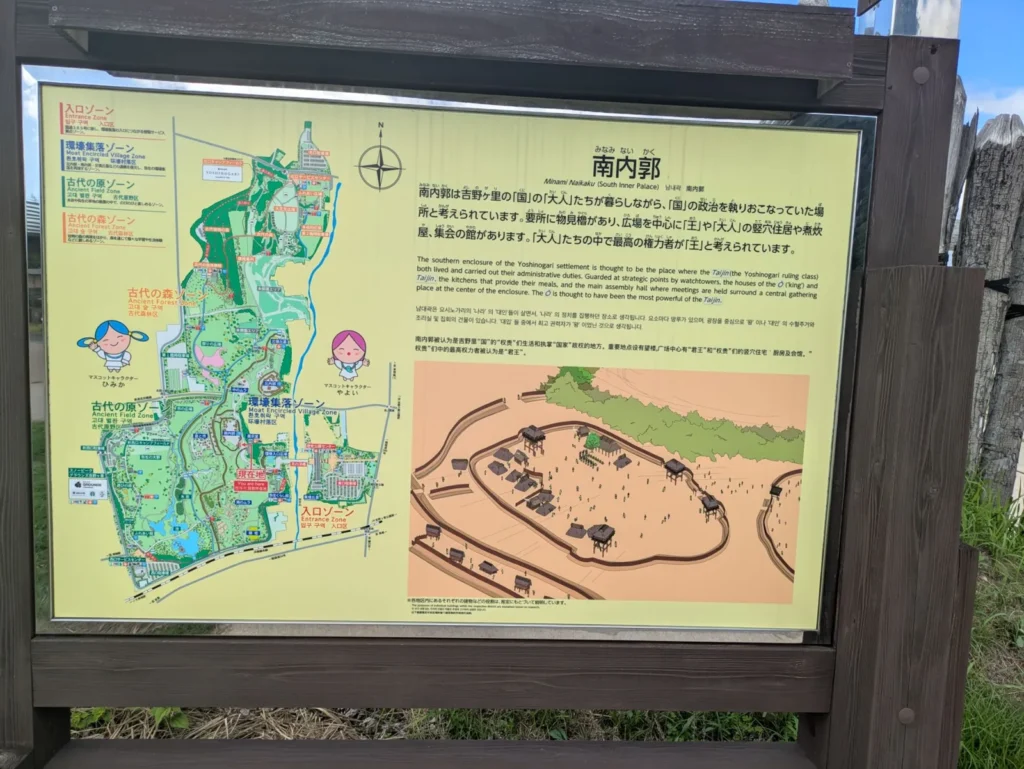
We arrived around 10 a.m. and spent about 2 hours until lunchtime. The guide’s talk took about 15 minutes and was free. The grounds are so vast that seeing everything on your own would take half a day. It was day 3 of our trip and we were a bit tired, so having the guide tell us “these are the places worth seeing” right at the start was a huge help.
- Quick visit (about 1 hour): Stamp → Minami Naikaku → the big building in Kita Naikaku
- Recommended (about 2 hours): First ask a guide (free, about 15 min) for the highlights, then see the moats and palisades, Minami Naikaku, Kita Naikaku and the pit dwellings
- Unhurried (half a day): Also the Northern Burial Mound, the exhibition rooms and hands-on activities
3. Yoshinogari Parking & Access
By car, it’s about 5 minutes from Higashisefuri IC on the Nagasaki Expressway. There’s a large parking lot, ¥310 for a regular car. When we visited, parking was free thanks to a campaign — nice, since we didn’t have to worry about the time.
After Yoshinogari, we drove to Saga Castle in Saga City (about 30–40 minutes).
4. Yoshinogari Admission
- Adults ¥460 / seniors (65+) ¥200 / free for junior high students and younger
- (As of September 2026. Check the Yoshinogari Historical Park official website for fees and campaigns.)
5. Highlights & On-site Report (Guide’s Talk & Structural Notes)
“Earth Built Up” Makes a Castle: V-Shaped Moats and Wooden Palisades
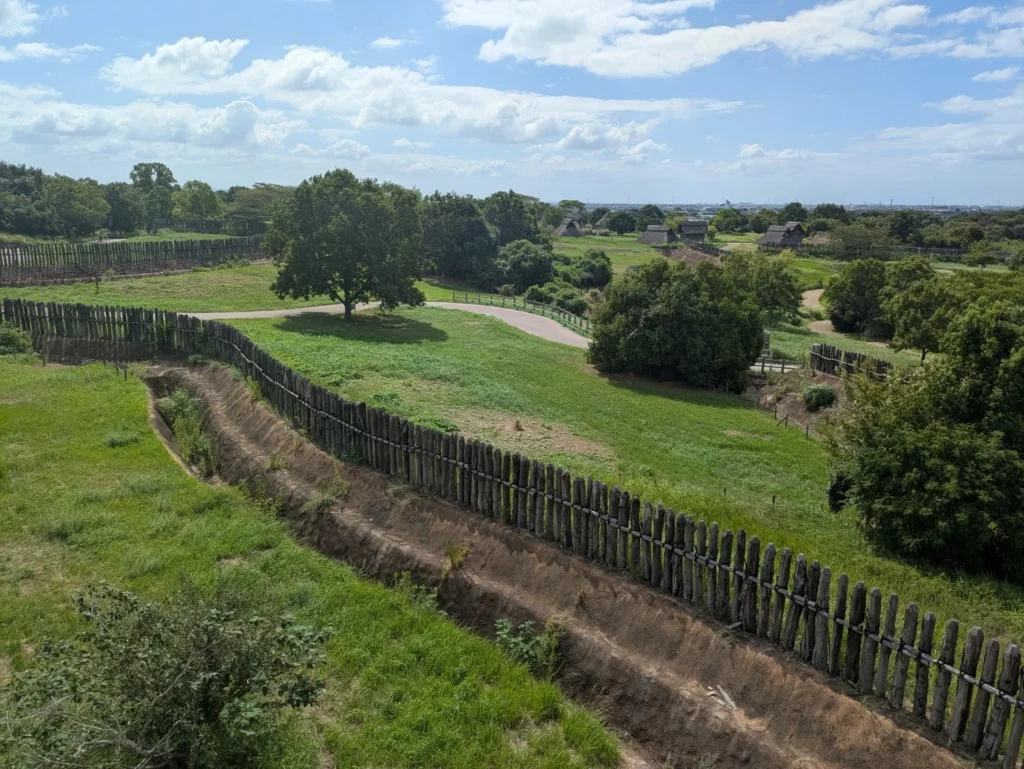
The first thing that overwhelms you at Yoshinogari is the deep, wide V-shaped moat and the palisades and earthen walls of sharpened logs. The Japanese character for castle (城) is literally made of “earth” (土) and “to build up” (成) — and this is exactly a defensive facility made by digging and piling up earth. Even without a keep, you can feel that this is where the Japanese castle began.
Dad’s Notes: Rice Farming Brought “Wealth” — and “Conflict”
What stayed with me most from the guide’s talk was the story of rice farming and conflict. When rice farming arrived from the continent and the Korean Peninsula, people began fighting over water, land and stored rice, and moats and palisades were built for protection. And the conflicts fought to protect lives and land ended up dramatically advancing bronze and iron working and civil engineering — an irony of history that made me groan.
Kita Naikaku Was for Rituals, Minami Naikaku Was Home to the Rulers
Inside the moats, the areas were clearly divided by role. The northern “Kita Naikaku” was the center of rituals and government, and nearby is the “Northern Burial Mound,” thought to be the king’s tomb. The southern “Minami Naikaku” is believed to be where the ruling class — the “king” and the “Taijin” (nobles) — lived and governed, guarded by watchtowers at key points. Ordinary people lived in villages farther outside. I was also surprised to hear that meals for the rulers were cooked together in a dedicated kitchen, and that they cast their own bronze tools using stone molds.
Climb a watchtower in Minami Naikaku and you can see the settlement lined with towers and pit dwellings, with mountains beyond. You get to experience a Yayoi lookout’s view, so be sure to go up.
The Main Ritual Hall of Kita Naikaku: A Shaman Receives Messages from the Ancestors
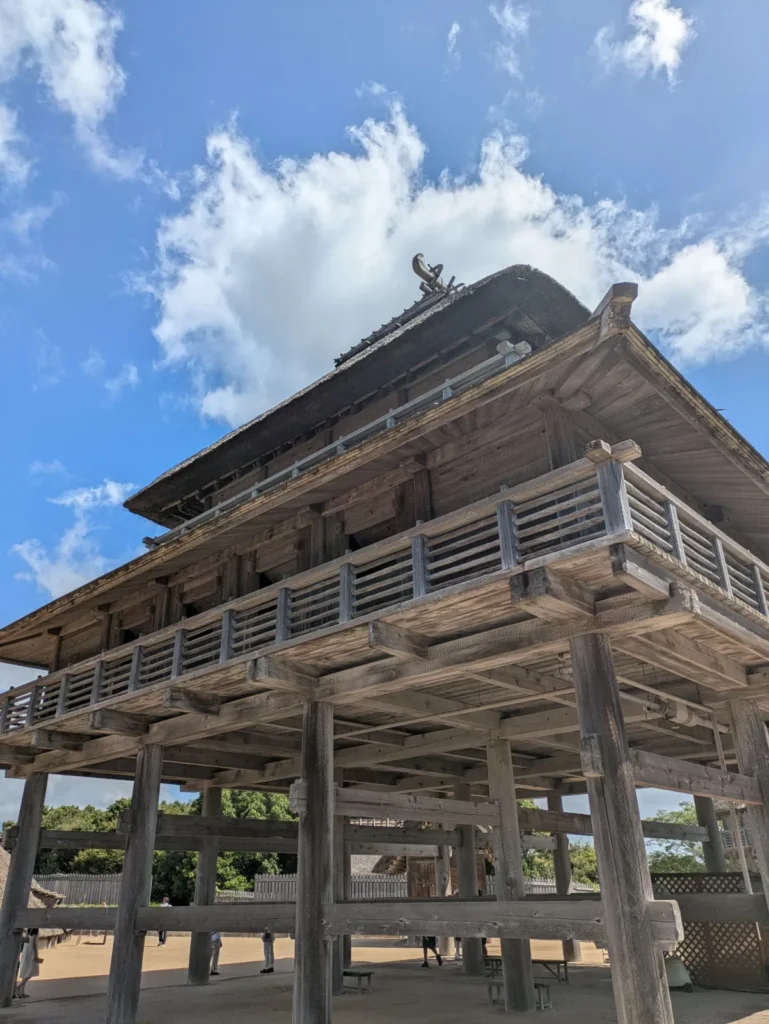
Towering at the center of Kita Naikaku is a large raised-floor building, the “Main Ritual Hall.” Looking up at it, you’re struck by its size.
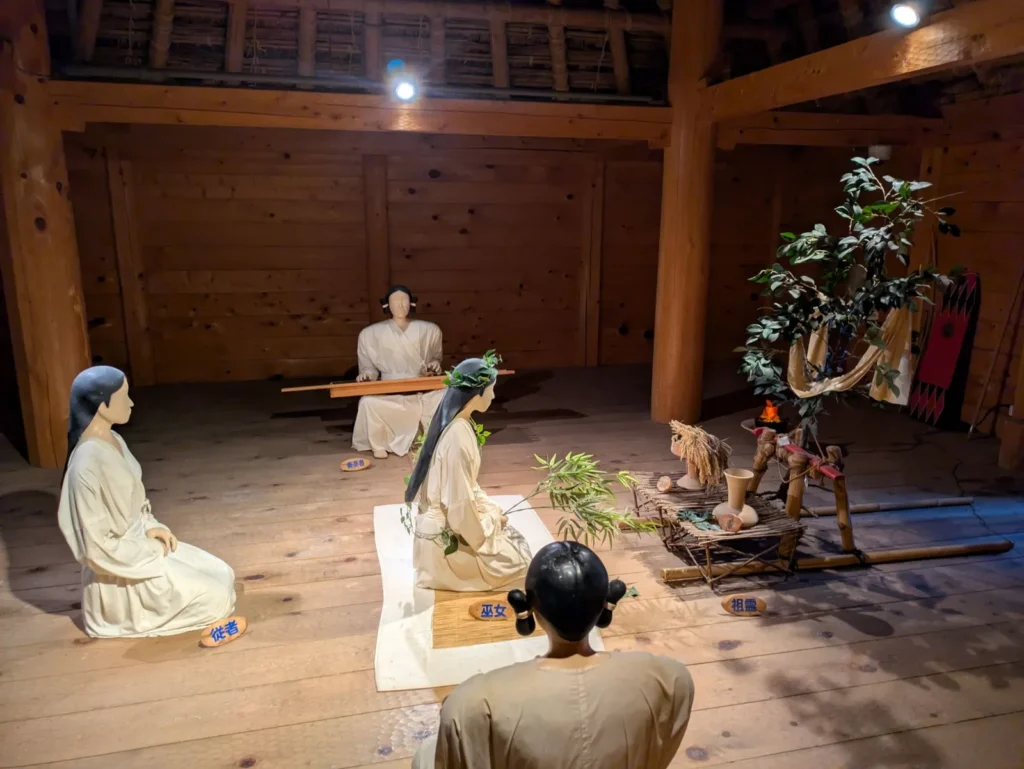
Inside the Main Ritual Hall, figures recreate a ritual in which the high priestess (shaman) tries to receive messages from the ancestral spirits to the sound of a koto (Japanese harp). She wraps vines around her head and body and holds bamboo leaves in her hand, while people who interpret and pass on her messages wait nearby. Mirrors, beads and swords were ritual tools for communicating with the ancestors. It shows clearly that this was not only a “castle” prepared for war, but also a “place of prayer.”
The Wisdom of the Yayoi People: Pit Dwellings and the “Hidana” Fire Shelf
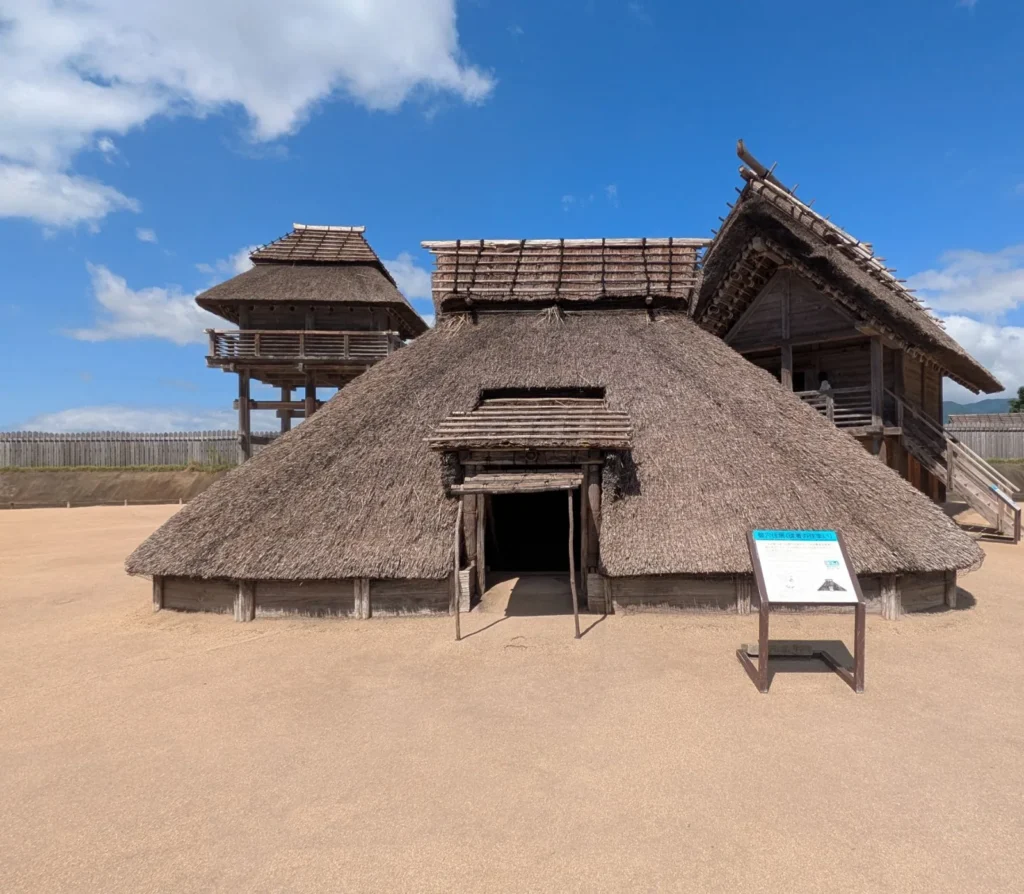
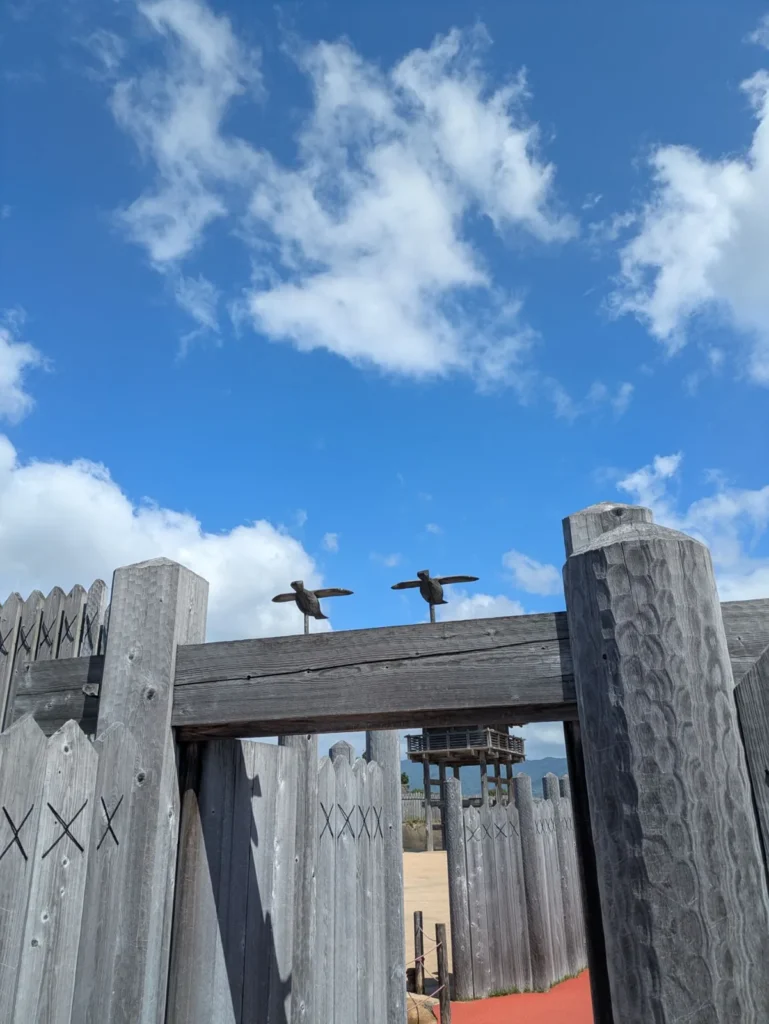
By digging into the ground, pit dwellings stay “cool in summer and warm in winter.” The narrow, low entrance not only keeps out the cold but also stops enemies from rushing in all at once. The “hidana” shelf hung above the hearth was a clever idea that did three jobs at once: smoking and preserving fish and meat, stopping sparks from reaching the thatched roof, and keeping insects away with smoke. I also enjoyed hearing that the “bird” ornaments perched on the gates are said to be the origin of torii shrine gates.
Stamp Location
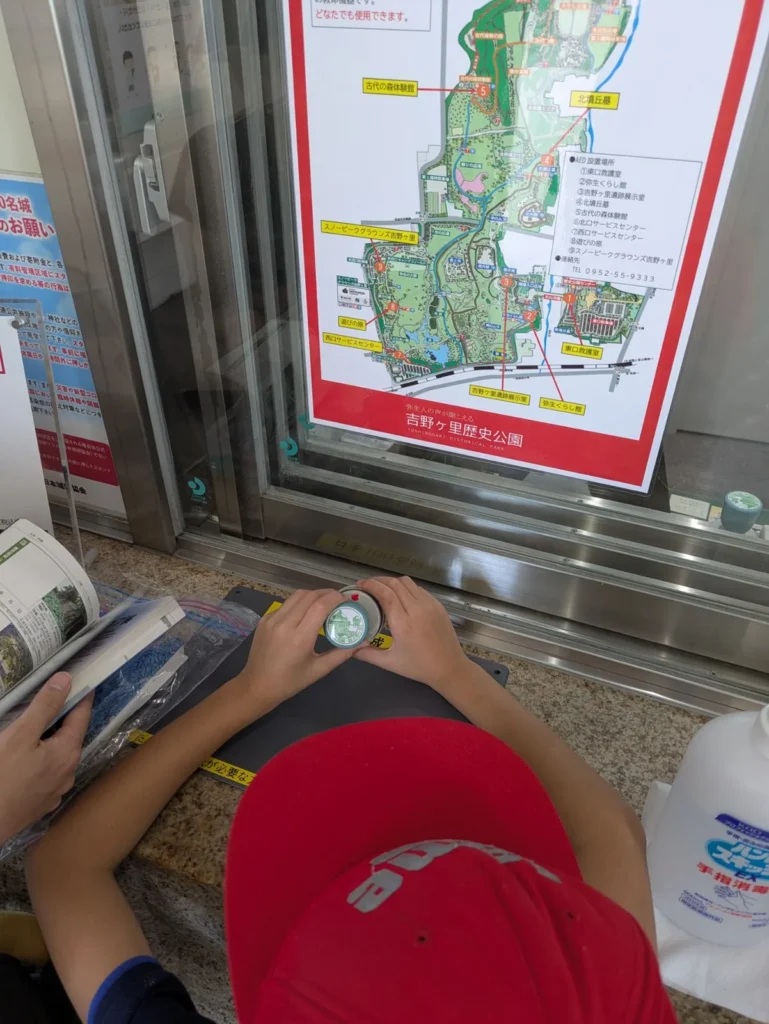
The 100 Fine Castles of Japan stamp is at the entrance ticket counter window. Our son stamped it here too. Stamp it first before exploring so you don’t forget.
6. Lunch & Tips for Families
- The grounds are huge, so wear comfortable shoes. If you’re tired, ask a guide for the highlights and explore efficiently
- On hot days, take a break with “Black Monblan,” a Kyushu-favorite ice cream bar
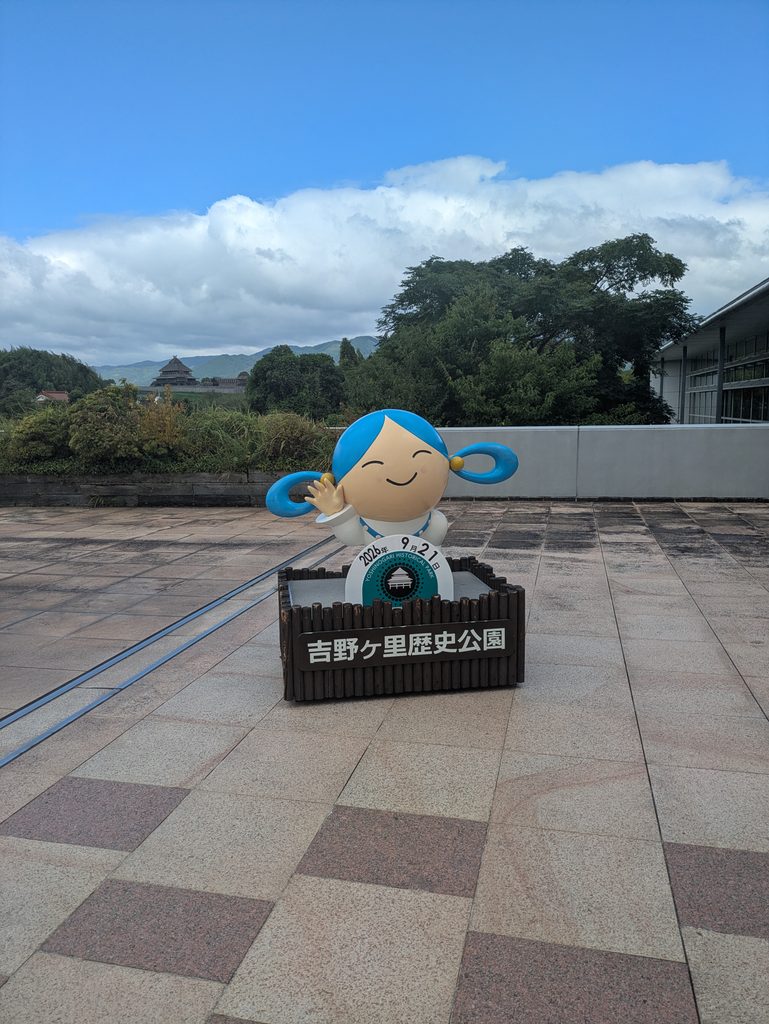
- Goods of the local character “Mokeke (Yoshinogari version)” make great souvenirs
After this, we had Sicilian Rice for lunch at the observation hall on the 13th floor of the Saga Prefectural Government Building, then headed to Saga Castle.
7. Staying Near Yoshinogari: Choosing a Hotel
We stayed with relatives that night, so we didn’t use a hotel. For Yoshinogari and Saga Castle, staying in Saga City — or in Karatsu or Fukuoka depending on your route — is convenient. Hotels for the whole trip are introduced in the hotel section of our 4-night, 5-day Kyushu & Hiroshima model itinerary.
8. FAQ
Q. Where is the Yoshinogari 100 Castles stamp?
It’s near the entrance ticket counter.
Q. How long does Yoshinogari take?
We asked a guide for the highlights first and then explored — about 2 hours. Allow about 1 hour for just the main spots, or half a day if you want to take your time.
Q. Is parking at Yoshinogari free?
Normally ¥310 for a regular car. It was free during a campaign when we visited.
Q. Is it fun for kids?
Yes. But the grounds are huge, so bring comfortable shoes and water. The guide’s talk is free and only about 15 minutes, so it’s easy to join even with kids.
Q. How long from Yoshinogari to Saga Castle?
About 30–40 minutes by car.
9. Summary & Nearby Castles
Yoshinogari has no keep or stone walls, but it’s one of the 100 Fine Castles where you can experience the very origin of “what a castle is.” It takes about 2 hours, and the stamp is near the entrance ticket counter. Because it’s so big, our top tip is to ask a free guide for the highlights first and then explore.
After Yoshinogari, we went on to Saga Castle. Our whole trip is summarized in our 4-night, 5-day Kyushu & Hiroshima model itinerary with kids.


Comments