Known as the castle built by Tokugawa Ieyasu and the historic site where the 15th Shogun, Yoshinobu, declared the restoration of imperial rule (Taisei Hokan), “Former Imperial Villa Nijo-jo Castle” in Kyoto is a staple of history textbooks. However, walking through it with my child revealed wonders not found in any textbook—it’s a magnificent castle packed with the logic of “visual security” that resonates deeply even in our modern era.
For our family, having passionately watched the Taiga drama *Sanada Maru*, this place is truly a heart-stirring historical crossroads. Combining a structural analysis from a dad in his late 30s, the authentic reactions of my 8-year-old son, and recommendations for nearby spots and local gourmet, here is our on-site report!
1. Essential Data Before You Visit
| Item | Details |
| Castle Name (No.) | 100 Fine Castles of Japan – No.053 Former Imperial Villa Nijo-jo Castle |
| Alternative Name / Location | Nijo-jo Castle / 541 Nijojo-cho, Nijo-dori Horikawa Nishi-iru, Nakagyo-ku, Kyoto City, Kyoto Prefecture |
| Built By / Year Built | Tokugawa Ieyasu / 1603 (Keicho 8) |
| Key Structures / Ruins | Ninomaru Palace (National Treasure), Honmaru Palace (Important Cultural Property), Karamon Gate, Higashi-Otemon Gate, Southeast Watchtower, Inner Moat, Stone Walls, etc. |
| Stamp Location | Nijo-jo Castle General Information Center (Just on your right after passing the ticket gate building) |
| Parking | Official parking available for standard cars (Can get very crowded during tourist seasons; public transport is highly recommended) |
| Estimated Time Required | Approx. 1.5 to 2 hours (If you thoroughly appreciate the interior of the National Treasure Palace) |
2. [On-Site Report] Strategy Points & Dad’s Analysis
Overwhelming “Visual Security” and the Stage of the Meeting That Makes Sanada Maru Fans Shiver
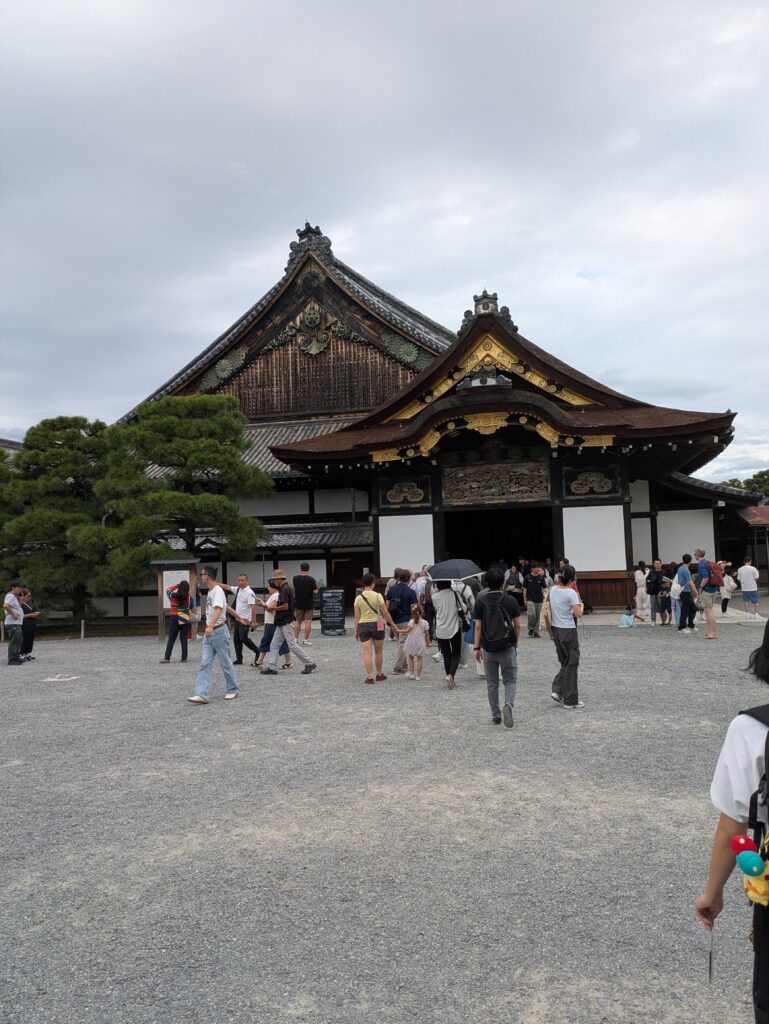
Stepping into the castle grounds, the first things that completely overwhelm you are the gorgeously ornate “Karamon Gate” and the majestic presence of the “Ninomaru Palace,” a designated National Treasure.
Rather than a “defensive logic by brute force” seen in typical Sengoku (Warring States) period castles, it feels perfectly calculated for “psychological security”—visually overpowering visitors and stripping away any will to fight before they even try. The peak technology and craftsmanship of the era were thoroughly packed into every detail, such as the breathtaking beauty of the ceilings and the exquisitely carved pheasant transoms (ranma).
For history buffs, the Great Hall (Ohiroba, Rooms 1 and 2) is famous as the stage for the Restoration of Imperial Rule in 1867. However, for a dad like me who passionately enjoyed the Taiga drama *Sanada Maru*, this is none other than the site of the legendary 1611 meeting between Toyotomi Hideyori and Tokugawa Ieyasu.
Rather than Yoshinobu’s political move, the tense atmosphere of Ieyasu and Hideyori facing off—which ultimately accelerated the path toward the Siege of Osaka—felt incredibly real to our family. Being able to experience that exact tension in this very space while looking up at the same ceiling is the ultimate luxury for an castle lover.
The wall paintings inside the palace feature many powerful depictions of “Tigers and Leopards.” I was fascinated by the explanation that people in Japan back then believed tigers and leopards were actually the male and female of the same animal species! Right before the final room, a tiger that somehow looks “visibly exhausted” is painted. Seeing the playful spirit of the master painters within such absolute authority was deeply intriguing from an adult’s perspective. It’s also great fun to hunt for the Tokugawa family’s “Triple Aoi” (hollyhock) crests scattered everywhere, including on the sliding door handles.
The famous “Nightingale Floors” (Uguisubari) chirp like birds every time you walk on them. However, modern research suggests they weren’t intentionally created as anti-ninja traps, but were actually the result of the metal fixtures holding the floorboards aging over time. Including those historical behind-the-scenes stories, it was a structurally fascinating space.
Stepping outside and walking around, you see the deeply excavated moats and massive stone walls enclosing the area, proving that physical defense was just as solidly guaranteed as the psychological mind games.
“It’s Flat Because the Warring States Ended!” Shoked by My Son’s Remarkable Discovery
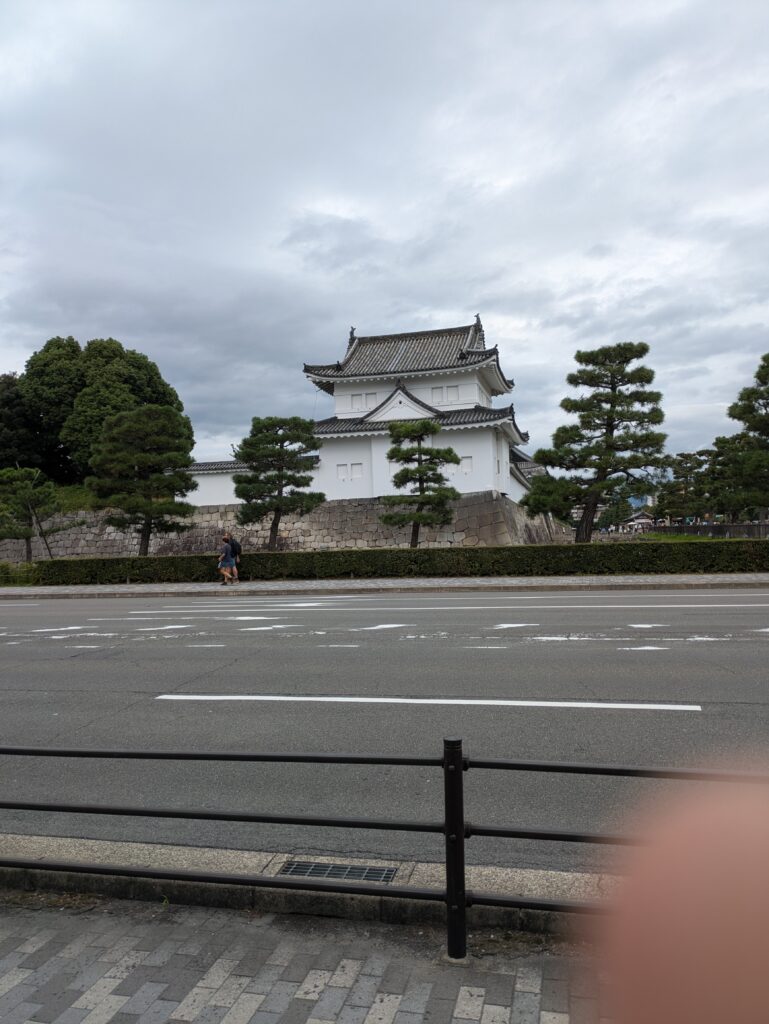
On the other hand, I was completely caught off guard by the perspective of my 8-year-old son walking beside me. The moment we stepped into the castle grounds, he mumbled this:
“Dad, compared to Sendai Castle or Shiroishi Castle that we climbed before, this one is so close to the station and easy to walk around! Since it was built after the Warring States period ended, did they build it right in the middle of the city instead of on top of a mountain?”
I was absolutely amazed. From his past experiences exploring mountain castles (yamajiro), he brilliantly deduced Nijo-jo’s geographical characteristic—how it was dynamically built on “flat land” as a political hub once the need to brace for enemy attacks had faded. It was a proud moment where I truly felt his sharp observation skills and growth through our castle-hunting journeys.
In the Great Hall where you can feel the drama of history, when I told him, “Ieyasu and Hideyori talked right here,” rather than just textbook facts, he stared intently into the space, seemingly absorbing the atmosphere.
3. Guide for Families & Kids
- Son’s Reaction: While he was deeply impressed by the National Treasure ceilings and gorgeous decorations, saying “Wow, so beautiful!”, he is still an elementary schooler at heart. The moment he spotted a capsule toy (Gachapon) corner inside the castle grounds, his eyes lit up. He beautifully pulled a “Toyotomi Hideyoshi figure” and was absolutely thrilled. Also, while walking through the nature-rich grounds, he made quite a fuss shouting, “Dad, there are so many bees flying around!” It turned out to be a wonderful walk where historical learning and childlike fun happily coexisted.
- Dad’s Tips: Shoes are **strictly prohibited** inside Ninomaru Palace. You will be walking along long corridors with your shoes off, so if you are visiting during chilly seasons or are sensitive to cold feet, I highly recommend bringing thick socks. Also, when we tried to take a breather at a rest area inside the castle, a coffee float was priced at 800 yen—a total tourist-trap price! To be honest as a dad, I flinched for a second thinking “Yikes, that’s expensive…”, but the taste of the ice cream we shared after walking so much was exceptional, making it a priceless memory.
4. Castle-Hunting Companions (Lunch & Souvenir)
My First Nishin Soba! Soothed by the Gentle Kyoto Broth at “Osoba Kyo-Yoshimi”
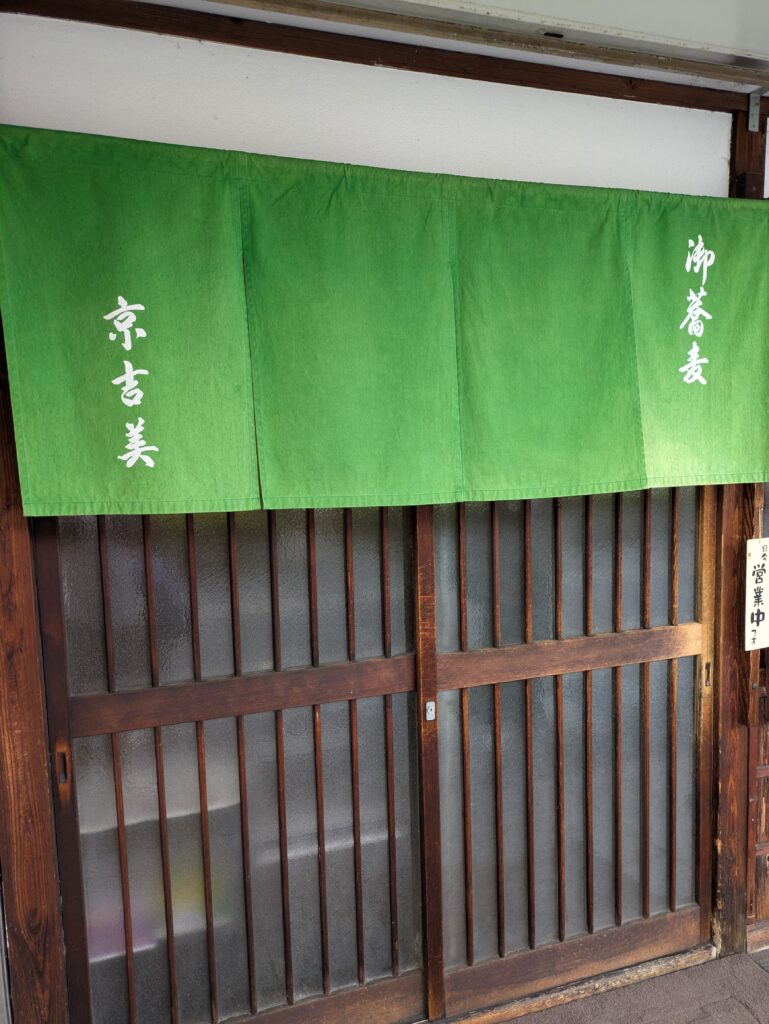
If you get hungry after all that walking, I highly recommend “Osoba Kyo-Yoshimi,” located just a short walk east of the castle. The calm and cozy restaurant is marked by its charming green noren curtain.
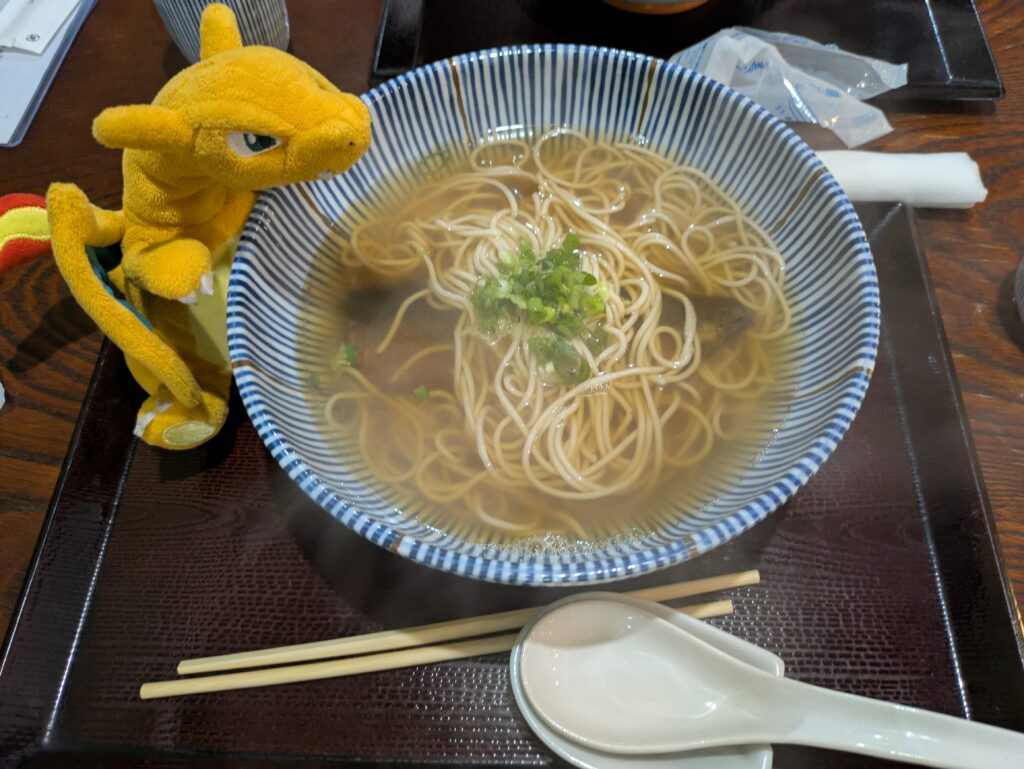
What I ordered here was Kyoto’s famous “Nishin Soba” (herring buckwheat noodles). It was my very first time trying it, and the flavor of the dried herring, simmered slowly in a sweet and savory sauce, melted beautifully into the gentle, elegant Kyoto-style dashi broth. It was astonishingly delicious. The sweet, comforting flavor soaked deep into my body, making it the perfect lunch that truly made us feel we were in Kyoto.
Our Family’s Unique Souvenir: “Tokugawa Yoshinobu”
Another highlight of this trip happened on Pokémon GO, which we opened inside the castle. Incredibly, a wild “Abra” (known as Abra in English, but it feels like a fateful encounter here!) appeared, and we successfully caught it. After a quick family meeting with my son, we named him “Tokugawa Yoshinobu” in honor of Nijo-jo Castle. Even now that the trip is over, every time I look at my phone, the scenery of Nijo-jo and the taste of nishin soba come rushing back—a special, one-of-a-kind souvenir just for our family.
5. Recommended Nearby Spots
- A Must-Visit Set: Honno-ji Temple Ruins Located quite close to Nijo-jo Castle (near Aburanokoji-dori Takoyakushi-sagaru), you can find the stone monument marking the original site of the infamous “Honno-ji Incident,” where Oda Nobunaga was ambushed by Akechi Mitsuhide. (Note: The actual active Honno-ji Temple has since relocated to Oike-dori, but the original historical site is right nearby). After experiencing the drama of the Tokugawa and Toyotomi clans at Nijo-jo, stopping by the site where Oda Nobunaga met his end allows you to physically feel Kyoto’s dense historical timeline connecting the Warring States period to the Edo period. It is highly recommended as a casual walking route to combine with your visit!

Comments