1. Essential Data Before You Visit
| Item | Details |
| Castle Name (No.) | 100 Fine Castles of Japan – No.054 |
| Aliases / Location | Kinjo, Kinjo (Brocade Castle) / Osakajo, Chuo-ku, Osaka City, Osaka Prefecture |
| Founder / Year Built | Toyotomi Hideyoshi (1583) / Tokugawa Hidetada (1620, Rebuilt) |
| Key Historical Remnants | Gigantic stones of the Sakuramon Masugata (Tako-ishi/Octopus Stone), Otemon Gate, Tamon-yagura Turret, Sengan-yagura Turret, Kinzo Storehouse, Inner & Outer Moats, etc. |
| Stamp Location | Osaka Castle Keep (Main Tower) 1st Floor Information Desk |
| Parking | Osakajo-koen Station Parking / Morinomiya Parking (*The grounds are vast, so expect a solid walk to the keep!) |
| Estimated Time Required | Approx. 2 to 3 hours (Leave plenty of buffer time if you want to dive deep into the exhibits) |
2. [Field Report] Strategy Points & A Dad’s Analysis
[Analysis] The Tokugawa Obsession to “Completely Erase” Toyotomi and Their Overwhelming Power-Management Strategy
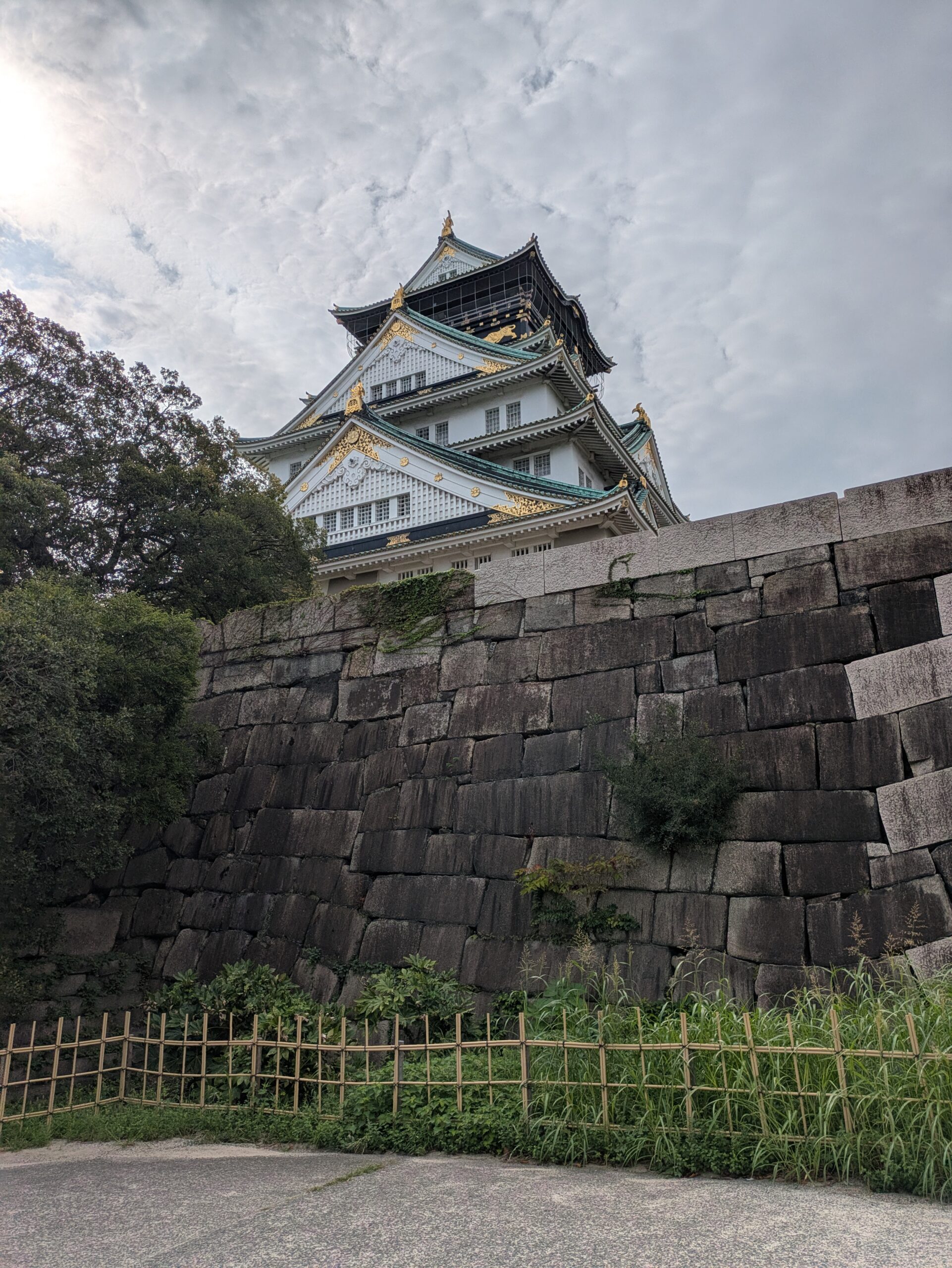
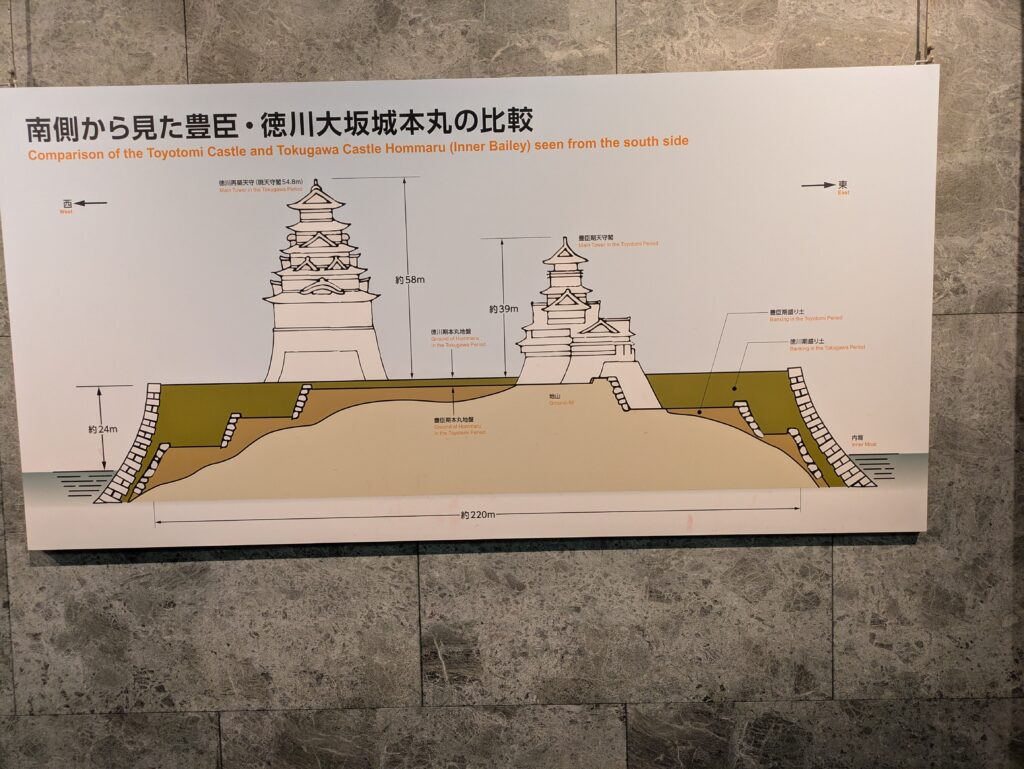
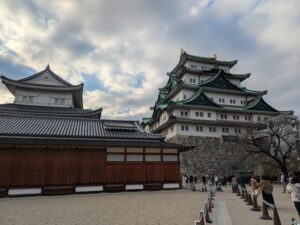
When people think of Osaka Castle, they usually associate it strongly with Toyotomi Hideyoshi. However, the massive stone walls, the inner and outer moats, and the very foundations upon which the current main tower stands today were all built by the Tokugawa clan. They literally buried Toyotomi’s original Osaka Castle deep underground and rebuilt a brand-new “Tokugawa Osaka Castle” right on top of it.
To completely shut out any trace of the previous ruler and stack even higher, more gargantuan stone walls to signal to the world, “This is the era of the Tokugawa now.” Looking at this from the perspective of a manager in my late 30s, this relentless drive to thoroughly overwrite a past legacy with one’s own corporate colors feels terrifyingly brilliant—a chilling yet fascinating display of absolute political logic.
Furthermore, walking around and observing the stonework, I was struck by how beautifully ordered it is. Combined with the elegance of the current reconstructed main tower built in the Showa period, the fact that the stone walls of such a massive early-modern fortress are maintained and replicated in such pristine condition speaks volumes about both the technological prowess of the past and the passion for modern-day preservation.
[Exhibits] Like “Where’s Waldo?”! The Summer Siege of Osaka Diorama That Hooked Father and Son
Standing in stark contrast to the medieval mountain fortresses we’ve explored so far, the inside of the main tower felt like a “massive history museum.” The sheer volume of the exhibits completely blew me away.
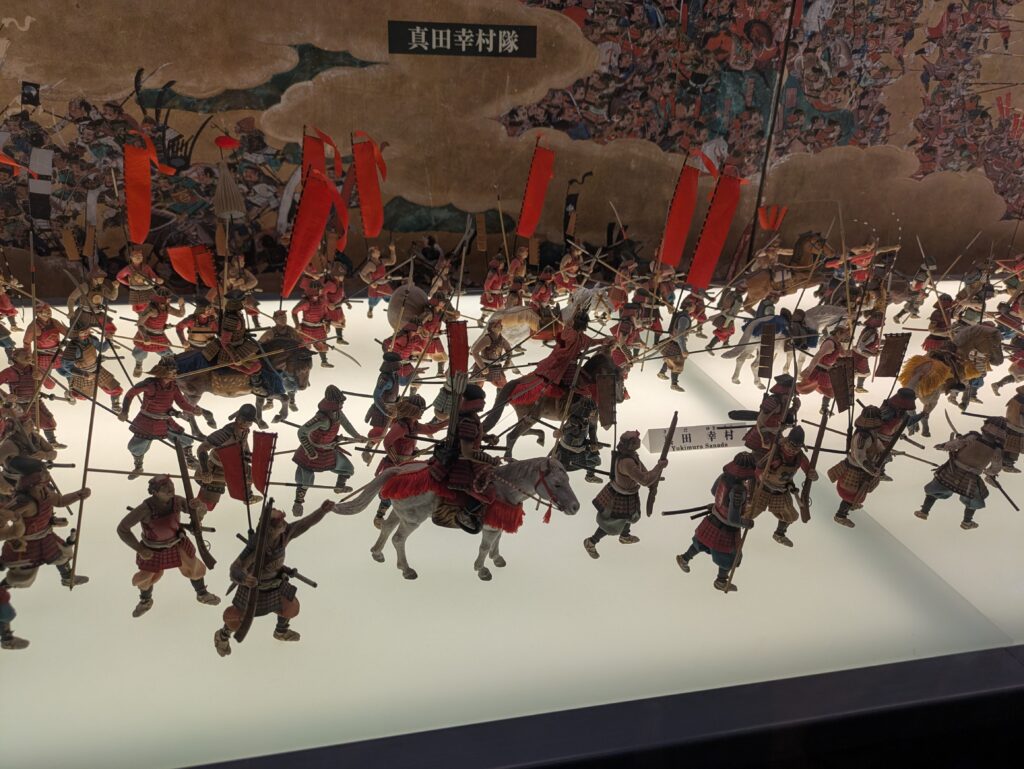
What completely glued my son and me to the spot was the massive diorama replicating the Summer Siege of Osaka. The level of detail on the battlefield, packed with countless intricate miniature figures, was spectacular. It felt just like playing a real-life game of *Where’s Waldo?* as we eagerly hunted for specific warriors, completely losing track of time.
Diving deeper into the exhibition, you can witness the raw reality of Sengoku-period risk management. For instance, you can see the armor of Sanada Yukimura—who bared his fangs at the Tokugawa—emblazoned with his famous “Rokumonsei” (six coins) crest, right alongside the helmet of Goto Matabei. Yet, the armor of Yukimura’s older brother, Sanada Nobuyuki, who had to side with the Tokugawa just to ensure the clan’s survival, bears the Tokugawa family crest instead of the Sanada crest.
From formal documents where Ieyasu forcefully frames Ishida Mitsunari as the villain, to a poignant letter sent by Yukimura—exiled to Kudoyama in Wakayama after the Battle of Sekigahara—to his older brother, pleading for financial support and confessing his vulnerable true feelings (“I have grown old and frail”), the castle is packed with raw human emotions and narrative foreshadowing left out of standard textbooks. The highlights are endless.
[Historical Deep Dive] Kudoyama: A Flawless, Multi-Layered Isolation Logic
Kudoyama (at the foot of Mount Koya), where Yukimura and his father were exiled, actually boasts a fascinating history of hosting some of the most prominent figures of the era. From Hojo Ujimasa’s son Ujinao, who lost his castle during Hideyoshi’s Siege of Odawara, to Oda Hidenobu (Sanbonmatsu), the legitimate grandson of Oda Nobunaga who sided with the Western Army at Sekigahara, and even Hideyoshi’s own nephew, the Regent Toyotomi Hidetsugu—this area served as the ultimate destination for the losers of history.
For the rulers of the time, Mount Koya and Kudoyama were sacred realms where secular authority was hard to reach, yet they simultaneously functioned as a flawless natural fortress—essentially an inescapable prison. It was Ieyasu’s perfect containment and risk-management strategy to ensure these figures would never return to the political center stage. Reflecting on how Yukimura broke out of this absolute isolation, entered Osaka Castle, and nearly took Ieyasu’s head, the weight of that vulnerable letter feels even heavier.
[Experience] Feeling Like a Sengoku Warlord! A Father-and-Son Samurai Armor Experience
Inside the Osaka Castle main tower, we decided to try the armor experience, where you can try on authentic replicas of historical helmets and Jinbaori (samurai surcoats).
My son chose the iconic bright-red Akazonae helmet of Sanada Yukimura, the ultimate hero of the Siege of Osaka, while I put on the armor of Toyotomi Hideyoshi, turning us into a duo of “warlords aligned with the Western Army.” Having just consumed the incredibly rich museum exhibits, putting on the actual armor felt deeply profound and became an unforgettable milestone for both of us.
3. Family & Kids Travel Guide
- My Son’s Reaction: His eyes lit up at the Summer Siege of Osaka diorama, and he was completely captivated by the raw presence of the authentic armor and the intimate details of the samurai letters. Getting to transform into a warrior with Yukimura’s helmet truly sparked his imagination; the historical drama behind the scenes definitely hit the sweet spot for an 8-year-old boy.
- Dad’s Advice: The interior of the main tower is a top-tier museum. Reviewing the displays thoroughly takes a significant amount of time, and with plenty of stairs to climb, it honestly takes a toll on your feet and lower back. Comfortable, well-worn sneakers are an absolute must for both adults and kids.
4. Castle Companion (Lunch & Souvenirs)
- What We Ate / What We Bought: The vast Osaka Castle Park features modern commercial complexes like JO-TERRACE OSAKA, meaning you won’t have any trouble finding great food or rest spots even with kids in tow. At the samurai gift shop, my son’s eyes widened as he picked out his favorite commemorative Sengoku souvenir.
5. Recommended Nearby Spots
- Where to Visit Together: Osaka Castle Park is surrounded by beautiful, lush greenery, making a stroll through the grounds excellent exercise. Interestingly, the area is also legendary as one of the premier spots in Kansai for Pokémon GO. With an incredibly high density of PokéStops surrounding historical monuments and a completely safe, car-free pedestrian space, it’s the ultimate location to extend your walk and enjoy some family “Poké-hunting” with the iconic castle main tower towering in the background.


Comments