1. Basic Data to Know Before You Visit
| Item | Details |
| Castle Name | Osaka Castle (100 Fine Castles of Japan – Extra Edition) *This is a special report focused on the surroundings of the branch castle, “Sanada-maru.” |
| Alternative Name / Location | Kinjo, Kinjo (Brocade Castle, Golden Castle) / Around Esashi-cho, Karahori-cho, Tennoji-ku, and Tamatsukuri, Chuo-ku, Osaka City, Osaka Prefecture |
| Builder / Year Built | Sanada Yukimura (Nobushige) / 1614 (Keicho 19 – Built as a fortification during the Winter Siege of Osaka) |
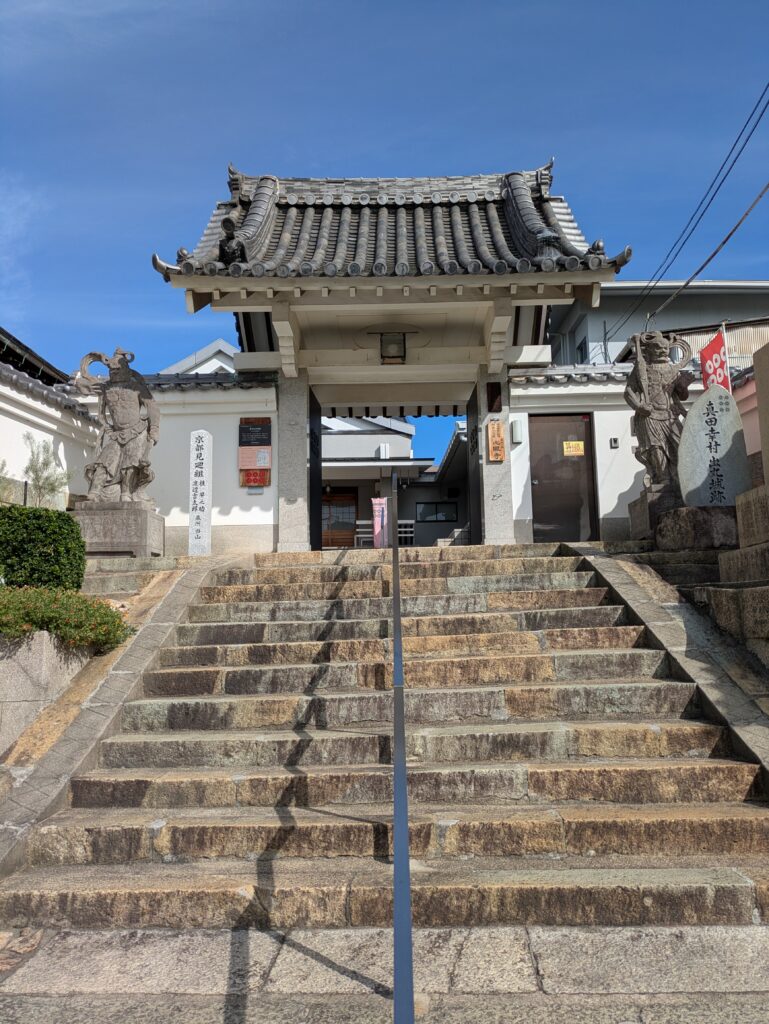
| Main Remains | Mt. Saisho (topography around Sanko Shrine), Sanada-maru Branch Castle Monument at Shingan-ji Temple, Sanada-maru Memorial Monument next to Meisei Gakuen, elevation differences (remains of the dry moat) |
| Stamp Location | Osaka Castle Keep, 1st Floor Information Desk |
| Parking | Use nearby coin-operated parking lots (the streets are narrow in this residential area, so public transport is recommended for smooth access) |
| Estimated Time Required | Approx. 2–3 hours (a leisurely walking pace visiting each spot from around Tamatsukuri Station) |
2. [Field Report] Strategy Points and Dad’s Analysis
The Topographical Logic of the Impregnable Branch Castle “Sanada-maru”
Our sacred site pilgrimage started from Tamatsukuri Station on the JR Osaka Loop Line. As soon as we arrived at the station, we found a stamp related to Yukimura. My son and I stamped our stamp books to commemorate the moment, and our parent-child adventure began.
The moment we stepped out of the station, an incredibly delicious aroma tickled our noses. I still remember how alluring that scent was, even though I’m not sure which shop it came from. Enveloped in that fragrance, our anticipation for the walk ahead grew even stronger.
The Tamatsukuri area is located a bit away from the main keep of Osaka Castle, which is designated as one of the 100 Fine Castles. When we walked over to the area around Meisei Gakuen, which is considered the actual site of Sanada-maru, we found it has now become a school ground. To be honest, no traces of the original structures remain. However, if you look at the terrain with an eye for structural logic, the “brilliance of its placement” becomes strikingly clear through real physical sensations.
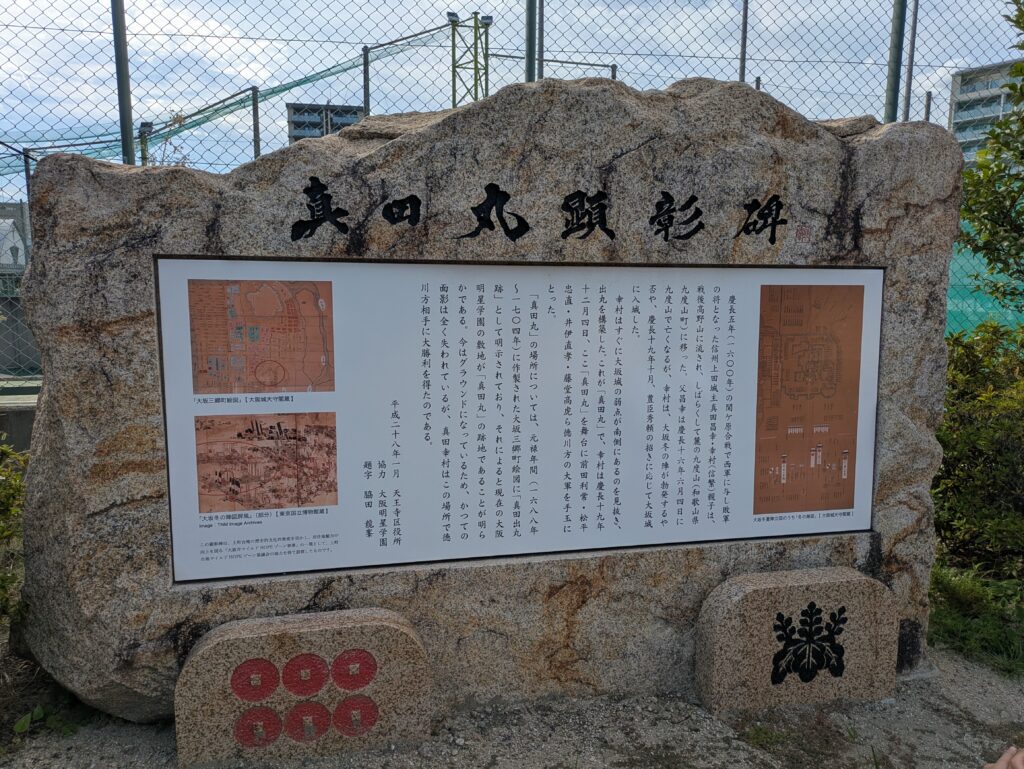
The southern side was Osaka Castle’s greatest weakness. Sanada-maru was placed there, literally “protruding” out, utilizing the natural elevation of the Uemachi Plateau. Walking around the area today, names like “Karahori-cho” (meaning dry moat town) still remain in the modern cityscape, and you can see remarkable elevation differences, slopes, and stairs everywhere. This wasn’t just flat land; Yukimura established a defensive position based on these undulating ridges. His logic reflects an overwhelming sense of risk management and strategic mastery.
Also, as a manager who values community and history, I was surprised to see so many apartments and preschools bearing the name “Sanada” scattered throughout the town. Even after more than 400 years, Yukimura’s legacy is completely integrated into the scenery of daily life here.
As we continued our walk, I noticed an unusually high concentration of shrines and temples in this neighborhood. A thought crossed my mind: “Did Yukimura rely on so many gods to pray for victory in the final decisive battle…?” Such historical imagination made the walk incredibly engaging.
Reflecting on the Legendary “Secret Tunnel” and Historical “What-Ifs”
Next, we visited Shingan-ji Temple, where the memorial tower (grave) of Sanada Yukimura (Nobushige) stands quietly. Here, my son and I offered a respectful prayer, reflecting on the fierce battle that took place 400 years ago.
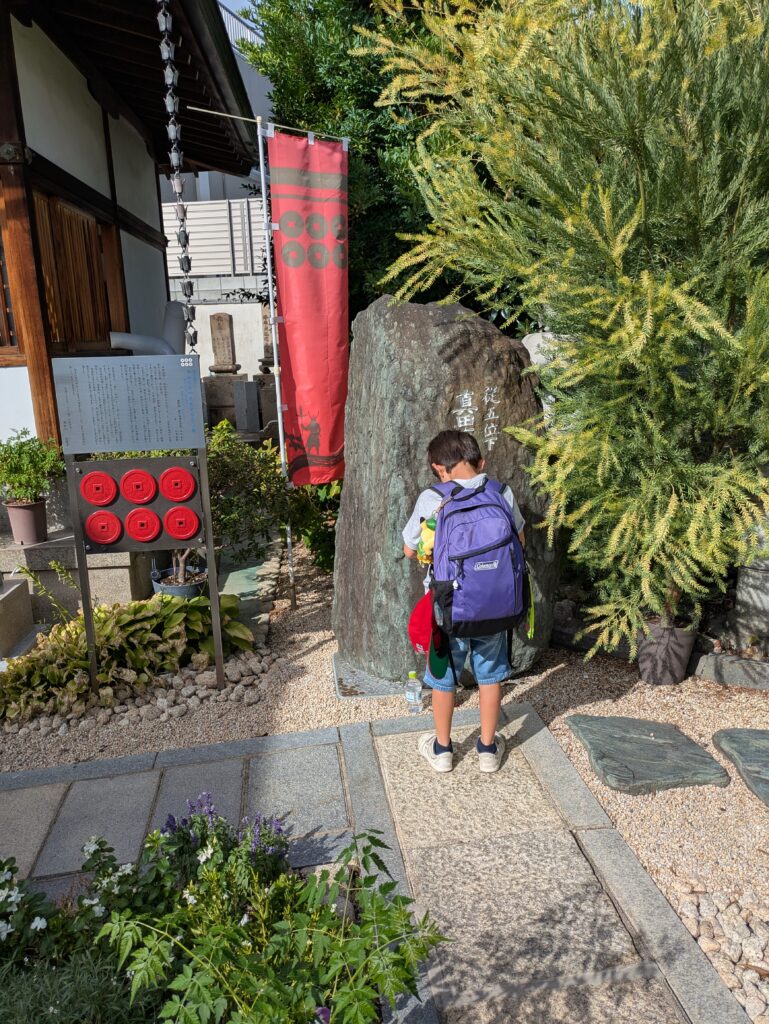
After paying our respects, we purchased a “Sure Victory” amulet adorned with the Sanada clan’s “Rokumonsen” (six-coin crest) at the temple office. Encased in a clear plastic protective cover, it has a very cool design that makes you want to straighten your posture just by holding it.
However, a realistic thought as a manager in my late 30s briefly crept into the back of my mind: “Yukimura actually lost to Ieyasu in the Siege of Osaka, so I wonder how effective this amulet really is…” Let’s keep that as our little secret. Regardless of the outcome, I decided to interpret it positively—his unyielding way of life is exactly what gives us strength today.
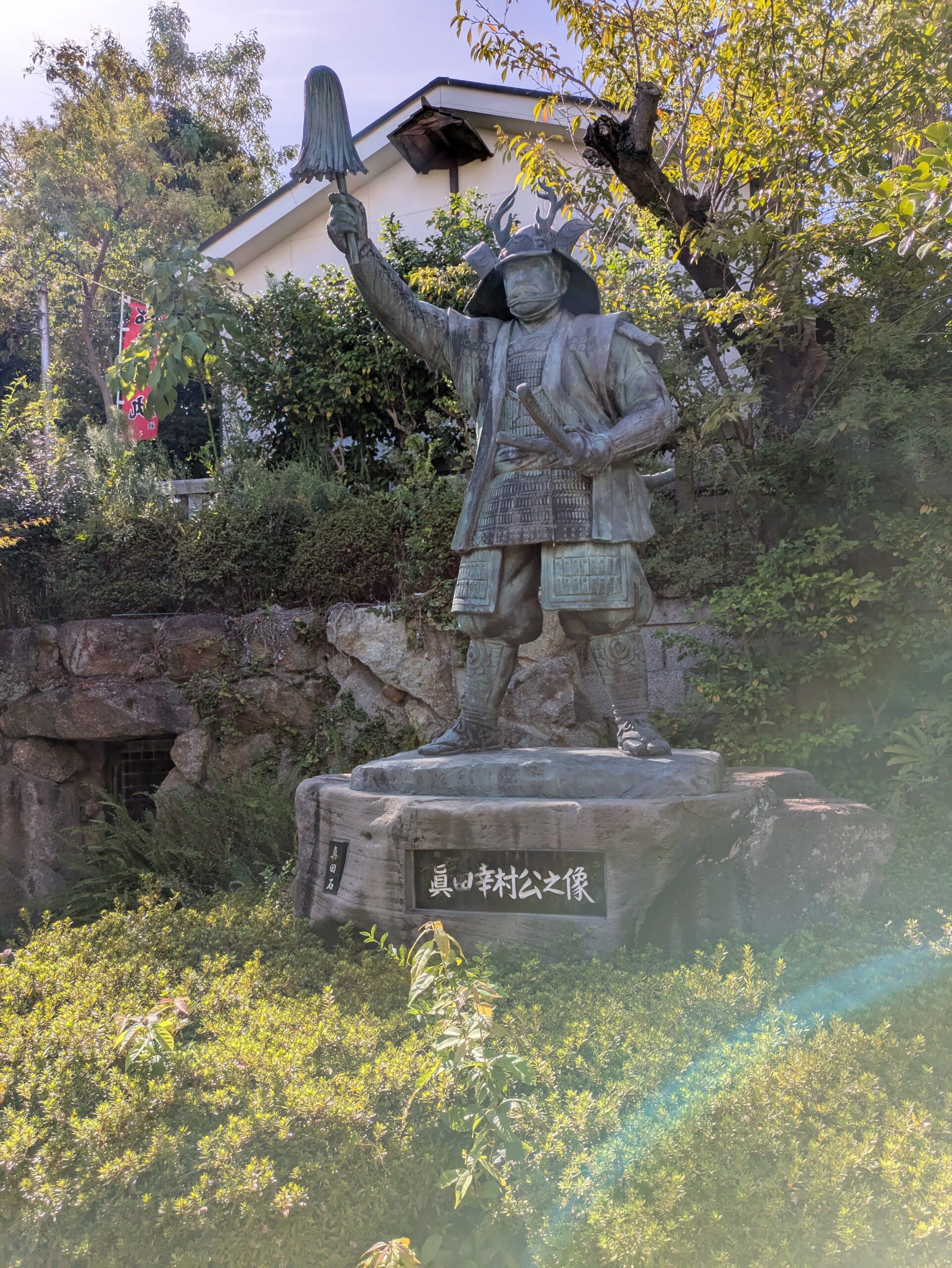
We then moved on to Sanko Shrine, where a dignified bronze statue of Yukimura stands. This shrine contains the remains of the famous “Sanada Secret Tunnel” (an underground structure), which is rumored to have connected all the way to the underground of Osaka Castle.
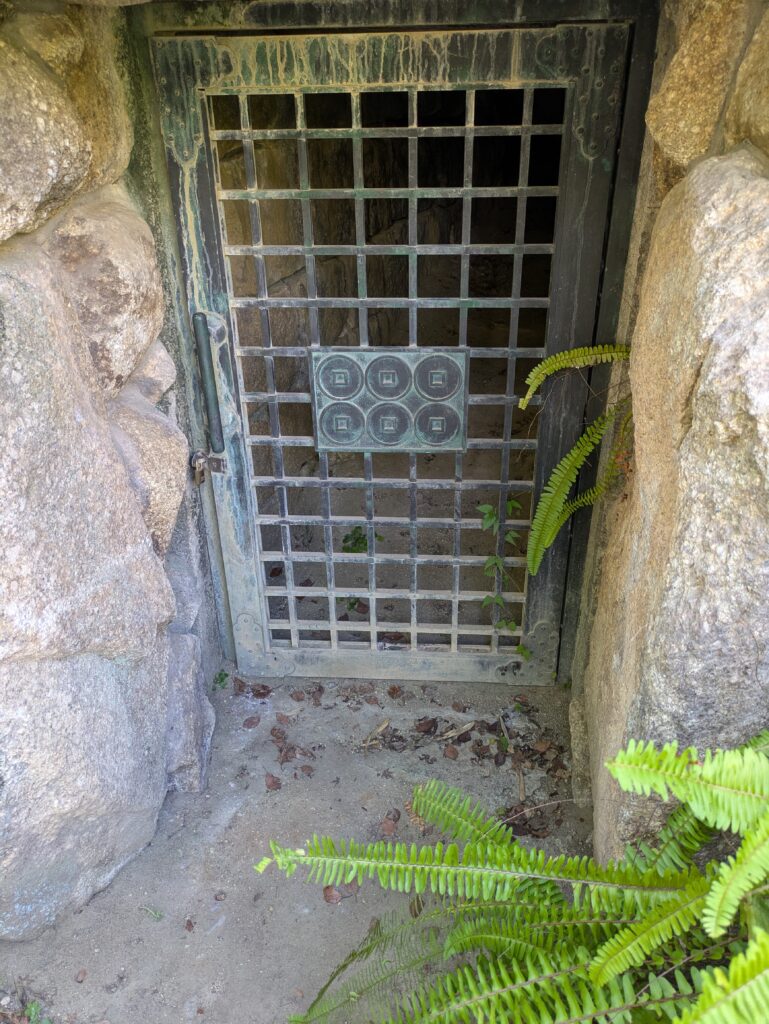
Peering into the darkness behind the sturdy iron grille built into the stone wall quietly stirs up a man’s sense of historical romance.
Actually, there is another underground remnant considered a secret tunnel near a different temple nearby, but it felt somewhat smaller and more modest compared to the one at Sanko Shrine.
The existence of multiple underground routes and wells seems to symbolize Sanada’s tactics, which excelled in guerrilla warfare, and his logic of rapid information sharing. There was also a fun face-cutout photo board in the shrine grounds, allowing our family to casually enjoy the atmosphere of the Warring States period together.
3. Family & Kids Travel Guide
- My Son’s Reaction: While his dad was completely immersed in historical romance, my 8-year-old son spent the day fighting with the highest level of enthusiasm. His opponent wasn’t Yukimura or the Tokugawa army, but the “mosquitoes” hiding in the bushes of the shrine grounds! “Dad, I got bitten so much!” he cried, clearly more focused on the battle against itchiness than the historical remains. I realized that if you visit with kids when summer is in the air, carrying strong insect repellent and anti-itch gel is an absolute must.
- Dad’s Advice & Cautionary Tips: The area around the Sanada-maru site retains the distinct topography of the former outer moat and branch castle, meaning there are intense ups and downs with slopes and stairs everywhere. There are many narrow roads in residential sections, so you need to keep a close eye on traffic. Wearing comfortable sneakers is a given, and if you are traveling with very young children, a baby carrier is much more maneuverable and safer than a stroller.
4. Castle Touring Companions (Lunch & Souvenirs)
- What I Ate / What I Bought: After walking around while being lured by that delicious smell near Tamatsukuri Station, I highly recommend taking a break at a local gourmet spot. For souvenirs, grab the “Sure Victory” amulet featuring the Sanada family crest. While holding this exceptionally cool amulet in its clear plastic case brings a bit of a sentimental feeling considering how history unfolded, I brought it home safely as a treasured item to channel Yukimura’s indomitable fighting spirit.
5. Recommended Nearby Spots
- Places to Visit as a Set: After fully enjoying the sacred site pilgrimage around Sanada-maru, it is highly recommended to extend your walk and head straight to “Osaka Castle Park (Castle Keep).” By walking the actual physical distance from the branch castle at Sanada-maru to the main keep, you can understand the spatial connection more three-dimensionally, revealing exactly why Yukimura set up his fortification here. The park grounds are well-developed, so you won’t have any trouble finding rest areas or cafes to relax your tired feet.


Comments