1. Basic Data to Know Before You Visit
| Item | Details |
| Castle Name (No.) | Himeji Castle (100 Fine Castles of Japan – No. 59) |
| Alias / Location | Shirasagi-jo (White Heron Castle) / Honmachi, Himeji City, Hyogo Prefecture |
| Founder / Year Built | Sadanori Akamatsu (around 1333), Terumasa Ikeda (major reconstruction starting in 1601) |
| Key Structures | Main Keep (Daitenshu), West Small Keep, Northwest Small Keep, East Small Keep (all designated National Treasures), various gates, turrets, stone walls, and moats |
| Stamp Location | Himeji Castle Management Office (near the main entrance) |
| Parking | Otemon-mae Parking Lot, etc. (Adjacent to the castle grounds, making it very accessible for families with children) |
| Estimated Time Required | Approx. 2 to 2.5 hours (The grounds are vast and include a round trip up the Main Keep, so planning with time to spare is highly recommended) |
2. Field Report: Strategic Insights and a Father’s Perspective
[Highlight 1: Ikeda Terumasa’s “Survival Strategy” and the Footsteps of Great Leaders]
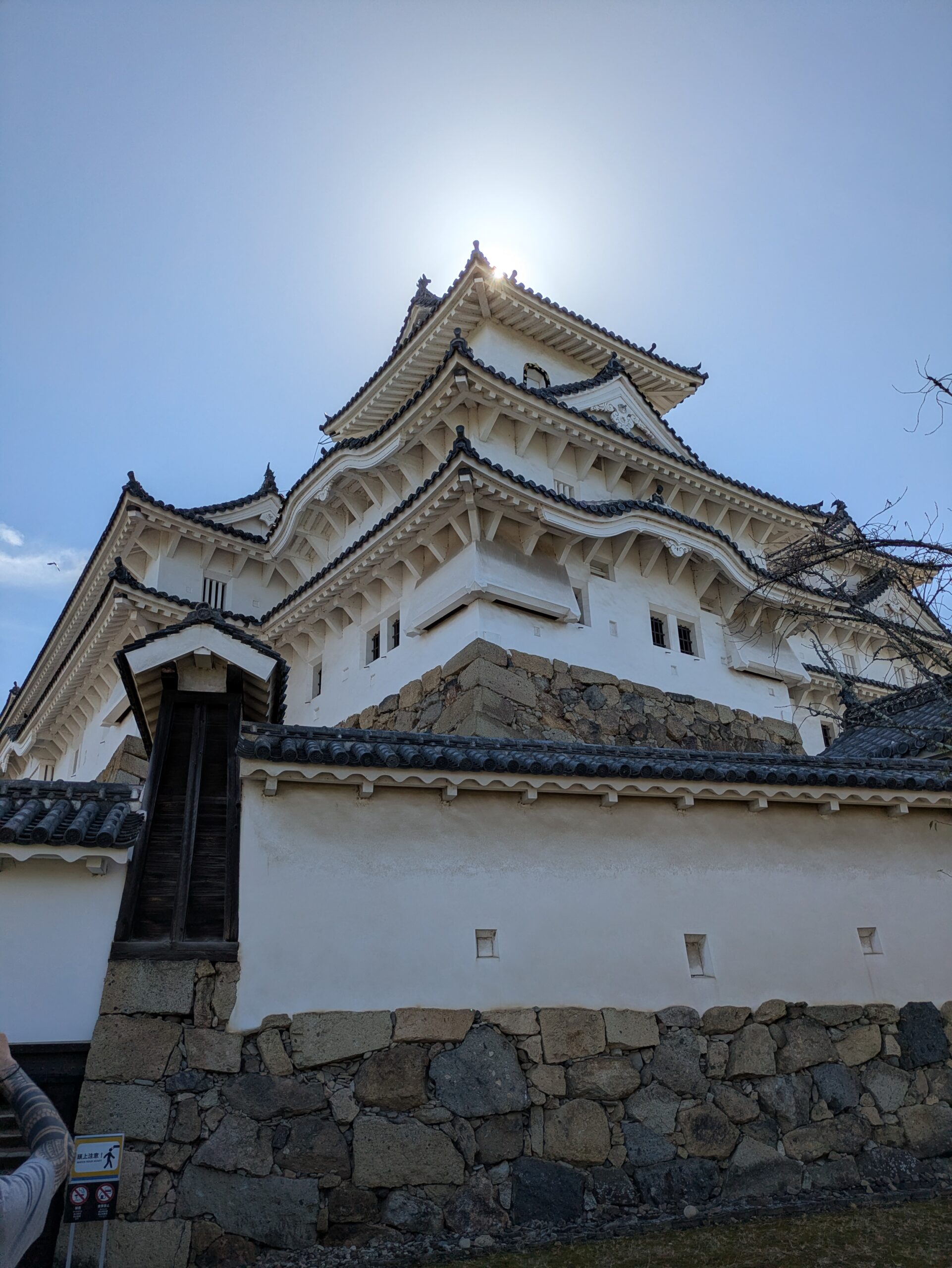
The grand and beautiful Himeji Castle we see today was completed in 1609 by Terumasa Ikeda. However, its original foundation was laid by Toyotomi Hideyoshi and designed by the legendary master strategist Kuroda Kanbei—a background brimming with historical romance.
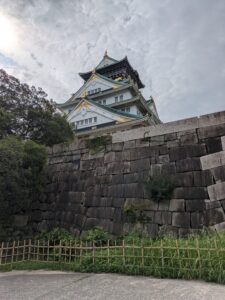
Terumasa Ikeda managed to survive the turbulent end of the Sengoku period by shifting allegiances among Oda Nobunaga, Toyotomi Hideyoshi, and Tokugawa Ieyasu, ultimately securing victory at the decisive Battle of Sekigahara. I could truly feel his absolute commitment to risk management and strategic decision-making in the sheer scale of this uncompromisingly robust fortress and the overwhelming power of its stone walls. Observing the structural transitions on-site—such as the distinct style of Hideyoshi’s era, which favored stacking larger, rugged stones—makes you feel the flow of history right before your eyes.
[Highlight 2: The “Maze-like” Defense Logic and the Functional Beauty of the Interior]
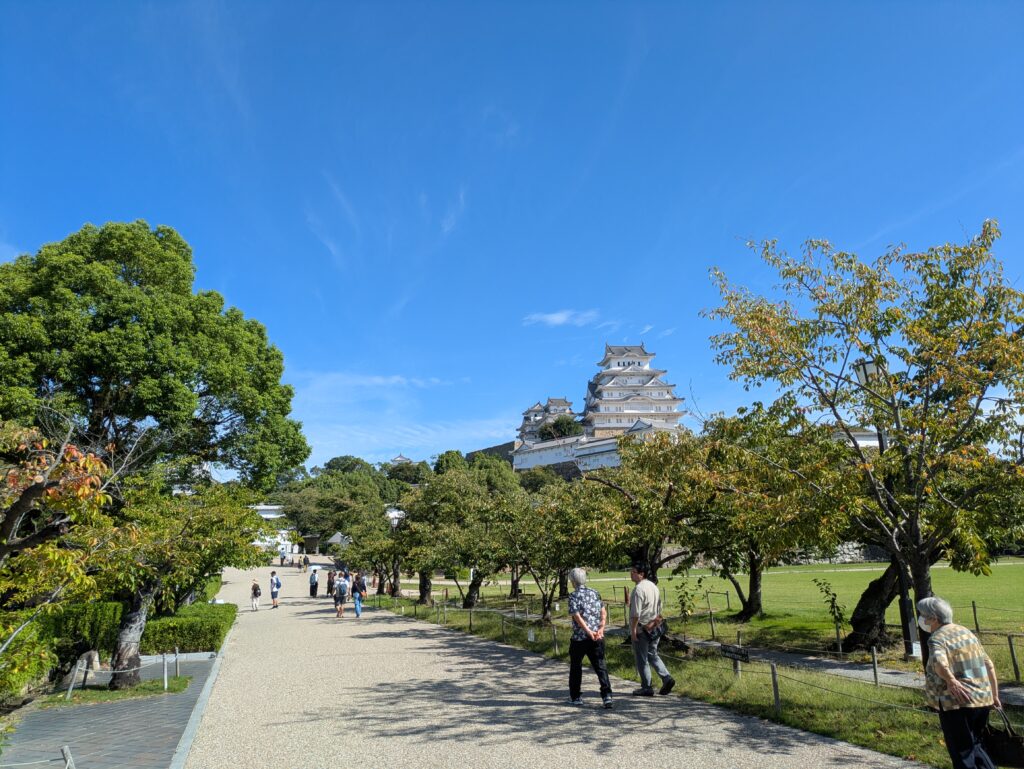
The castle is encircled by massive water moats, and just looking up from the outside leaves you awestruck by its sheer scale. Once you step inside, the paths twist and turn like a labyrinth, allowing you to experience firsthand the defensive logic designed to prevent enemies from easily approaching the main keep.
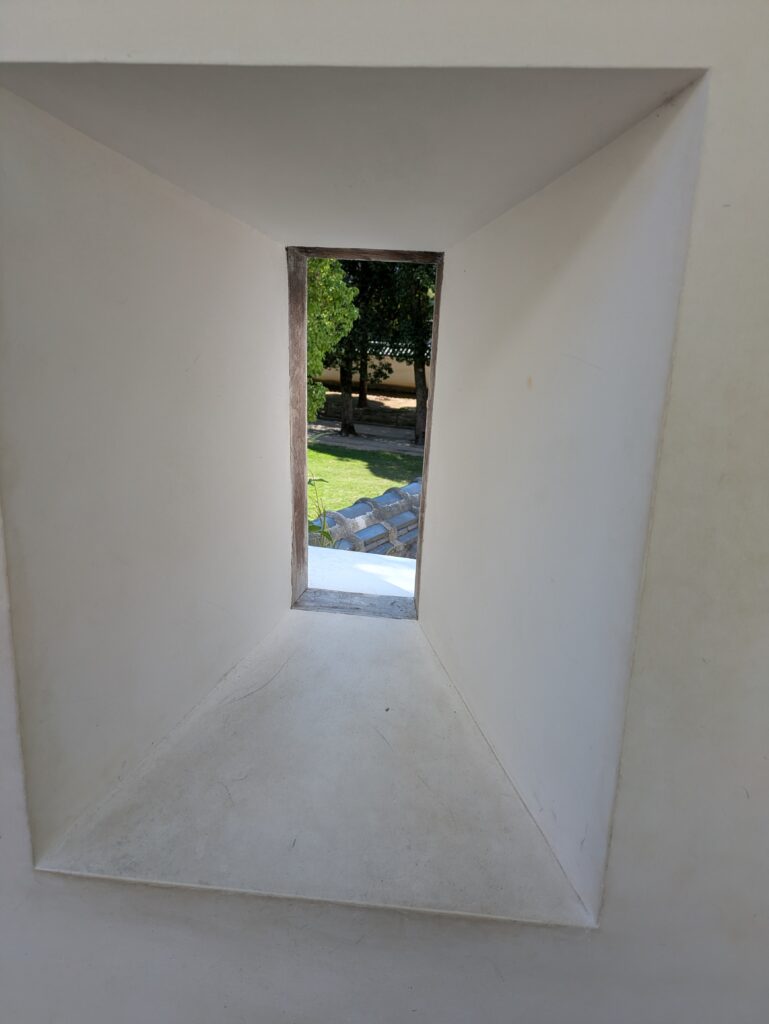
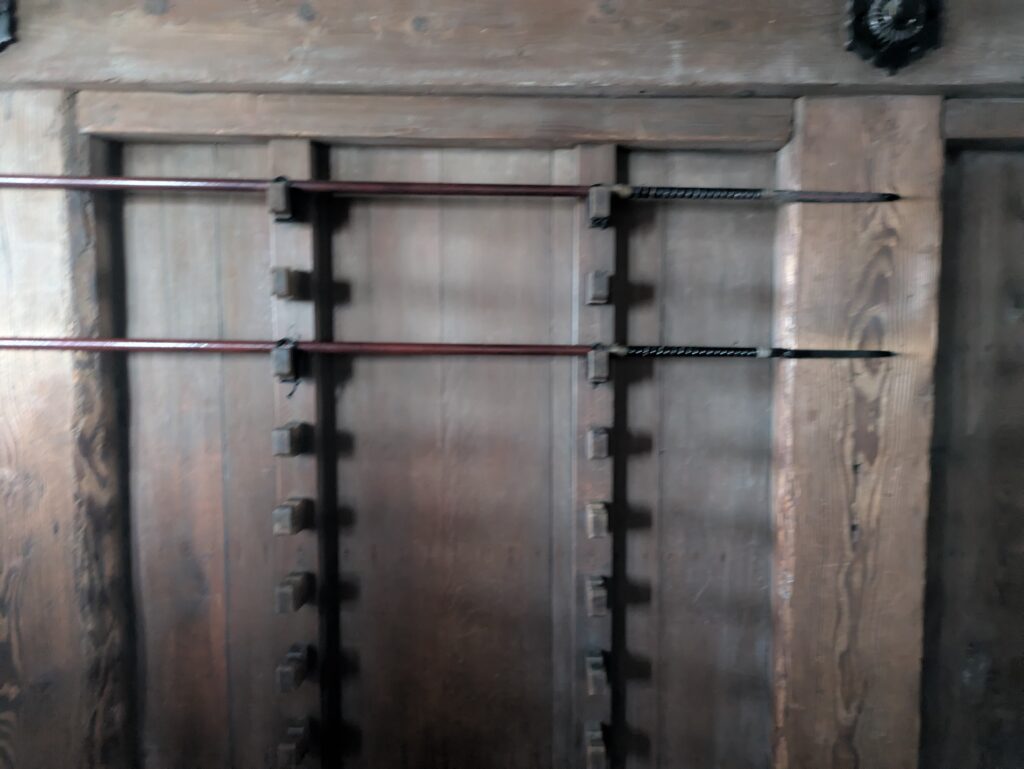
Analyzing the interior layouts from a logical perspective makes you deeply admire its ultimate functional beauty. For instance, an unlabelled sink found in the armory on the basement floor was likely a practical installation designed for washing feet or blades during a prolonged siege. Furthermore, the gunpowder storage racks on the first and second floors are positioned so high they are out of arm’s reach; this was a brilliant design to ensure gunpowder could be retrieved safely and efficiently using long poles like spears, preventing accidental ignition. The walls are also meticulously equipped with *Sama* (gun loops/loopholes) for firing muskets, along with heavily fortified *Ishi-otoshi* (stone-drop chutes).
3. Family & Kids Travel Guide
My Son’s Reaction:
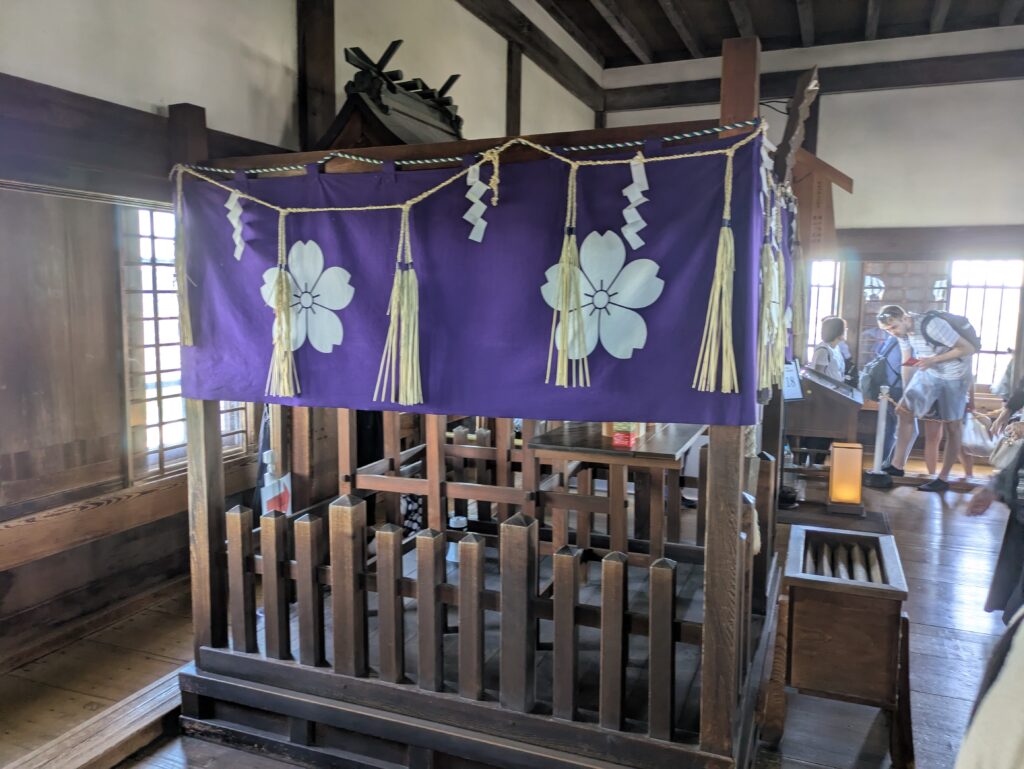
For an 8-year-old boy, a massive castle surrounded by water moats is the ultimate adventure playground! He was completely thrilled the entire time, navigating the maze-like corridors as if clearing a video game level, treating the journey into the secret-base-like Main Keep as an epic quest. After paying our respects at the small shrine located on the top floor of the Main Keep, he cheered with excitement upon spotting the magnificent *Shachihoko* (mythical tiger-headed carp roof ornaments) on the roof tiles.
To top off the adventure, we bought a collapsible plastic toy samurai sword as a souvenir. It instantly became his favorite castle-hunting sidekick, and seeing him proudly marching around with it brought a massive smile to my face.
Dad’s Tips & Warnings:
On our way there, we took a local bus since we weren’t quite sure of the distance from the station. On the way back, however, we decided to take a leisurely stroll back to the station. While reaching your destination quickly is important, taking detours to enjoy the local streetscapes with your kid is truly one of the best parts of traveling.
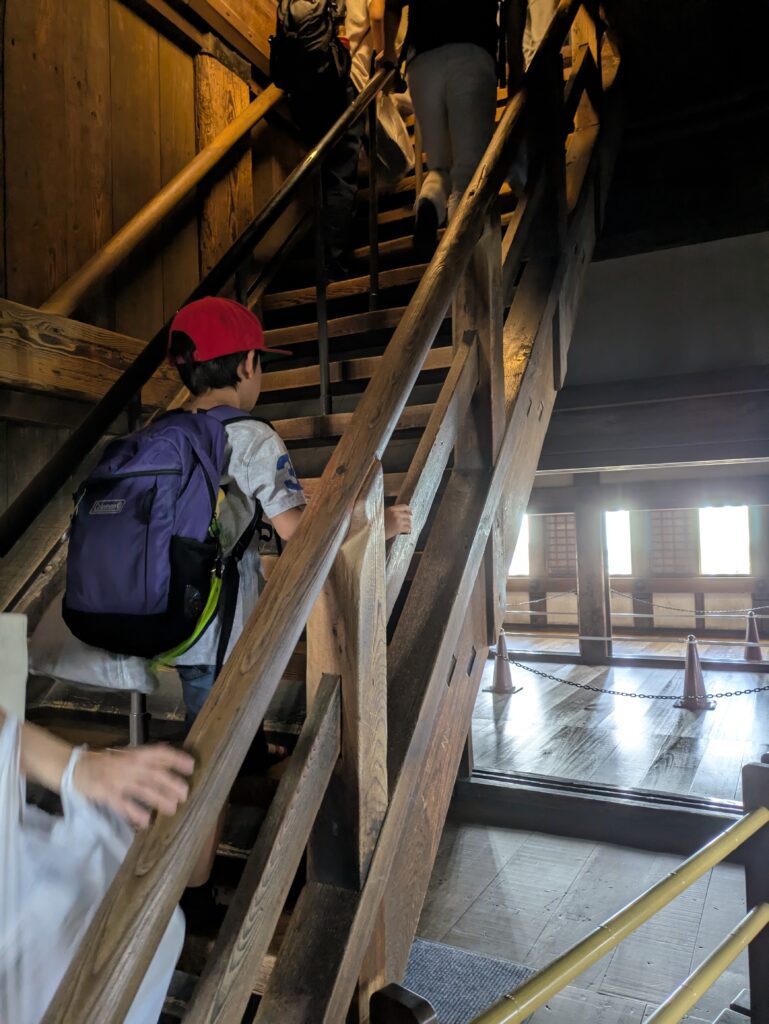
Inside the Main Keep, you will encounter a series of incredibly steep wooden stairs that might give even adults a bit of vertigo. In particular, the notorious 18-step steep staircase has an intense incline that put quite a bit of strain on my late-30s knees! Also, shoes are strictly prohibited inside the keep, meaning you have to carry your own footwear in a plastic bag. Between holding your child’s hand and gripping the handrails tightly on the steep steps, bringing a backpack to keep both hands completely free is an absolute requirement. The top floor is beautifully breezy and refreshing, so make sure to savor that fantastic sense of shared family achievement when you reach the peak!
4. Castle Delights: Lunch & Souvenirs
What We Ate / What We Bought:
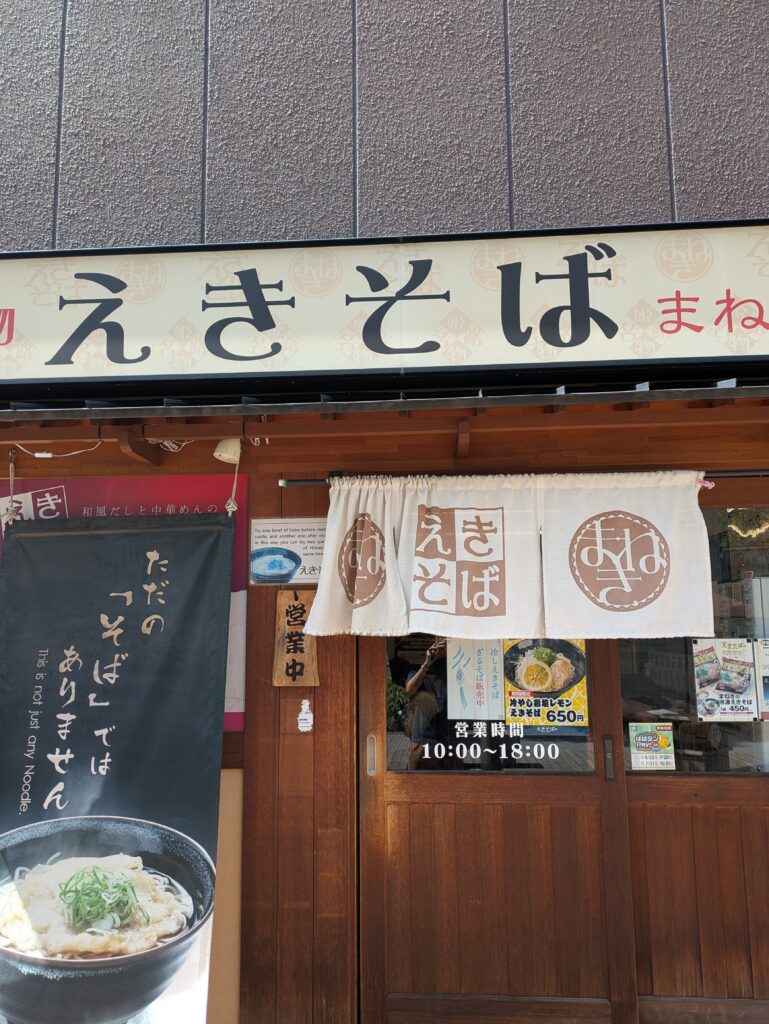
While walking back to the station from Himeji Castle, we stumbled upon “Maneki’s Eki-Soba”—the ultimate soul food of Himeji citizens—and stopped for a late lunch. Boasting a rich history that dates back to 1949, this unique dish was born out of creative trial and error during the post-war era of material shortages.
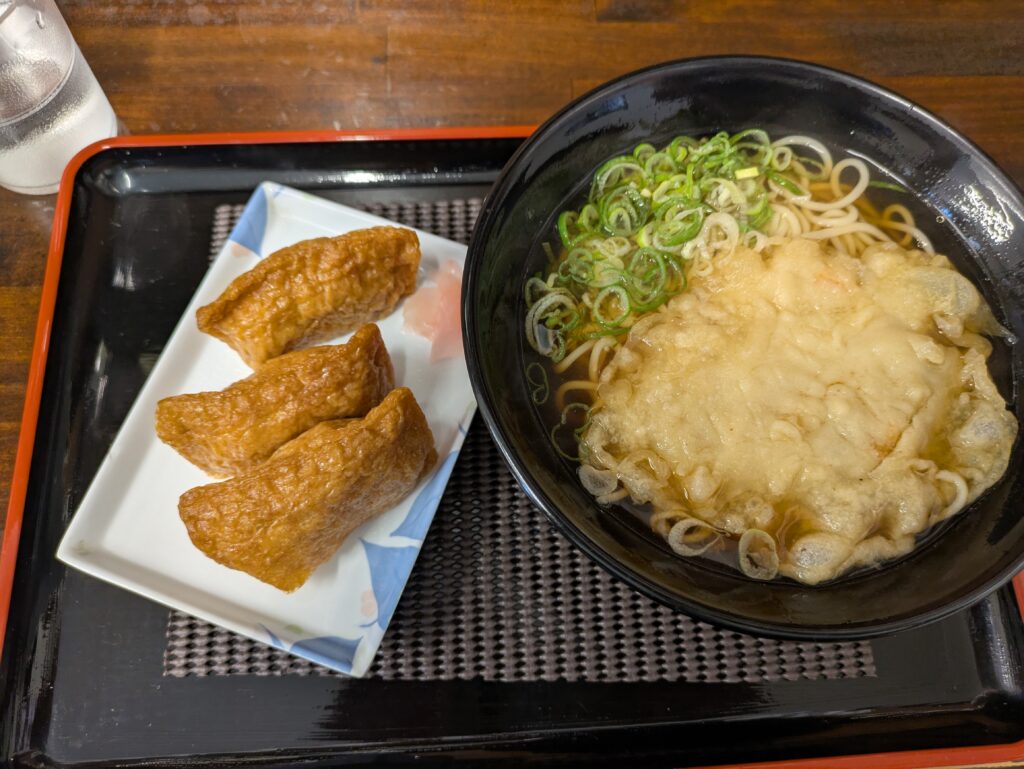
What blew me away was the fascinating texture and flavor combination of the noodles. They use yellow Chinese-style noodles (made with alkaline water), yet pair them with a light, savory, Japanese-style Kansai dashi broth! It is a wonderful hybrid that feels like a cross between ramen and udon—something I’ve never experienced anywhere else. It hits the spot perfectly, offering an incredibly smooth texture. We ordered the warm “Tempura Eki-Soba,” where the broth beautifully soaks into the tempura batter, paired with a juicy, filling *Inari-zushi* (sweet fried tofu rice balls). It was the perfect comforting meal to recharge our tired muscles after all that walking. The area around Himeji Station is highly developed, offering plenty of family-friendly dining options, which is another huge plus.
5. Recommended Nearby Spots
Perfect Spot for a Combined Visit:
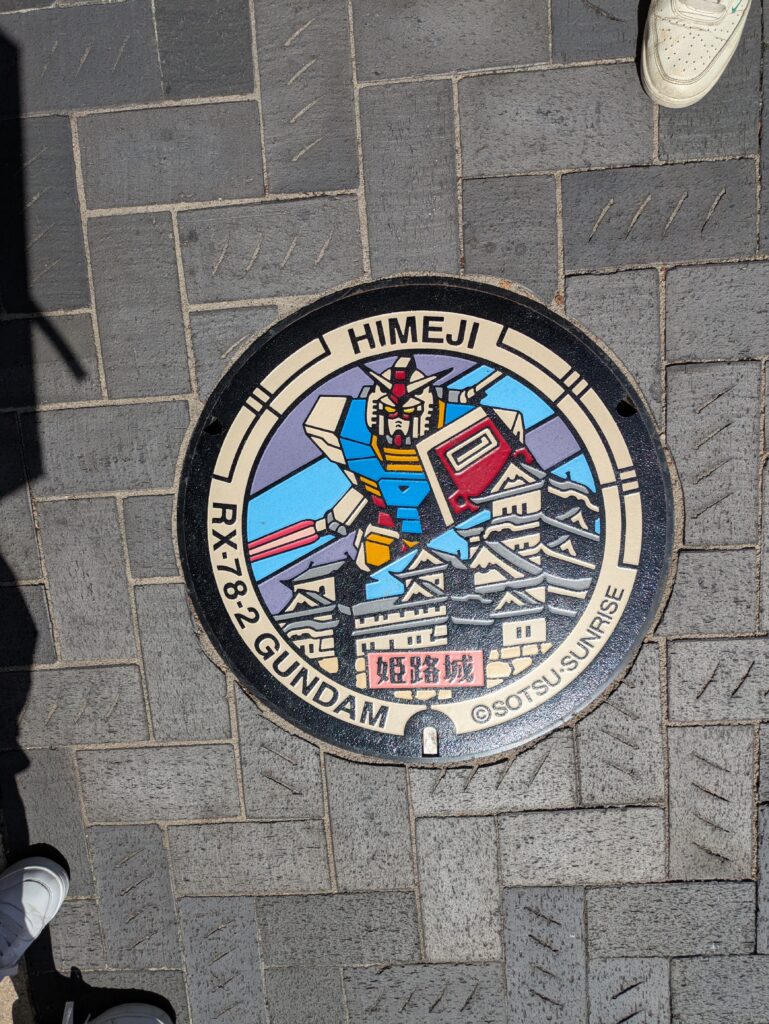
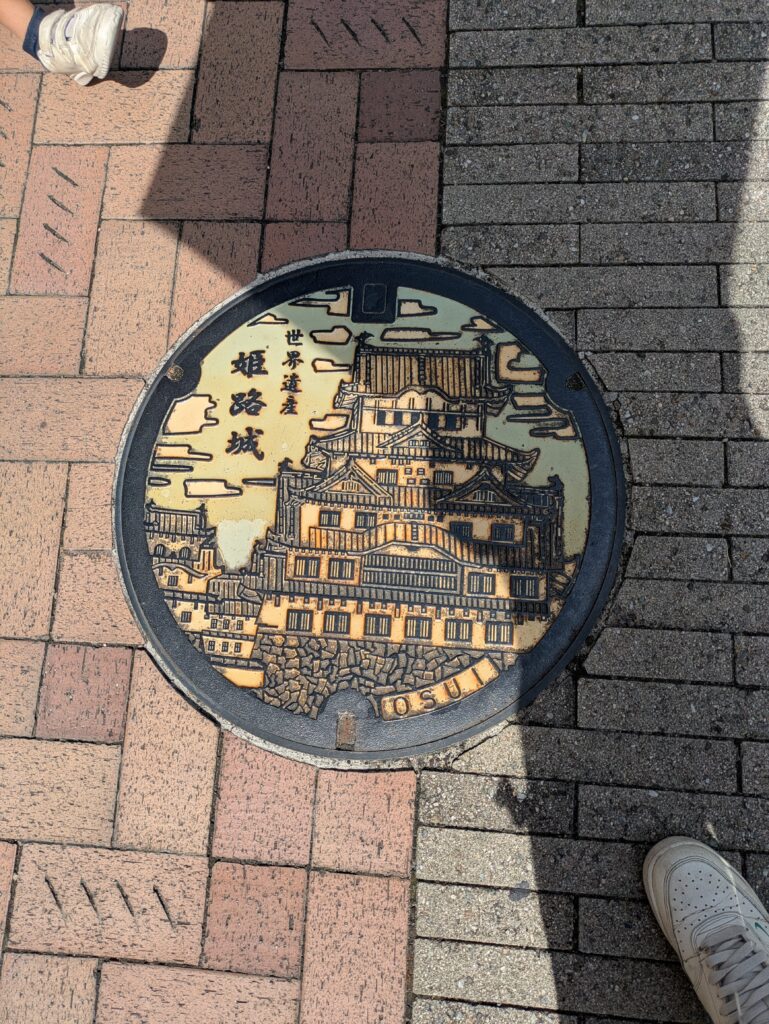
During our walk back to the station, we spotted a special regional “Gundam Manhole” featuring the iconic RX-78-2 Gundam on the sidewalk! After immersing ourselves in samurai history, turning the walk into a mini treasure hunt to spot street art right under our feet made for an amazing family memory.
Also, playing the local version of “Pokémon GO” with your child along the way is highly recommended. In our case, we gently placed a Stantler, which we had caught the previous day around the historic Honno-ji Temple in Kyoto, into one of the Himeji Castle Gyms. Leaving a shared gaming footprint on the stage of such a monumental castle added a wonderful new layer of memory to our parent-child journey, leaving us thoroughly satisfied with the trip.


Comments