
We visited the special exhibition tied to NHK’s 2026 historical drama “Toyotomi Kyodai!” (Brothers in Arms) at the Edo-Tokyo Museum in Ryogoku, Tokyo. In short: buy your ticket online in advance, and rent the audio guide. The museum reopened recently after renovation and is still crowded. The audio guide is narrated by Taiga Nakano, who plays Toyotomi Hidenaga in the drama, and uses the drama’s music. It was easy to enjoy with our son.
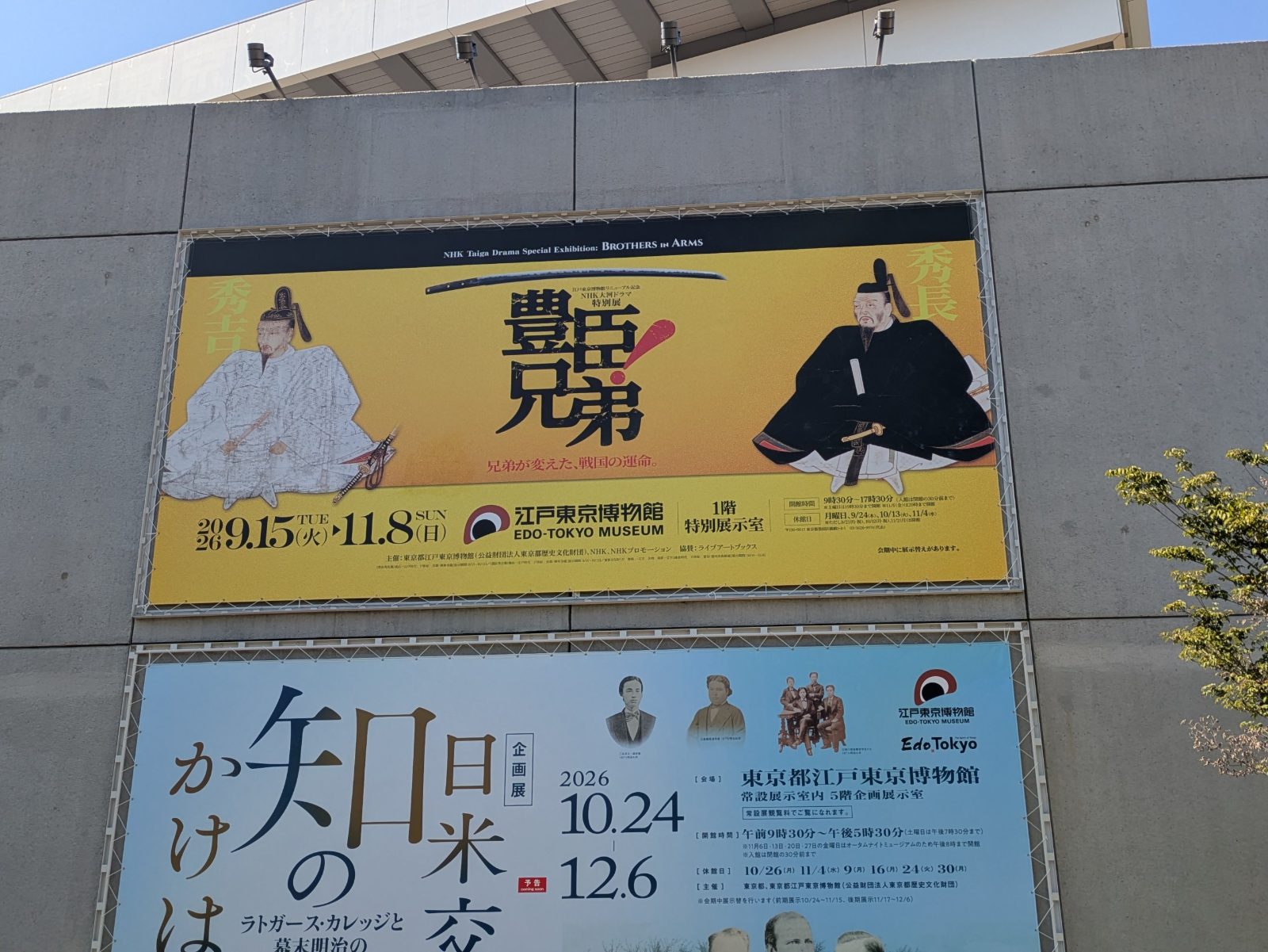
1. Key Information Before You Visit
| Exhibition | NHK Taiga Drama Special Exhibition “Toyotomi Kyodai!” (Brothers in Arms), commemorating the reopening of the Edo-Tokyo Museum |
| Visit date | October 18, 2026 (Sun) – late-period display |
| Dates | September 15 (Tue) – November 8 (Sun), 2026 Early period: until October 12 / Late period: from October 14 |
| Venue | Edo-Tokyo Museum, 1F Special Exhibition Gallery |
| Hours | 9:30–17:30 (until 19:30 on Saturdays and 20:00 on Friday, November 6). Last entry 30 minutes before closing |
| Closed | Mondays (open on national holidays), October 13 (Tue), November 4 (Wed), etc. |
| Admission | Adults ¥2,100 (advance ¥1,900); free for high school students and younger. Combo tickets with the permanent exhibition are also available |
| Tickets | Buying in advance online via Webket (Edo-Tokyo Museum online tickets) is recommended |
| Audio guide | Download version ¥800 / rental device ¥700 |
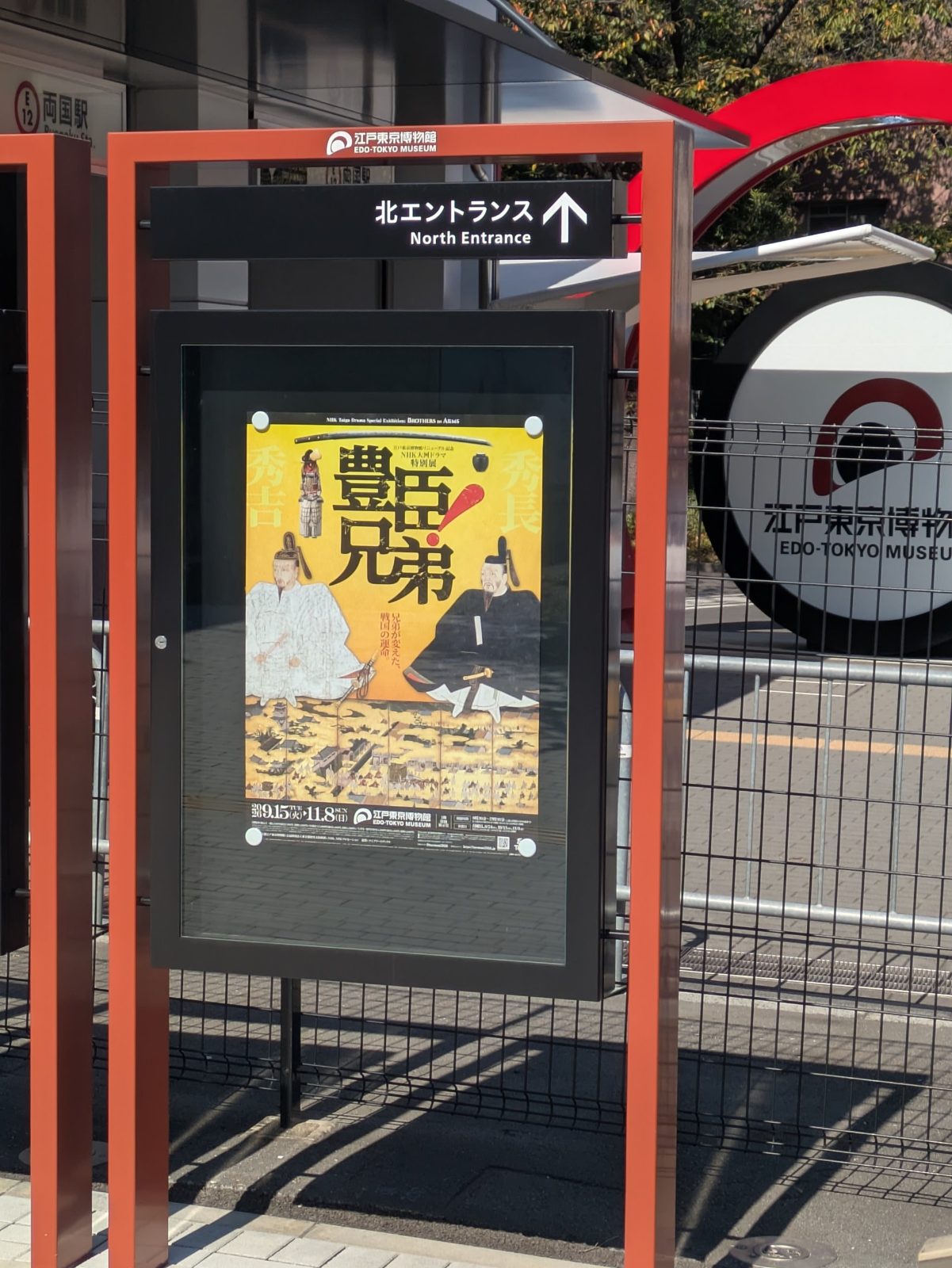
| Access | A short walk from Ryogoku Station (Toei Oedo Line) to the North Entrance; also walkable from JR Ryogoku Station |
*Prices and hours are based on official information as of October 2026. Please check the official website for the latest details.
2. On-site Report: Highlights and Dad’s Take
[Tip] One audio device + two pairs of earphones is the smart choice
There are two types of audio guide: a version you download to your smartphone (¥800) and a rental device (¥700). We rented two devices, but it turned out each device has two earphone jacks. With two pairs of earphones, two people can share one device and save ¥700. If you are visiting as a pair, bring your own earphones.
The narration is by Taiga Nakano, who plays Hidenaga in the drama, and the drama’s soundtrack is used throughout. That alone got our son excited. (We used the Japanese-language guide; please check at the counter whether other languages are offered.)
[Exhibit] Portraits of Hideyoshi and Hidenaga, and the origin of the name “Hidenaga”
The first things you see are the portraits of Hideyoshi and Hidenaga. According to the audio guide, in those days only people of high rank were allowed to wear white robes.
Something we learned from the guide: the name “Hidenaga” is said to combine “naga” from their lord Oda Nobunaga and “hide” from his older brother Hideyoshi. The name itself seems to capture his role of supporting both his brother and his lord.
[Exhibit] Unreadable but fascinating: dozens of letters
Letters by Hideyoshi, Hidenaga and the warlords around them are a core part of the exhibition. Honestly, the cursive script is almost impossible to read. Still, I could just about make out numbers and dates, and imagining what happened on that day was fun.
[With kids] A “spot the difference” game with the Hojo portraits
Portraits of Hojo Ujimasa and his son Ujinao of Odawara hang side by side. Their faces are almost identical; only the poses differ. My son and I joked that it could be a spot-the-difference puzzle. If you visit with children, give it a try.
[Insight] Matching roof tiles from Osaka and Koriyama castles show the brothers’ bond
The display that made me feel the brothers’ bond most was the roof tiles. Tiles excavated from Osaka Castle, Hideyoshi’s castle, and from Yamato-Koriyama Castle, Hidenaga’s castle, have nearly identical patterns. They may have shared the same molds or tools, which suggests the brothers worked together even in castle building.
Here is our report from visiting Osaka Castle. Today’s Osaka Castle was rebuilt by the Tokugawa on top of the buried Toyotomi castle. Reading it after seeing these tiles gives it a new perspective.
→ [100 Fine Castles of Japan – No.054] Osaka Castle
[Exhibit] The famous sword “Nansen Ichimonji” is surprisingly short
A highlight of the late period (from October 14) is the Important Cultural Property sword “Mumei Ichimonji (meibutsu Nansen Ichimonji)”. It was owned by Toyotomi Hideyoshi, Hideyori and Tokugawa Ieyasu, and is said to have been given by Hideyori to Ieyasu at their meeting at Nijo Castle. My honest first impression was that it is shorter than an ordinary sword. Knowing it witnessed power shifting from the Toyotomi to the Tokugawa changes how you see it.
[Exhibit] Hidenaga’s last wish: “I want to live longer”
A document said to have been written by Hidenaga shortly before his death is also on display. Written in black ink on red paper, it expresses his wish to keep living. As the final words of a man who supported his brother all his life, it was moving.
[Insight] If Hidenaga had lived longer, would there have been a Tokugawa era?
Since this exhibition is linked to the drama, you have to allow for some bias in Hidenaga’s favor. Even so, it was striking that no document portrays him badly. He stood between his brother and the other lords and genuinely considered people, with a remarkable sense of balance. He was a rare type of warlord for the Sengoku period.
Hidenaga died in 1591, before Hideyoshi. Had he lived longer, he might have restrained Hideyoshi’s reckless final years, and the Tokugawa might never have taken power. That is what I found myself thinking after the visit.
3. Tips for Families with Kids
Our son’s reaction: He lit up every time the drama’s music played in the audio guide. Back home, when we watched that evening’s episode of “Toyotomi Kyodai!”, a segment introducing this exhibition aired at the end, and he shouted “We went there!” Connecting the drama and the exhibition really deepens kids’ interest in history.
Dad’s tips: Admission is free for high school students and younger, so it is an easy exhibition to visit with kids. There are many written documents such as letters, so the audio guide makes a big difference for children. Setting a small mission, like the Hojo spot-the-difference game, also helps.
4. Souvenirs
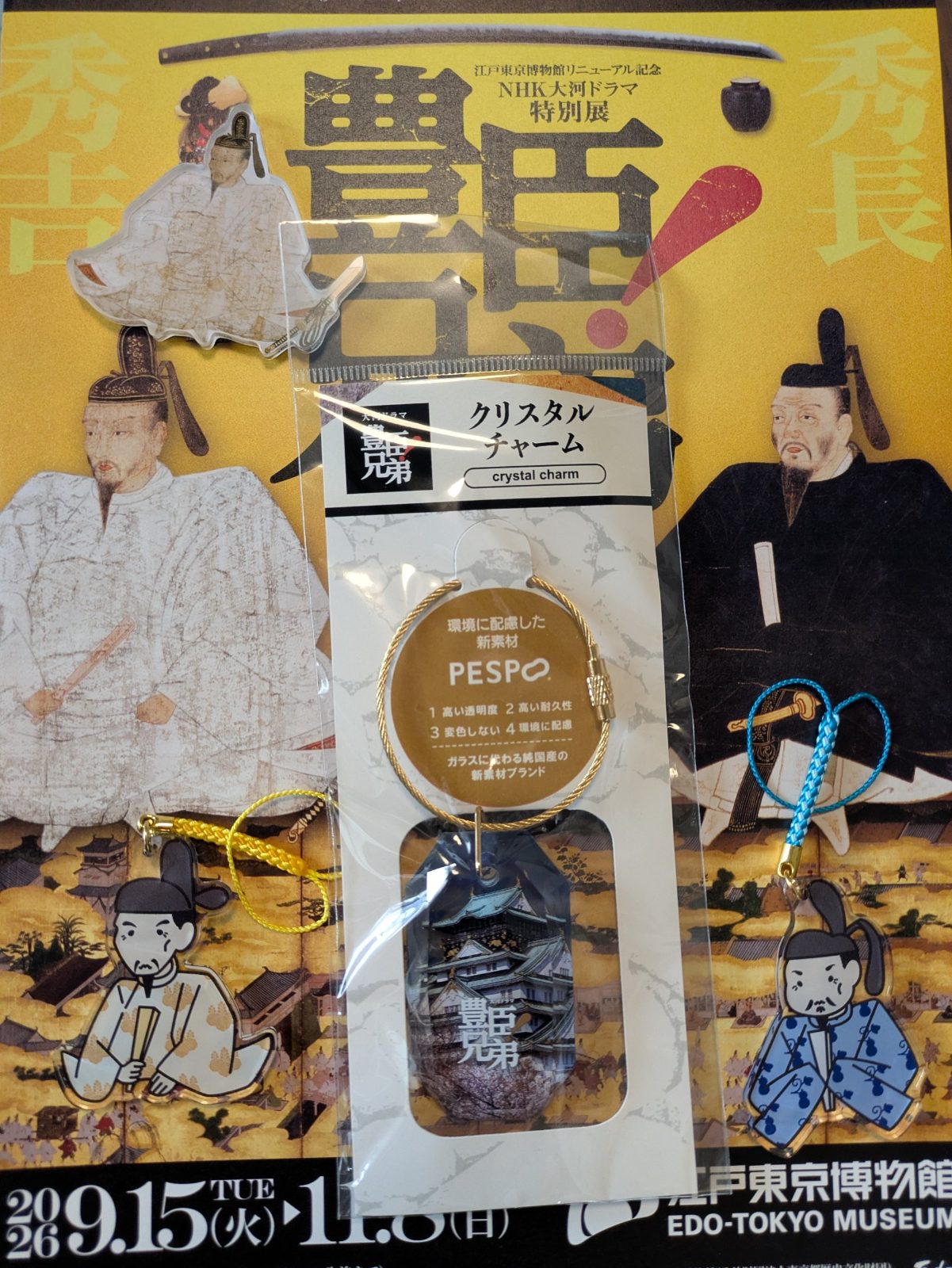
At the shop we bought a magnet, a crystal charm keychain with an Osaka Castle design, and cute exhibition-only straps of Hideyoshi and Hidenaga. The straps come with a yellow cord for Hideyoshi and a light-blue cord for Hidenaga, so you will want the brother set.
5. Nearby: Statue of Tokugawa Ieyasu
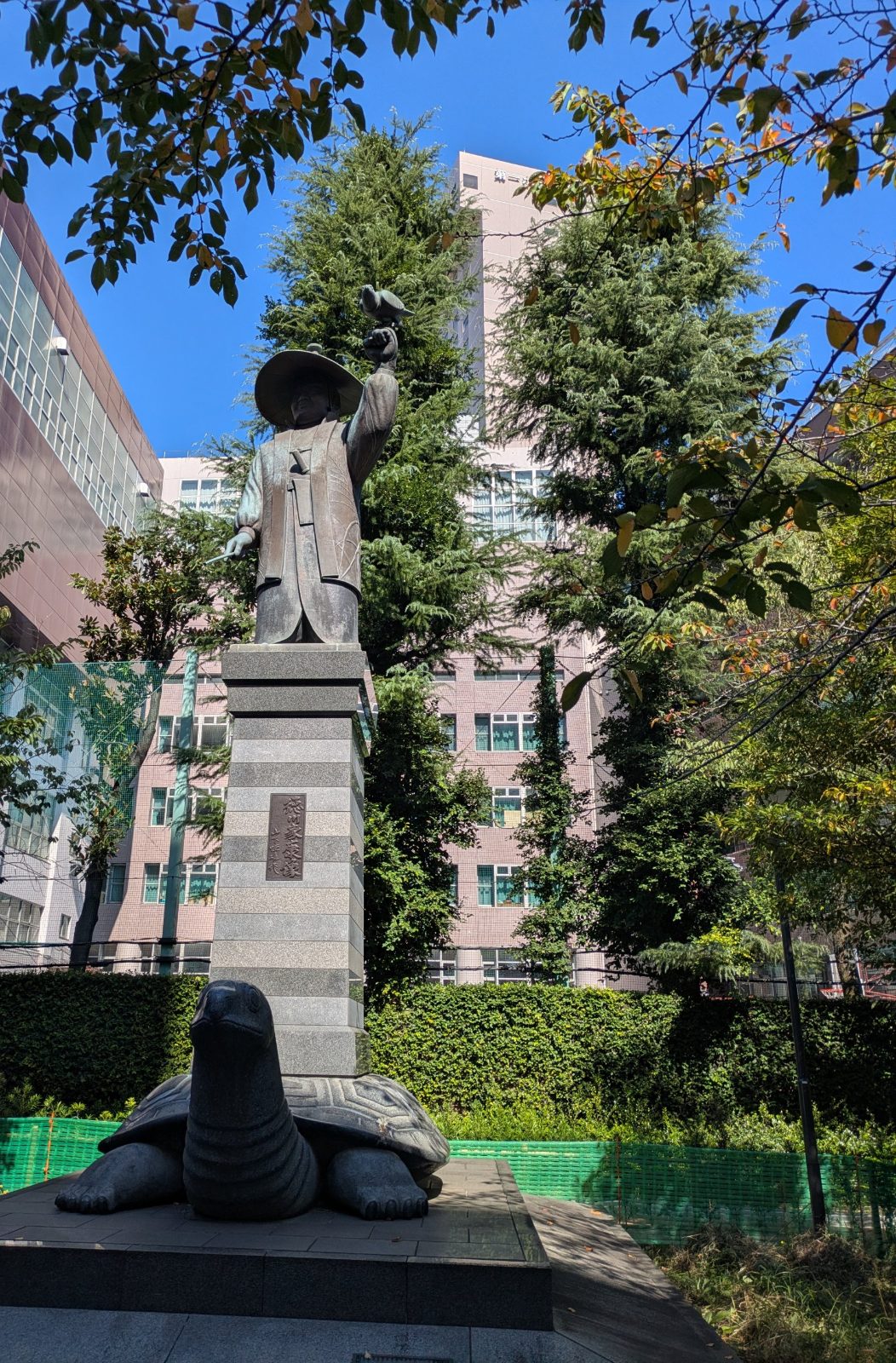
Outside the Edo-Tokyo Museum building stands a bronze statue of Tokugawa Ieyasu holding a hawk, on a turtle-shaped pedestal. Looking up at Ieyasu after the Toyotomi exhibition, you can feel how power passed from the Toyotomi to the Tokugawa. Stop by on your way out.
6. FAQ
Q. Should I buy tickets for the Toyotomi Brothers exhibition in advance?
A. Yes. The museum reopened recently and is crowded. Tickets are sold online via Webket.
Q. How much is the audio guide, and what types are there?
A. The download version is ¥800 and the rental device is ¥700. Each device has two earphone jacks, so two people can share one if they bring their own earphones.
Q. How much is admission for children?
A. Free for high school students and younger.
Q. When can I see the Nansen Ichimonji sword?
A. It is on display in the late period, October 14 – November 8, 2026.
Q. Who was Toyotomi Hidenaga?
A. He was Toyotomi Hideyoshi’s younger brother, three years his junior, and supported Hideyoshi’s unification of Japan. Based at Yamato-Koriyama Castle, he governed Yamato, Kii and other provinces, and died in 1591, before his brother.


Comments