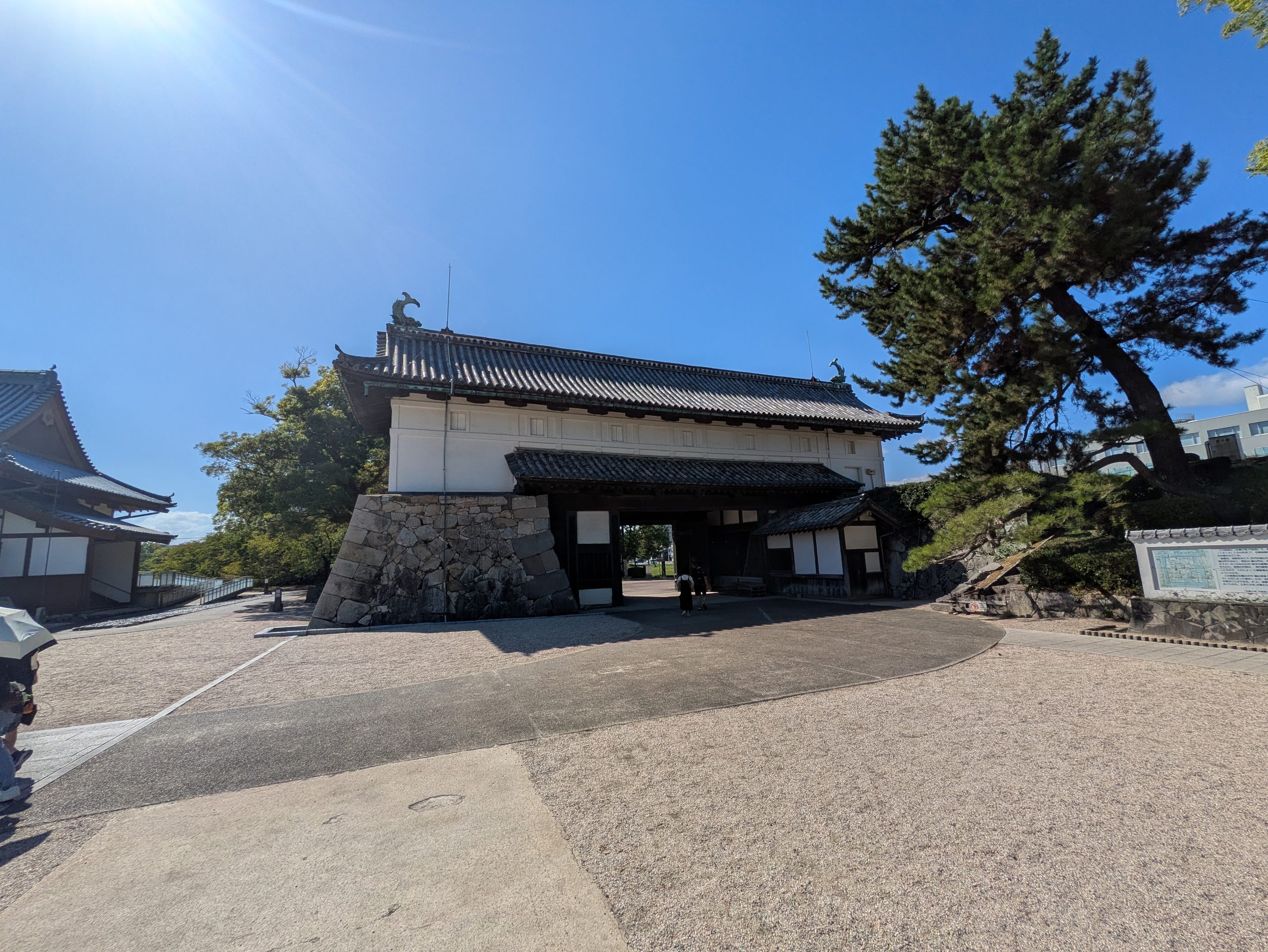
We visited Saga Castle (Saga City, Saga) with our 8-year-old son during Japan’s “Silver Week” holidays in September 2026. The “Saga Castle History Museum,” a wooden reconstruction of the Honmaru Palace, has an impressively long tatami corridor. Admission is free (donations welcome), volunteer guides are available, and it’s a castle families can enjoy at a relaxed pace. The short answer: plan on about 1 hour 45 minutes (taking our time). The 100 Fine Castles of Japan stamp is at the History Museum reception desk.
Key Points
- Time needed: We stayed about 1 hour 45 minutes (unhurried, with a guide). About 1 hour for a quick visit
- Stamp: The 100 Fine Castles of Japan stamp is at the Saga Castle History Museum reception
- Admission: Free (donations welcome; as of September 2026)
- Parking: Free parking available. If the lot right in front is full, there’s another lot across the road
- With kids: Elementary school children and younger can take a “history quiz” at reception and get a prize for answering
1. Basic Information Before You Go
| Castle (number) | Saga Castle (100 Fine Castles of Japan No.89) |
|---|---|
| Other names / Address | Shizumi Castle (“Sinking Castle”), Kikko Castle, etc. / Jonai, Saga City, Saga |
| Construction / Rebuilding | Built on the Ryuzoji clan’s Muranaka Castle and developed into an Edo-period castle by Nabeshima Naoshige and Katsushige |
| Main remains | Shachi Gate and attached turret (Important Cultural Property), keep foundation, stone walls, earthen walls, water moats |
| Stamp location | Saga Castle History Museum reception |
| Parking | Free parking available |
| Time needed | Our actual stay: about 1 hr 45 min (unhurried, with a guide) |
| Admission / Hours | Free admission (donations welcome). 9:30–18:00 (gates open 7:30–21:00), closed Dec 29–Jan 1 (as of September 2026) |
2. How Long Does Saga Castle Take?
We arrived a little after 2 p.m. and toured the History Museum and the Shachi Gate while listening to a volunteer guide, spending about 1 hour 45 minutes at a relaxed pace.
- Quick visit (about 1 hour): Shachi Gate → the History Museum’s tatami corridor and exhibits → stamp at reception
- Unhurried (about 1 hr 45 min): The History Museum, the Shachi Gate and around the moats, with a guide’s explanation
3. Saga Castle Parking & Access
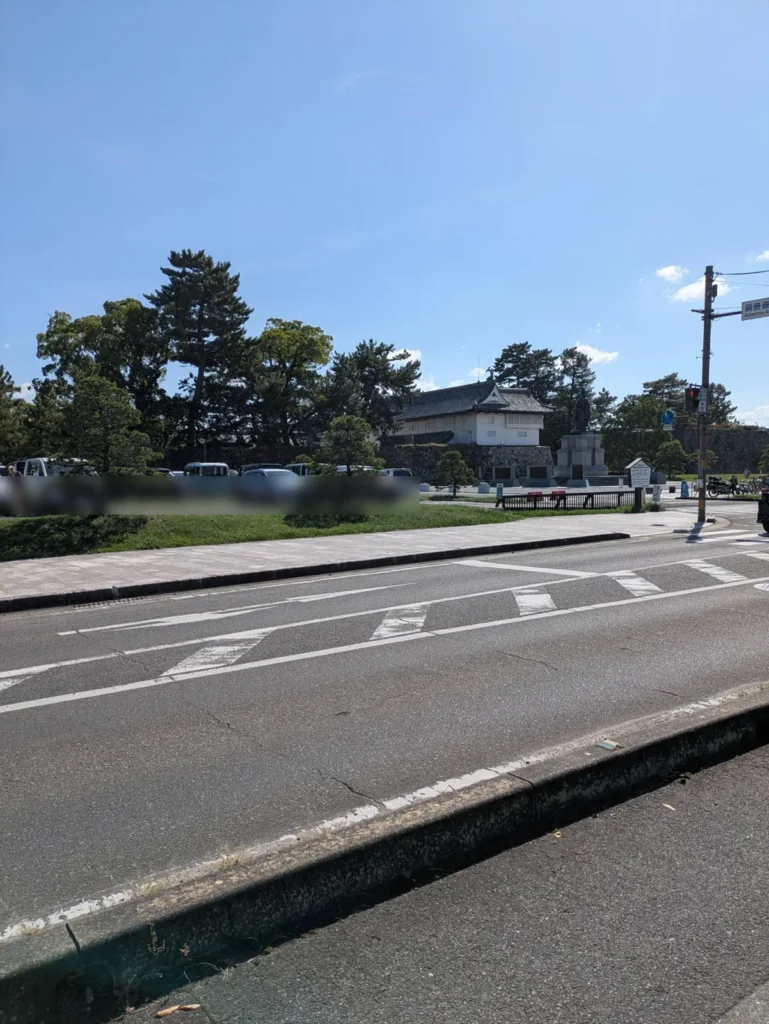
There’s free parking near the History Museum. Even if the lot right in front is too crowded to park, there’s another lot across the road, so don’t give up — check that one too.
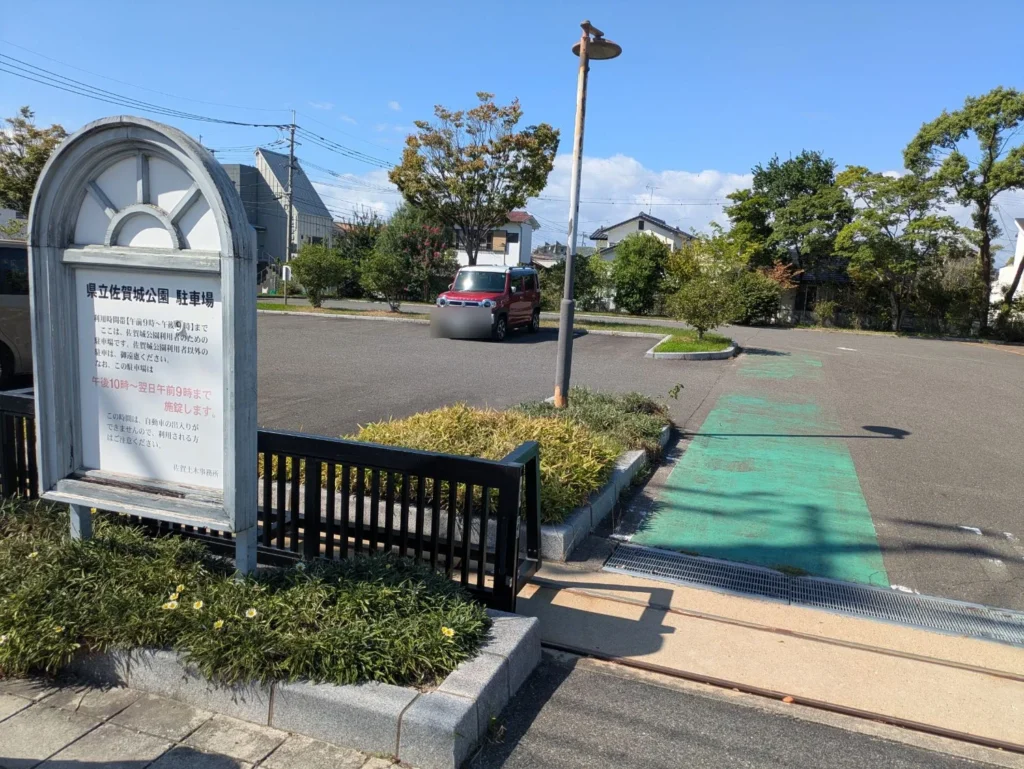
The lot across the road is the “Saga Prefectural Saga Castle Park Parking Lot.” It’s for Saga Castle Park visitors, and it’s locked at night (22:00 to 9:00 the next morning), so you can’t drive in or out then — be careful.
We drove from Yoshinogari, had lunch at the Saga Prefectural Government Building, then headed to Saga Castle. It’s about 30–40 minutes by car from Yoshinogari to central Saga.
4. Saga Castle History Museum Admission
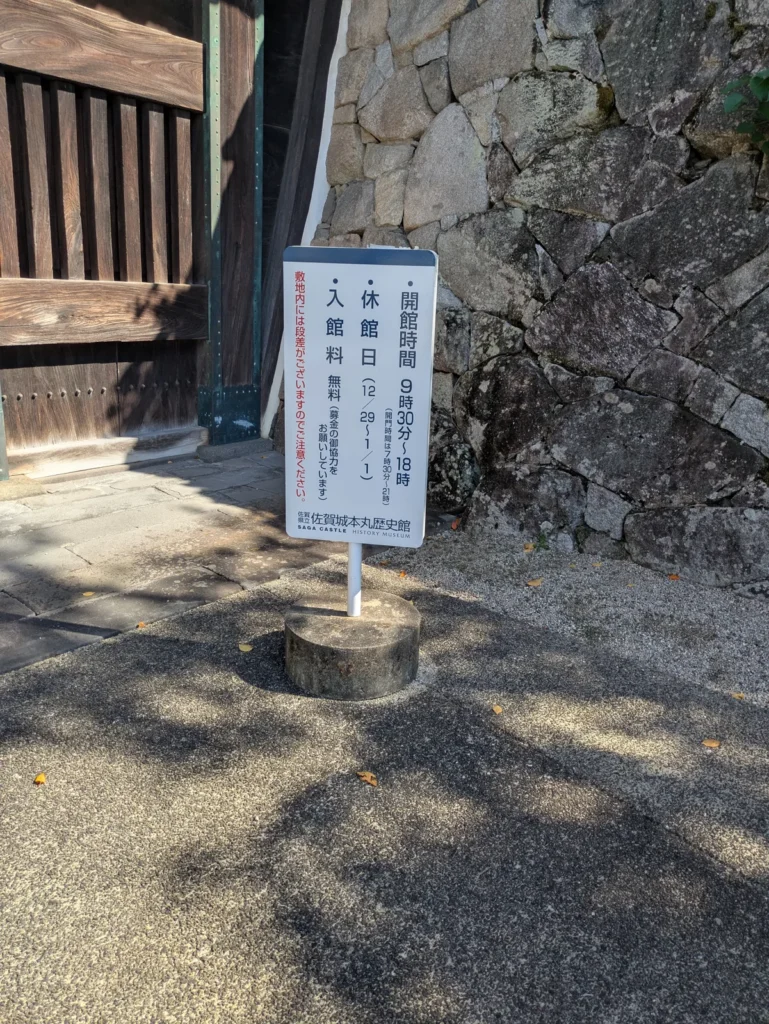
Admission is free, with a request for donations (as of September 2026). It’s open 9:30–18:00 (the gates are open 7:30–21:00) — later than most castles, which makes it easy to fit into your itinerary. Closed December 29 to January 1. There are steps on the grounds, so watch your footing with small children or strollers.
5. Highlights & On-site Report (Structural Notes)
One of Japan’s Largest Wooden Reconstructions: The Honmaru Palace and Its 50 m Tatami Corridor
The Saga Castle History Museum is a faithful wooden reconstruction of part of the Honmaru Palace. The biggest highlight is the tatami corridor running straight for about 50 meters. The tatami mats are the large “Kyoma” size of the time, and the scale is overwhelming.
The “Shachi Gate,” Still Bearing Bullet Holes from the Saga Rebellion
The Shachi Gate, an Important Cultural Property, still bears bullet holes said to be from the Saga Rebellion of 1874. Seeing an event from the history books carved right into the gate in front of you is quite powerful.
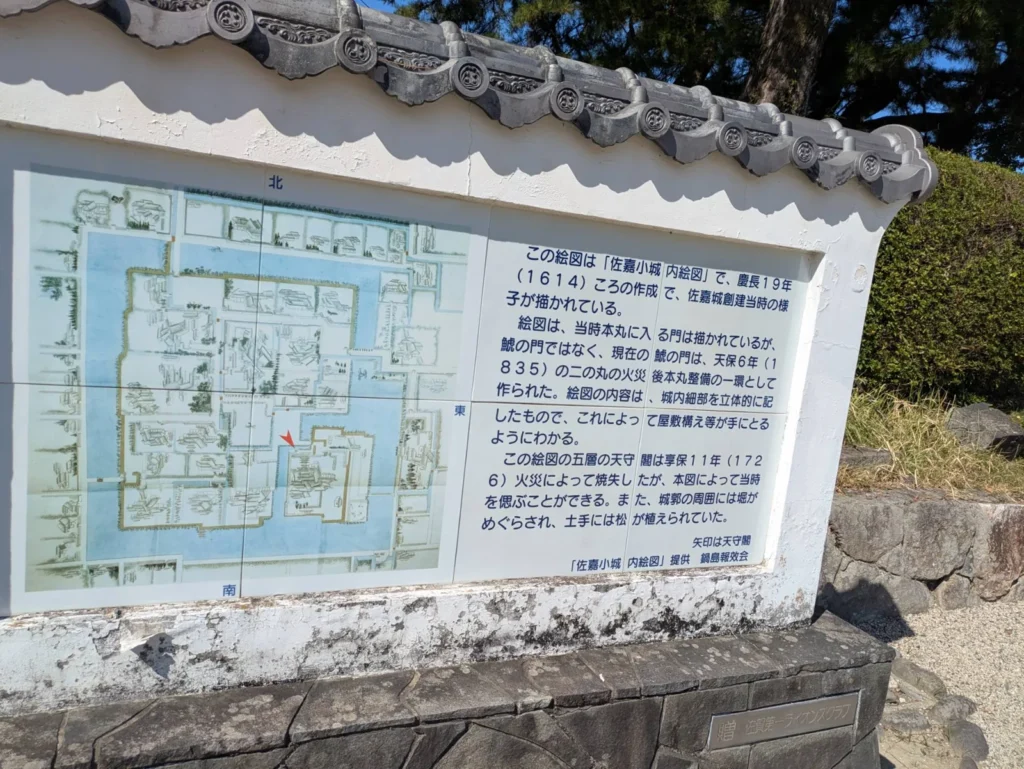
An information board on the grounds introduces the “Saga Kojo Uchi Ezu,” a map drawn around 1614. When it was first built, Saga Castle had a five-story keep, which burned down in a fire in 1726. In fact, today’s Shachi Gate isn’t original either — it was built when the Honmaru was redeveloped after a fire in the Ninomaru in 1835. Comparing the map with today’s ruins really shows the differences.
Dad’s Notes: “Shizumi Castle,” Defended by Its Moats
Saga Castle is a flatland castle whose main enclosure is surrounded by wide water moats. Its nickname “Shizumi Castle” (Sinking Castle) is said to come from a system for flooding the surroundings in an emergency to keep enemies away. The northern moat is said to have been dug with help from Kuroda Kanbei after the Battle of Sekigahara, and is called the “Chikuzen Moat.” It connects to the Kuroda family of Fukuoka Castle, which we had visited the day before — the fun of touring Kyushu’s castles in a row.
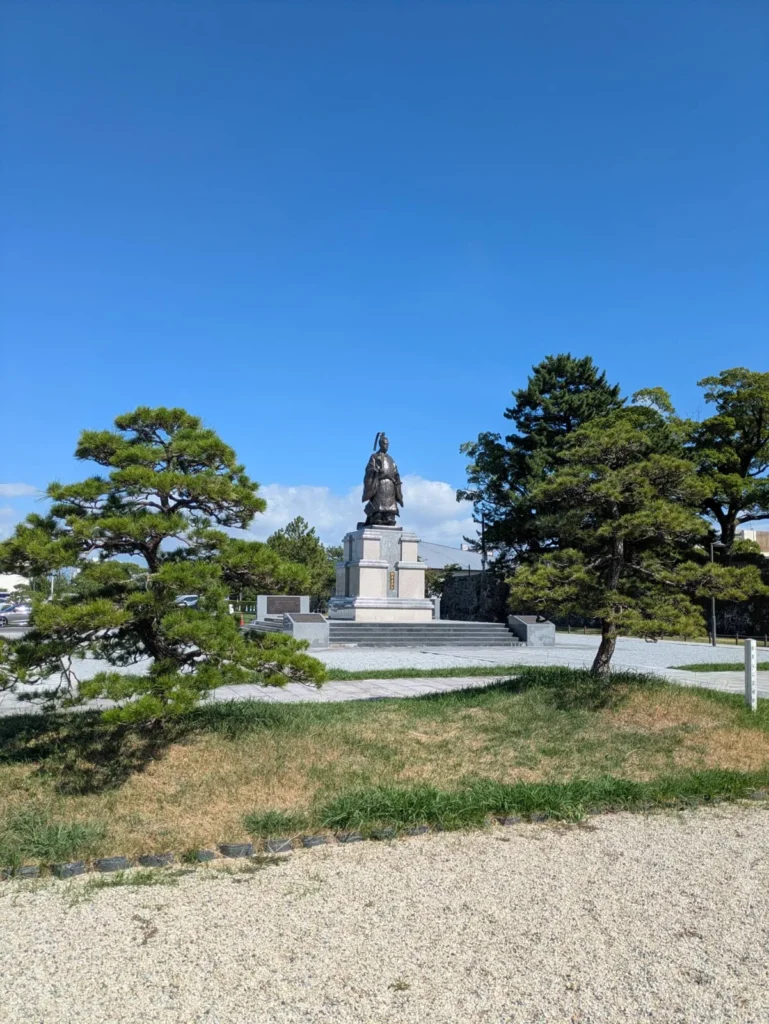
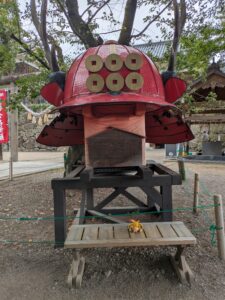
There’s much more to see, too: the Nabeshima family crest “Gyoyo” on roof tiles and metal fittings, and a statue of Nabeshima Naomasa, the wise lord who pushed forward the building of reverberatory furnaces and Armstrong guns at the end of the Edo period.
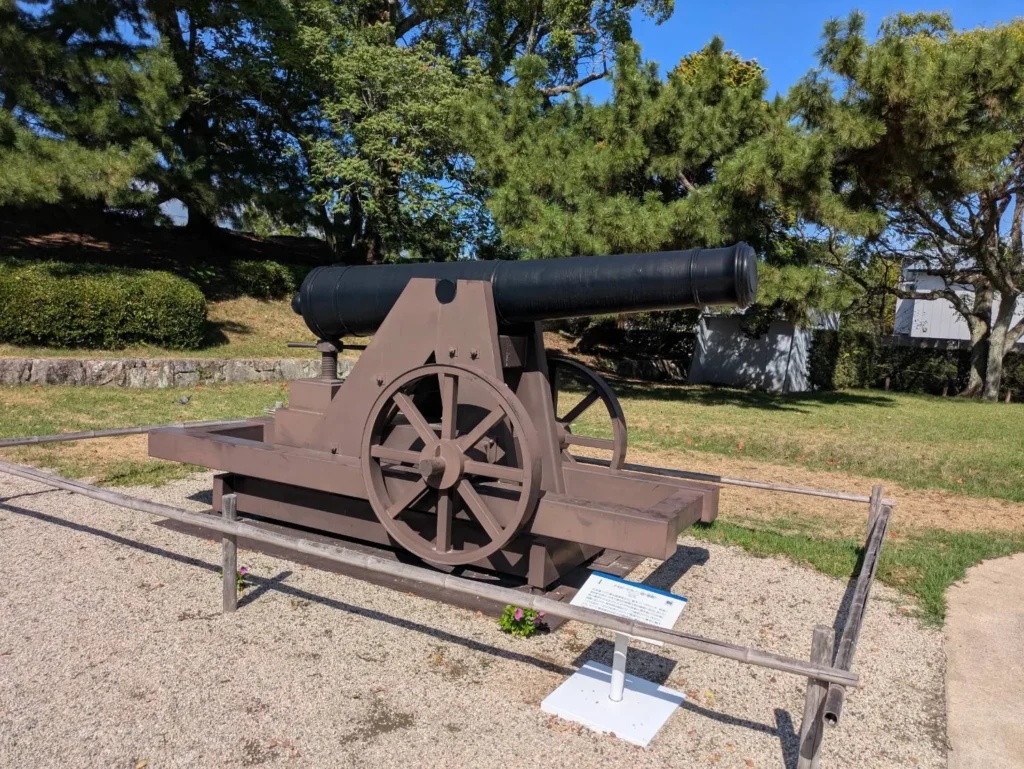
True to the Saga domain, which took on the challenge of making iron cannons at the end of the Edo period, a reconstructed cannon is also on display on the grounds.
Our Son’s (8) Reaction: “The Bear of Hizen!” Delights the Guide
When the volunteer guide talked about the Ryuzoji clan, our son immediately chimed in: “The Bear of Hizen!” (the nickname of warlord Ryuzoji Takanobu). The guide was thrilled — “Wow, amazing!” — and the exchange felt as warm as one between a grandfather and grandson. Asking a local guide makes the explanations much deeper and the visit far more satisfying.
Children Can Take a “History Quiz”
At reception, elementary school children and younger can get a history quiz sheet and receive a prize for answering. Our son gave it a try too. We recommend getting the sheet at reception before you start exploring.
Stamp Location
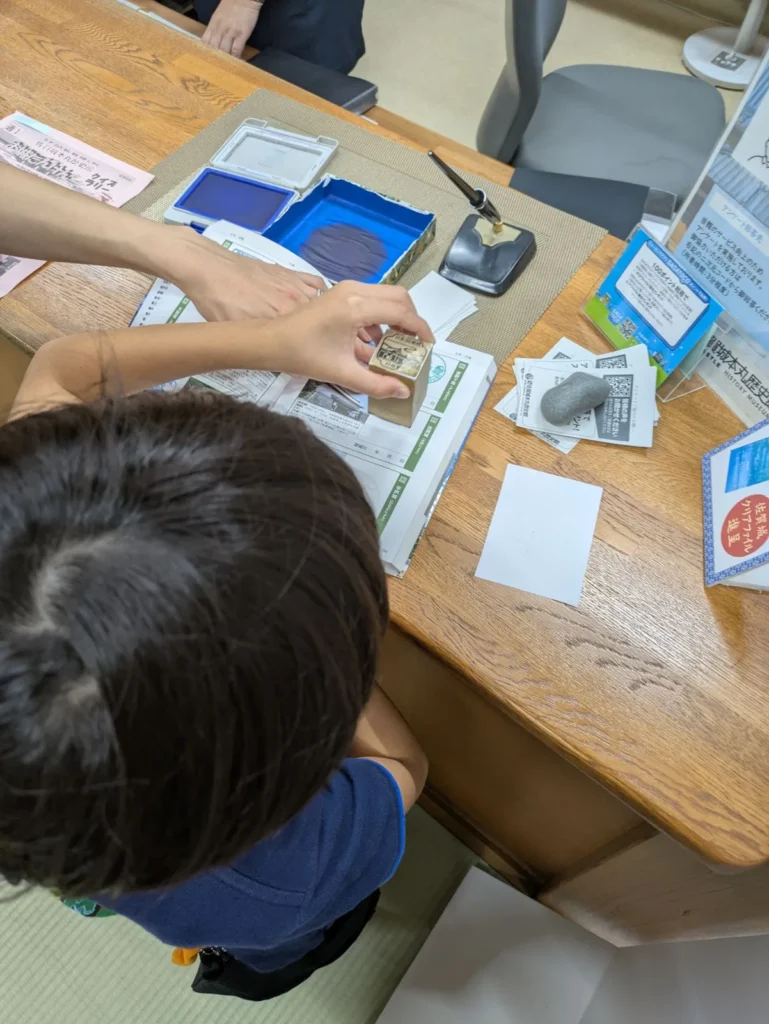
The 100 Fine Castles of Japan stamp is at the Saga Castle History Museum reception.
6. Lunch & Tips for Families
Lunch: Sicilian Rice at the 13th-Floor Observation Hall of the Saga Prefectural Government Building
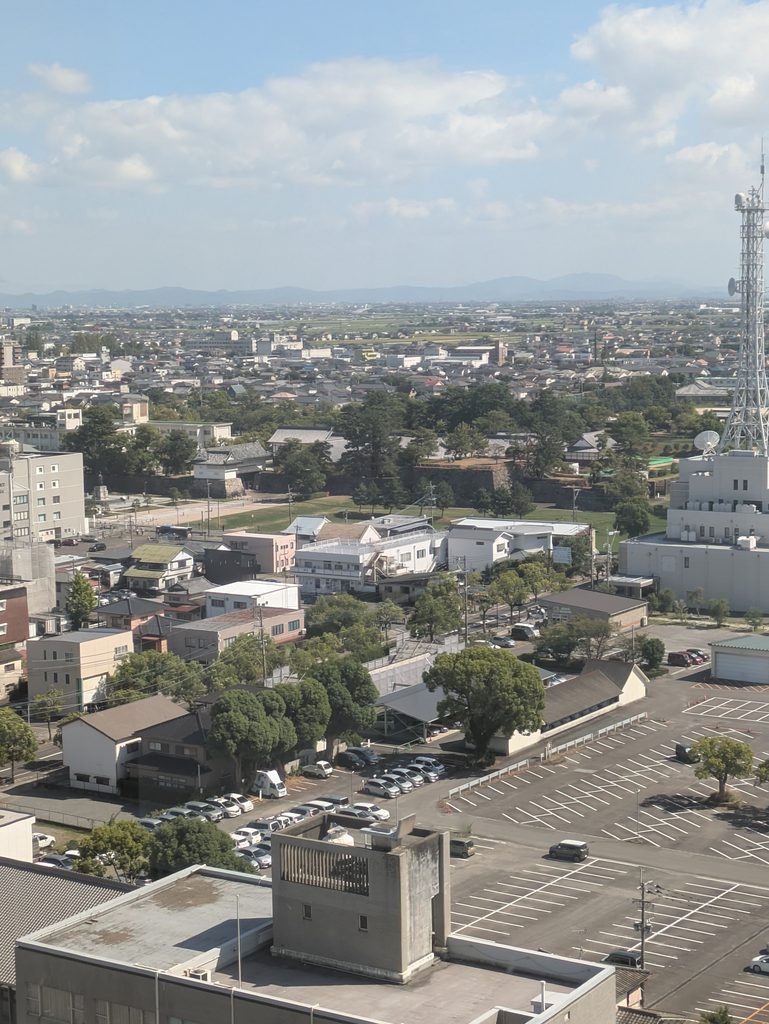
Before Saga Castle, we had lunch at the 13th-floor observation hall of the Saga Prefectural Government Building. You can look out over the Saga Plain, and the shape of Saga Castle’s moats and grounds — where we were heading next — is clear from above.
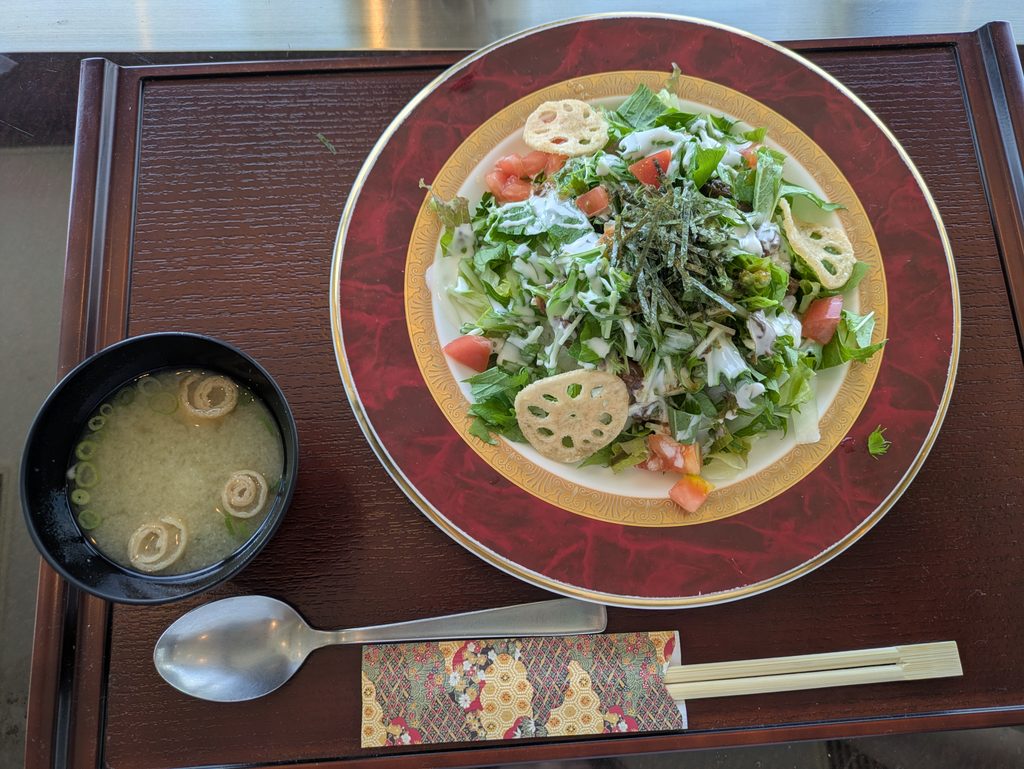
We enjoyed Saga’s local specialty “Sicilian Rice” — sweet-and-savory meat, crisp vegetables and mayonnaise over rice — with a great view.
Tips for Visiting with Kids
- Get the history quiz sheet for elementary school children and younger at reception before you start
- Volunteer guides explain things in a way kids can understand (check the official website for availability)
- Open until 18:00, so it’s easy to visit even in the late afternoon
7. Staying Near Saga Castle: Choosing a Hotel
We stayed with relatives that night, so we didn’t use a hotel. For Saga Castle and Yoshinogari, staying in Saga City is convenient. Hotels for the whole trip are introduced in the hotel section of our 4-night, 5-day Kyushu & Hiroshima model itinerary.
8. FAQ
Q. Where is the Saga Castle 100 Castles stamp?
At the Saga Castle History Museum reception.
Q. How much is admission to the Saga Castle History Museum?
It’s free, with donations welcome. Open 9:30–18:00 (as of September 2026).
Q. Where can I park at Saga Castle?
There’s free parking. Even if the lot in front is full, there’s another lot across the road.
Q. Is it fun for kids?
Yes. Elementary school children and younger can take a history quiz at reception and get a prize for answering.
Q. How long from Yoshinogari to Saga Castle?
About 30–40 minutes by car.
9. Summary & Nearby Castles
Saga Castle’s highlights are the wooden History Museum with its 50 m tatami corridor and the Shachi Gate with bullet holes from the Saga Rebellion. Admission is free (donations welcome) and the stamp is at reception. With a guide and the history quiz, kids and adults alike can take their time and enjoy it.
That morning we visited Yoshinogari. Our whole trip is summarized in our 4-night, 5-day Kyushu & Hiroshima model itinerary with kids.


Comments