Use nearby paid parking. Arrival early is recommended before festival days due to crowds.
Est. Time Required
Approx. 150–180 mins (Including Keep tour, grounds walk, and nearby historic sites)
2. [Field Report] Strategic Points and a Father’s Analysis
[Castle Structure: A Museum-Style Keep Stimulating Intellectual Curiosity]
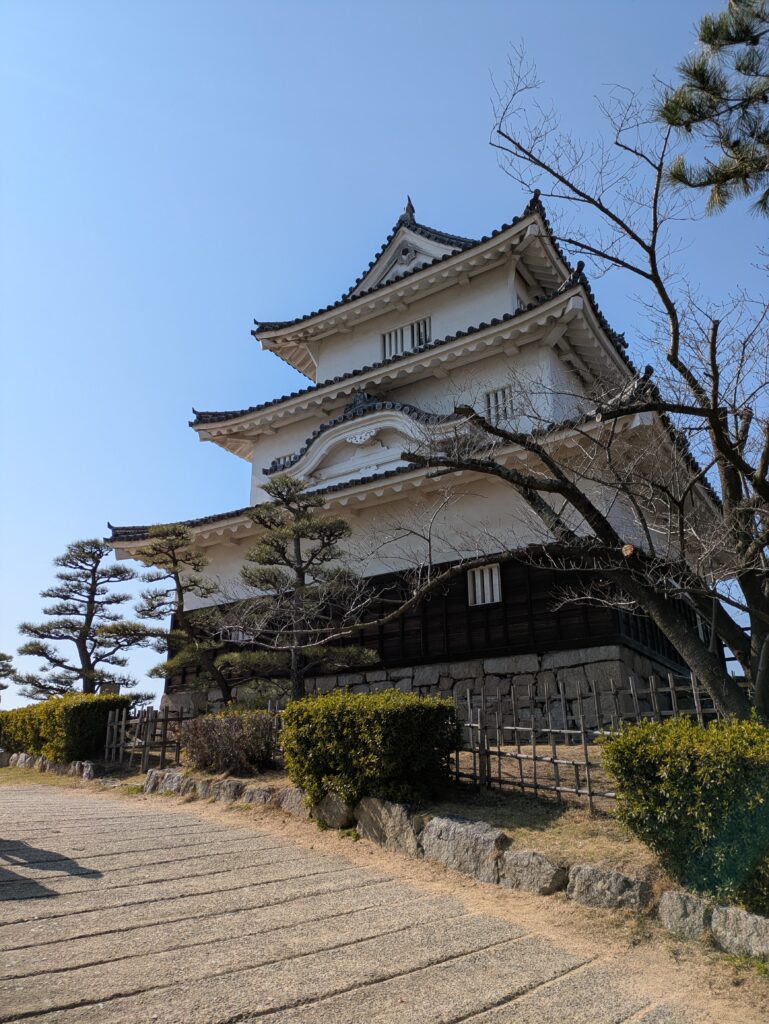
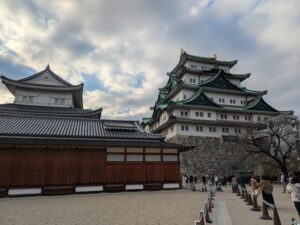
While the keep of Odawara Castle is not an original surviving structure, the interior is a modern museum, much like Osaka Castle. It’s a space where you can dive deep into the history of the Hojo Clan and castle architecture. The exhibits, renovated in 2018, are very sophisticated—I was particularly impressed by the correlation diagrams that neatly organize the complex human relationships of the era. Seeing the maps also helped me link the dramatic history of Uesugi Kagetora (played by Tetsuji Tamayama in the drama “Tenchijin”), who was sent from here to Uesugi Kenshin as an adoptee, to the power struggles of the time.
Climbing to the top floor, I was greeted by a breathtaking view of Sagami Bay. Standing on this height, I imagined the successive lords of the Hojo Clan watching over the daily lives of the people they swore to protect. From here, you can also see the direction of “Ishigakiyama Ichiya-jo” (The Overnight Castle). Looking at it, I could practically feel the psychological pressure the Hojo side must have felt when a fortress suddenly appeared on that mountain top.
[Defense Logic: Past Success vs. Evolution of Resource Strategy]
Odawara Castle had an overwhelming history of success, having withstood sieges by the strongest warlords of the Sengoku period, such as Uesugi Kenshin and Takeda Shingen. Therefore, the Hojo’s logic that “the enemy will retreat once the farming season (planting or harvesting) begins” was perfectly rational by the standards of that time.
However, Hideyoshi had already completed the “separation of warriors and farmers” (Heino Bunri). His professional army, disconnected from agriculture, was a “deadline-free military” that could maintain a siege for months regardless of the season. The Hojo side was trapped by their past success, while Hideyoshi had updated his strategy. I truly felt that this gap in resource management was the real factor that brought down this fortress.
I used to view the Hojo Clan simply as stubborn people who wouldn’t surrender even when defeat was certain. However, I’ve started to think that at the root of that stubbornness was a deep love for their citizens.
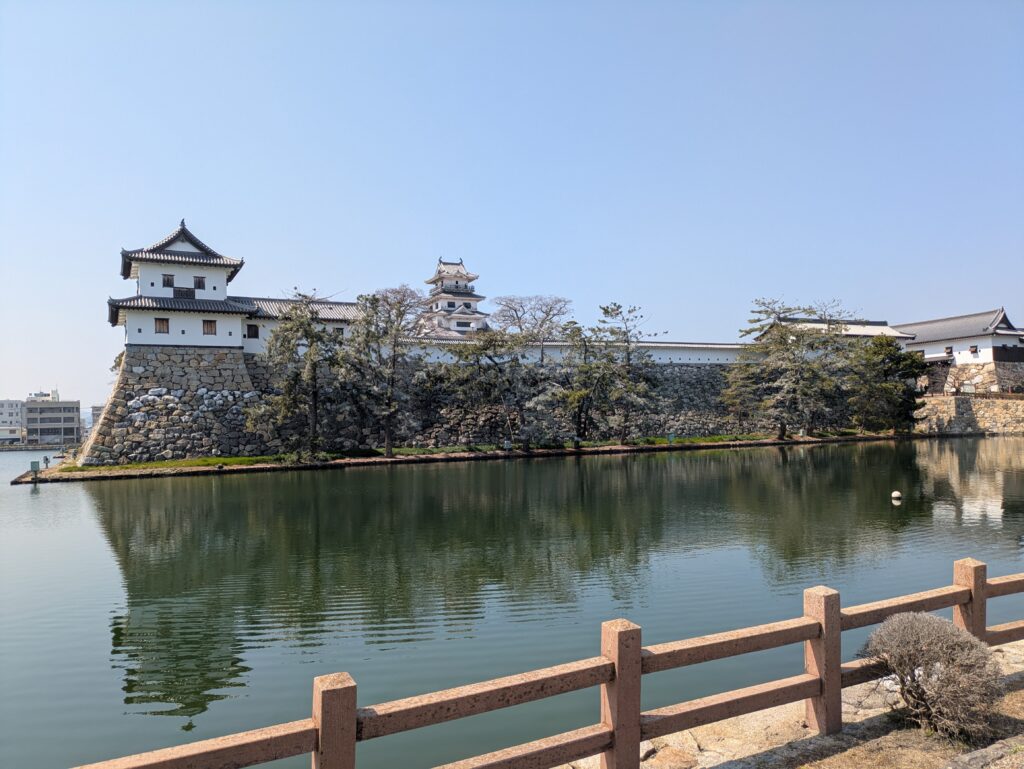
A symbolic example is their “Shi-ko Roku-min” (40% tax to the lord, 60% kept by the people) tax system. While the standard at the time was often 50/50 or even heavier taxes, the Hojo Clan maintained a low tax rate to lighten the burden on the people. Seeing local residents peacefully eating lunch on benches by the moat, I felt that Hojo Ujimasa’s refusal to surrender until the end wasn’t just pride, but a genuine concern for the lives of his people under a new ruler. It was a moving realization.
[Drama of the Victor and the Vanquished: Mount Koya and Fuma Kotaro]
Hojo Ujinao’s resolve to “save his vassals and people in exchange for his own ritual suicide (seppuku)” moved Hideyoshi. As a result, he was spared and exiled to Mount Koya—a sanctuary for the defeated where Sanada Yukimura would later be sent. My son listened intently as I told him about the emotions Ujinao might have felt heading toward that sacred mountain.
We also explored the legend of Fuma Kotaro, the ninja who supported the Hojo from the shadows. My son asked a sharp question: “Did he become a Tokugawa ninja in the end?” Sadly, the reality was harsh. Without a master, Kotaro did not serve the Tokugawa and was said to be eventually captured. We felt the light and shadow of history in the way of the ninja who shares the fate of his lord.
3. Family Guide: Visiting with Kids
My son’s (8yo) Reaction:
He looked very sharp in samurai armor and showed great focus during the shuriken (ninja star) throwing. He was particularly excited seeing the statue of Hojo Soun at the station, shouting “That’s the famous Kagyū-no-kei (Fire Ox Strategy)!” when he saw the oxen with torches on their horns.
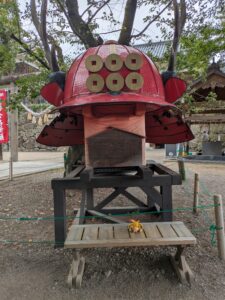
In the armor trial at the Honmaru Square (500 yen), he transformed into a dignified warrior and we took some great photos of him walking around the castle.
He also tried shuriken throwing, concentrating on the target with an intensity that would have made Fuma Kotaro proud.
Tips for Dads: When the moats are full of water, you might not see the famous “Shoji-bori” (waffle-shaped dry moats) structure directly, but you can enjoy watching the beautiful koi fish swimming around.
4. Food & Souvenirs
Lunch: At “Lea Lea” near the moat. In a warm atmosphere run by the owner alone, the chicken curry with coconut milk was incredible—the perfect recovery meal after a castle siege.
Souvenir: I bought a replica of the “Tiger Seal” with the inscription “Rokuju Oon” (Peace and Prosperity for the People), which the Hojo Clan used on official documents.
5. Nearby Recommended Spots
Must-visit:Ishigakiyama Ichiya-jo (Overnight Castle). This was Hideyoshi’s base where he displayed his overwhelming resources. By visiting here after spotting the location from Odawara Castle’s keep, you can truly connect the perspectives of both sides in the Siege of Odawara.
Summary of Our Odawara & Ichigeyajo Castle Mission
"Where did I get that stamp?" "I want to remember the excitement of seeing those stone walls with my child." We developed "ShiroLog" to capture those precious moments.
Covers 1,000+ castles across Japan
Keep your own "Conquest Log" with photos
Save memories with family and friends digitally My son and I use this app to record our adventures. It’s the perfect companion for every castle lover!




Comments