【Kagawa-Ehime Castle Tour Day 2】Conquering the Three Castles of Takamatsu, Imabari, and Matsuyama! The Impact of Authentic “Taimeshi” and a Sauna Analysis
Morning: Real-time Rescheduling and the Merits of Udon
Originally, I had planned to go to the castle on foot and grab udon afterward due to concerns about parking congestion. However, stepping outside in the early morning, I noticed the traffic was surprisingly light.
This is where my managerial intuition kicked in: “Moving by car will be much faster.”
I quickly pivoted the strategy. We walked to the nearby “Kodawari Menya” for breakfast, returned to the hotel to check out, and then headed to the castle by car—a mobility-focused reschedule that worked perfectly.
The “Medium” size udon I casually ordered was unexpectedly massive, but it became a vital energy source that sustained me through a skipped lunch. My call on the car travel was spot on, and we secured a parking spot without a hitch. A flawless start to Day 2.
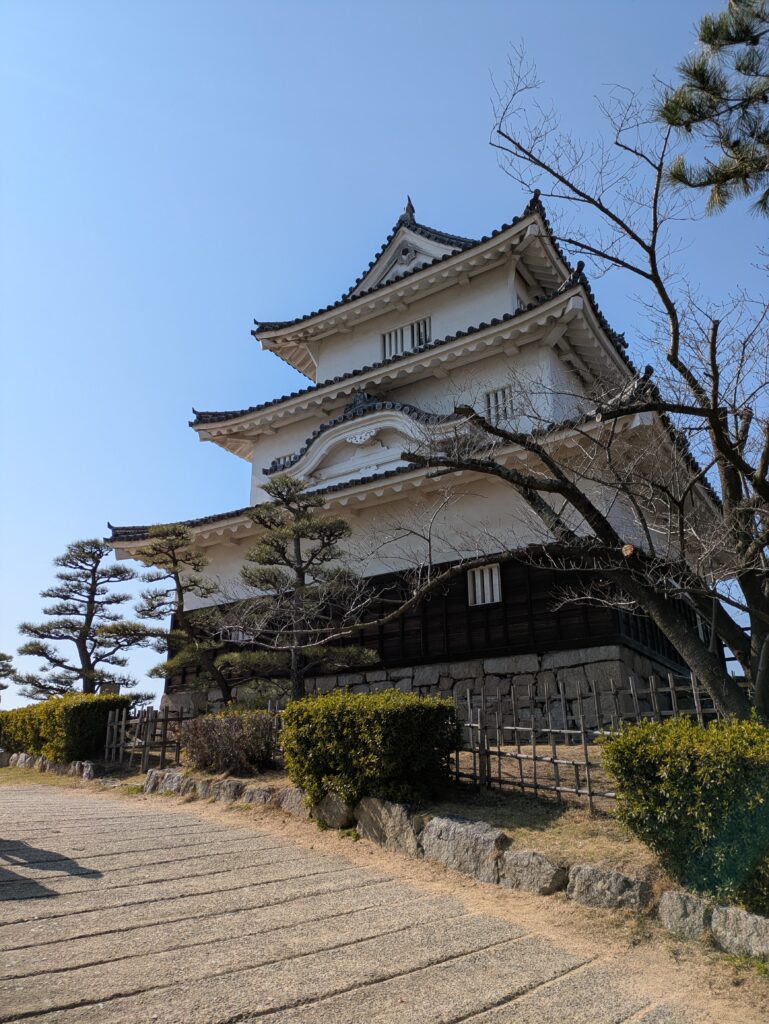
Takamatsu Castle (Tamamo Park): Impregnable Tactics Hidden in Morning Serenity
After yesterday’s “Drop-off Operation” (coordinating by letting the family off first), I arrived at the castle fully prepared for a revenge match this morning.
Fortification Discovery: Comparing it later with Imabari Castle, I noticed the “Inubashiri” (the narrow path at the base of the stone wall) is extremely tight. It’s a textbook-perfect design to deny enemies a foothold.
The One-Way Path to the Isolated Keep: I was impressed by how strictly limited the route to the main tower base is. Surrounded by a moat, the only way to reach the keep is via the roofed “Sayabashi” bridge. This “Mizujiro” (water castle) philosophy of sealing off escape routes to trap intruders is brilliant.
Family Observations: My son sharply spotted differences in the “Takamatsu Aoi” crests, while I enjoyed the local Kagawa vibe of the “Slowpoke (Pokémon)” train running in the background.
Imabari Castle: The “Rationality” of Master Builder Todo Takatora
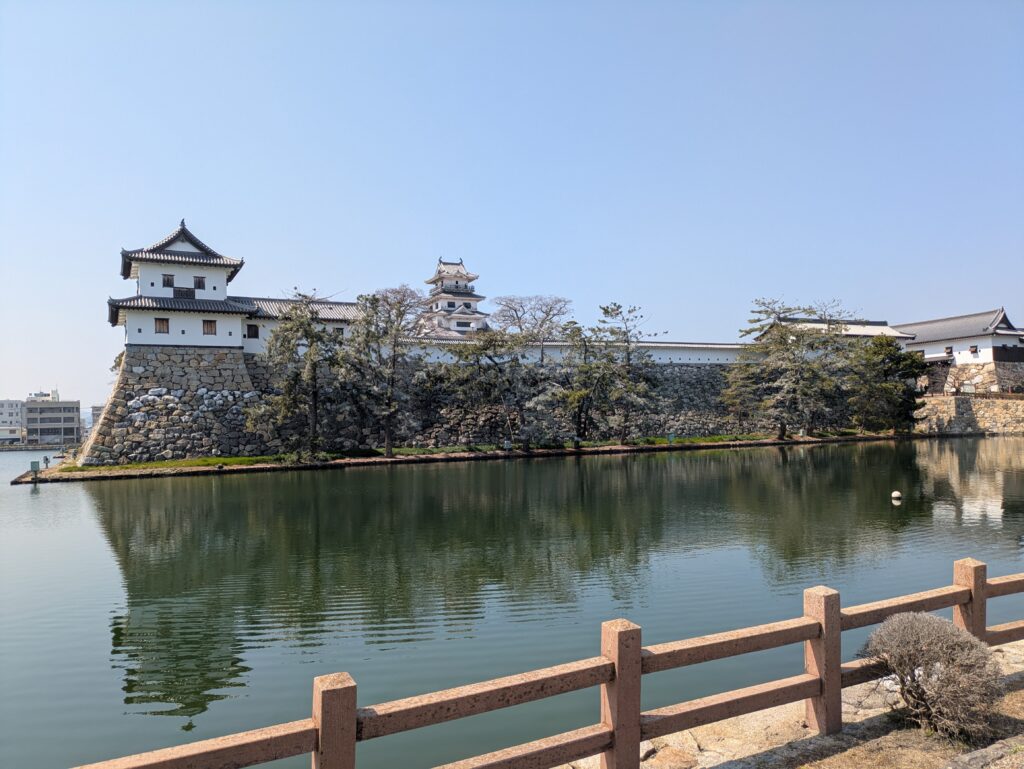
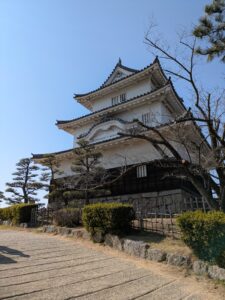
Heading west along the Seto Inland Sea, we reached the second of Japan’s Top Three Water Castles: Imabari Castle.
Vast Inubashiri: In stark contrast to Takamatsu Castle, the path at the base of the walls here is surprisingly wide. I felt Takatora’s rationality firsthand—prioritizing the stability of the foundation.
Modern Ascent: The interior is fully equipped with elevators, meaning no ladder-like steep stairs. While the feeling of “climbing a castle” was a bit thin, we did manage to score some Imabari towel merchandise.
Son’s Knowledge: My son shared the story of the “Mitsumochi” (Three Mochi) banner, symbolizing Takatora’s gratitude. I was stunned by how deep his historical knowledge has become.
“Fuku-fuku-fuku, they are everywhere!”: Looking up, each roof tile was clearly engraved with the kanji “吹” (Fuki). My son and I had a blast counting them: “Fuki, fuki… there are so many ‘Fuku’!”
The Name Itself: I later researched and found that Imabari Castle’s alias is “Fukiage-jo.” The shrine on the grounds is “Fukiage Jinja.” This single character truly symbolizes this place. There’s even a theory that Takatora’s favorite horse was named “Fuki,” suggesting the character was very special to him.
The Trial of Highway Driving: Dam Rest and Letting Go
The drive from Imabari to Matsuyama was the most nerve-wracking part of the trip. On a single-lane highway with no escape, I felt the pressure from large vehicles approaching from behind. I realized once again: “Driving is truly exhausting…”
At this point, I decided to cut my losses. I pulled into a dam parking lot to take a breather. This short rest allowed me to regain my composure and ensure safe driving for the rest of the leg.
Matsuyama Castle: Baptism of an Original Keep and “Yoshiaki-kun”
Aiming for the late afternoon lull, we visited Iyo Matsuyama Castle.
Labyrinthine Keep Complex: An impregnable structure where you can’t walk straight even after passing a gate. The mix of old and new stone walls was fascinating to observe.
Chairlift Descent: After correcting my son’s misconception that the mascot “Yoshiaki-kun” was Ashikaga Yoshiaki (it’s actually the founder, Kato Yoshiaki), we took a scenic chairlift ride down. The tension from the drive melted away in the breeze.
Dinner: Kindness in the Castle Town and the Shock of “Taimeshi”
Dinner after 4 PM (having skipped lunch) was a peak experience. The staff kindly advised us, “You can have refills, so you don’t need to order an extra portion for your child.” That local warmth really sticks with you.
The “Uwajima Taimeshi” (sea bream sashimi with raw egg sauce) comparison between wild-caught and farmed fish was shocking. The softness of the wild bream versus the firm crunch of the farmed one—the difference was so stark I wondered if they selected the most contrasting specimens on purpose. I finished the meal wondering if the bream in the Takamatsu Castle moat would ever meet a similar fate…
Night: Wandering Okaido and the “Defeat” at Don Quijote
Before checking in, we went for a stroll looking for Matsuyama specialties, but somehow ended up drawn into Don Quijote.
Claw Machine Baptism: My son declared, “I can definitely win this!” and challenged the crane game. However, the arm didn’t even graze the prize. It wasn’t even close. Papa’s strategies are useless against the whims of family fun.
The Sweet Potato Mystery: My wife suddenly said, “I heard the roasted sweet potatoes at Donki are good.” When asked why now, she replied, “Because there’s a Donki here.” I couldn’t help but retort, “There are plenty near your parents’ house in Chiba!” but she just brushed it off.
Further Contradiction: Immediately after buying the potato, she said “I’m not hungry” upon returning to the hotel. Yet, she managed to finish the whole thing by bedtime.
♨️ Tonight’s Stay: Candeo Hotels Matsuyama Okaido
The finale of Day 2 was quiet time at the Sky Spa. Here, I analyzed the difference between this and last night’s “Dormy Inn” from a manager’s perspective.
Dormy Inn vs. Candeo: A Saunner’s Analysis
Honestly, in terms of “overall grade for each feature,” Dormy Inn takes the prize.
The “Staging” of the Sauna:
Dormy Inn: The moment you open the door, a pleasant aroma hits you, instantly switching you into relaxation mode.
Candeo: A very stoic space with no TV or aroma. Good for self-reflection, but lacks the dense hospitality and “staging” of Dormy Inn.
Winning the Periphery: With free ice cream after the bath, a manga corner, and the “Yonaki Soba” (free night ramen), Dormy Inn masters the balance of keeping the family happy so Papa can enjoy the sauna guilt-free.
That said, looking up at the night sky over Okaido from Candeo’s open-air bath was wonderful—a perfect “Totono-u” (meditative) moment to reset after a hectic day.
The Magic of Dogo Beer
A sip of “Dogo Beer” I bought in town. To be honest, it had a unique taste on its own, but after the sauna? It transformed into the “perfect glass.”
"Where did I get that stamp?" "I want to remember the excitement of seeing those stone walls with my child." We developed "ShiroLog" to capture those precious moments.
Covers 1,000+ castles across Japan
Keep your own "Conquest Log" with photos
Save memories with family and friends digitally My son Keigo and I use this app to record our adventures. It’s the perfect companion for every castle lover!





Comments