Fukiage-jo / 3-1-3 Doricho, Imabari City, Ehime Prefecture
Founder / Year
Todo Takatora / 1602 (Keicho 7)
Major Remains
Stone walls, seawater moats, reconstructed Keep, Kurogane-mon Gate, Yagura turrets
Stamp Location
Entrance of the Castle Keep (Reception desk)
Hours / Fee
9:00–17:00 / Adults ¥520, College Students ¥260, Free for High School and below
Parking
Imabari Castle Parking No.1 (Paid). Conveniently located right in front of the castle for families.
Estimated Time
Approx. 1 to 1.5 hours
2. [Field Report] Strategic Points and Dad’s Observations
Functional Beauty of the “Floating Castle” by Master Architect Todo Takatora
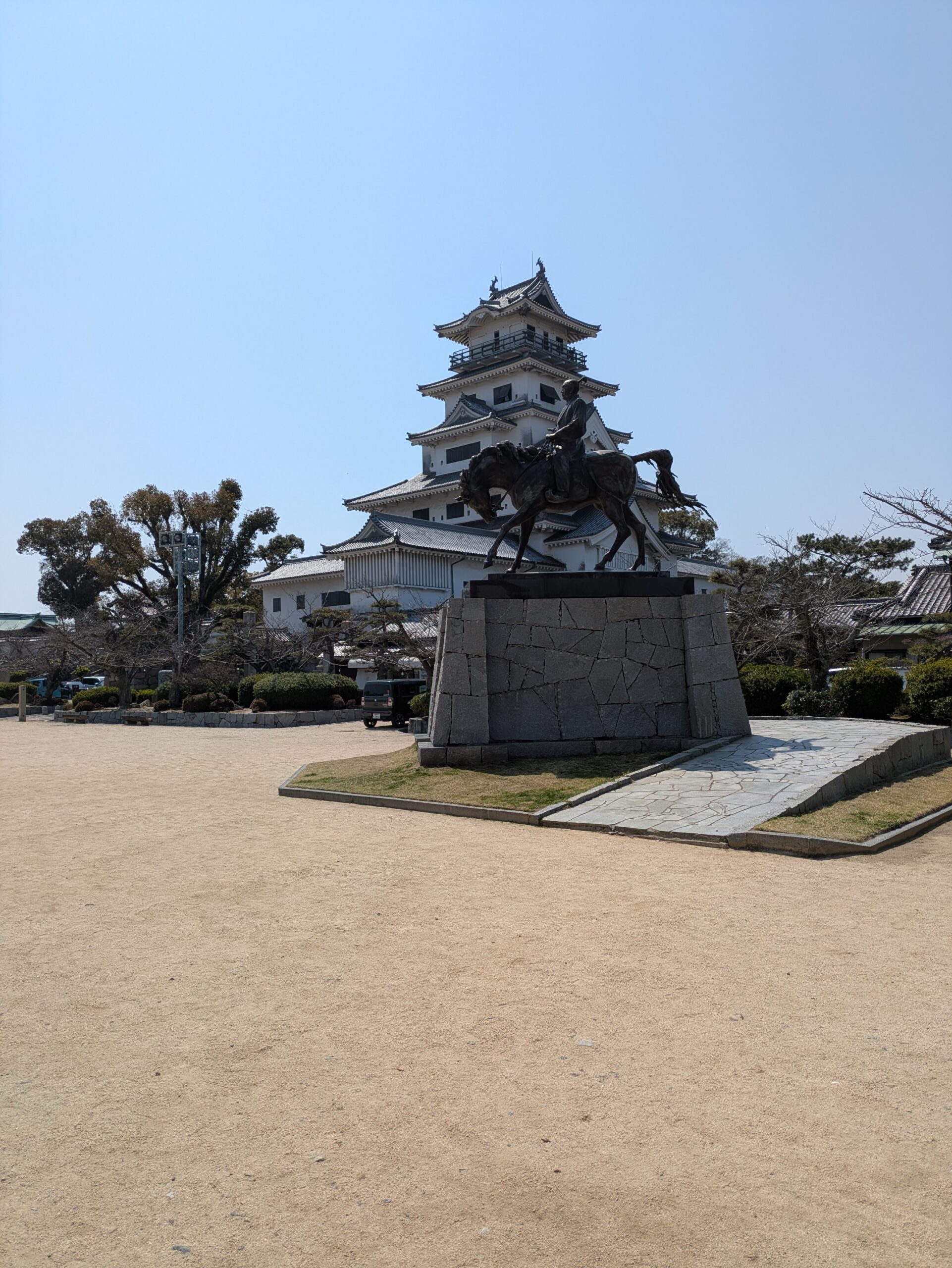
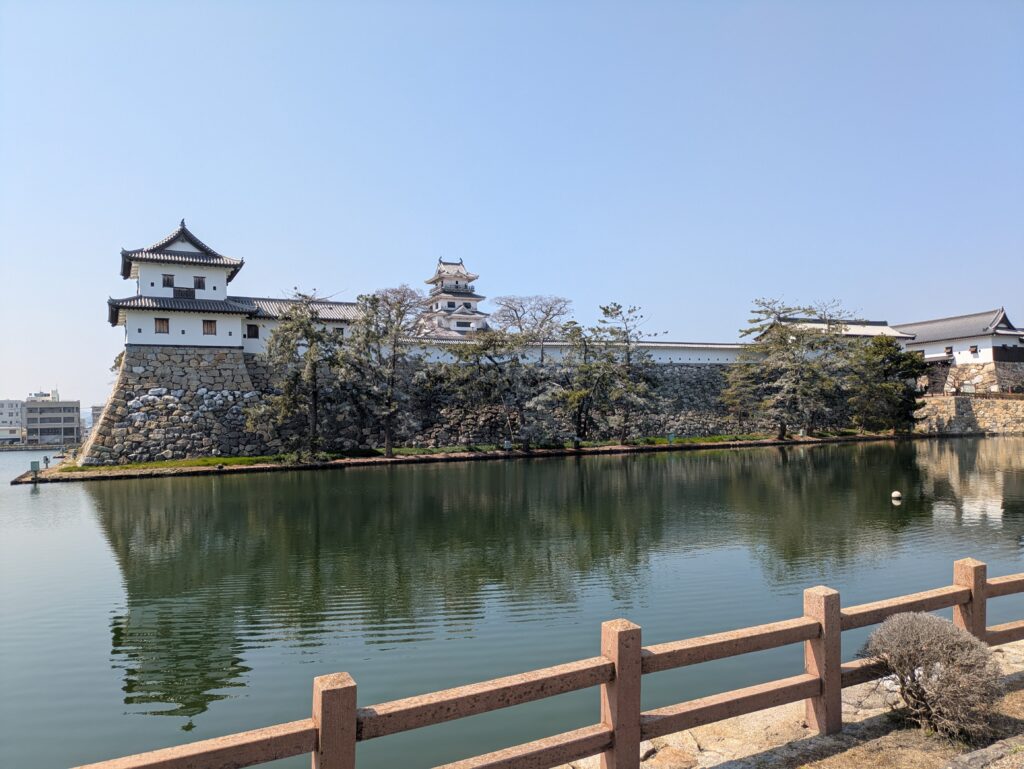
Following Takamatsu Castle, I have successfully explored Imabari Castle, one of Japan’s Three Great Water Castles. The first thing that catches your eye is its appearance, protected by a vast moat filled with seawater, making it look like a fortress floating on the sea.
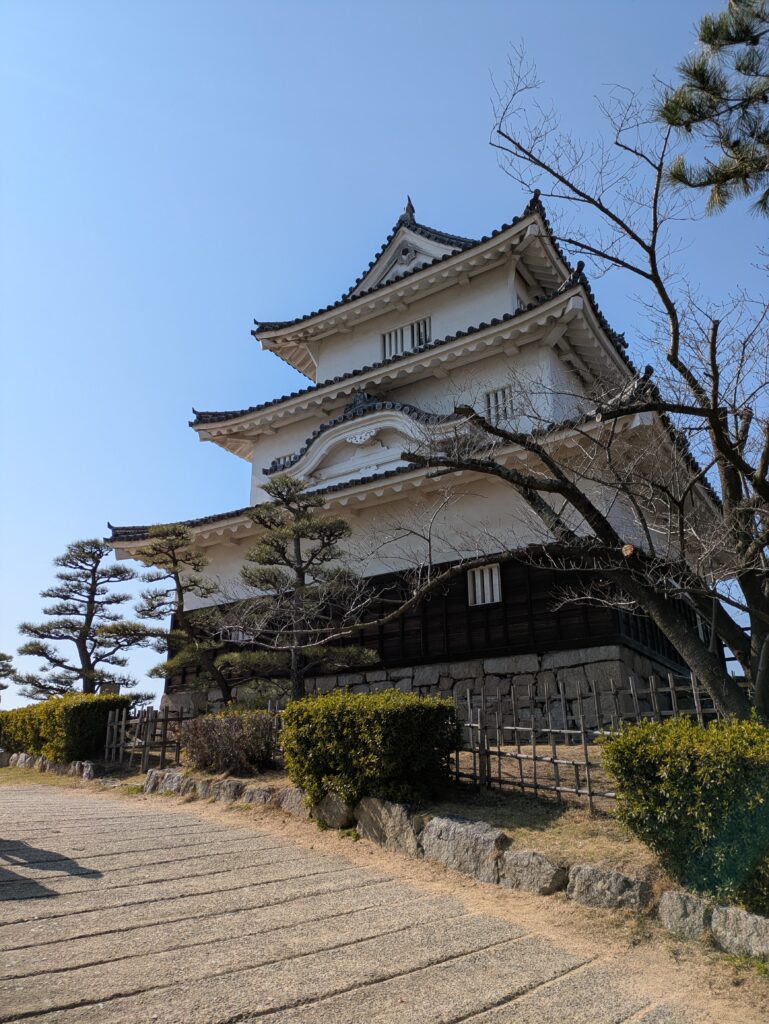
This castle is a pioneer of the “Sotogata” (multi-layered) style keep, which is said to be the first of its kind in Japan. Its hierarchical structure, which becomes systematically smaller as it goes higher, exudes a pragmatic beauty devoid of excessive decoration. The historical fact that ships could once enter the moat directly is a design typical of Takatora, who lived with the sea, and it still stands out uniquely within the modern cityscape.
Dedication to Ground Reinforcement: Nozurazumi Walls and Inubashiri
As a stone wall enthusiast, I cannot overlook the “Nozurazumi” (wild stone stacking)—rugged walls built with natural stones. Of particular note is the “Inubashiri” (dog path), the wide berm at the base of the wall. This is a rational design used to strengthen the weak ground near the coast and prevent the stone walls from collapsing.
Furthermore, the overwhelming presence of the “Masugata-koguchi” (square-shaped entrance), which allows for attacks from three directions, was astonishing. Standing in the gateway, you feel an intensity that makes you instinctively think, “If I were an enemy soldier, breaking through here would be impossible.”
3. Guide for Families and Kids
My son’s (8 years old) Reaction:
On the path to Fukiage Shrine within the castle grounds, my son’s special skill was on full display. He performed an “overly polite worship,” bowing deeply at every single one of the consecutive red Torii gates.
True to its alias “Fukiage-jo,” the character for “Fuki” (blow/wind) can be found everywhere, including the roof tiles. Walking with my son, we laughed at how many there were, but I later learned that this “Fuki” also refers to Takatora’s beloved horse, “Fukikaze.” That explained the abundance of the character!
My son was also thrilled to see sea fish like black sea bream and mullet swimming in the moat. From his perspective of food security, he evaluated the castle’s defense highly, saying, “You can fish here, so we could survive a siege by eating the fish!” Between that and him telling me the legend of Takatora’s “Three Mochi Cakes,” he seems to be enjoying castles through both practical and emotional lenses.
Dad’s Advice:
Imabari Castle features a rare “seawater moat,” allowing you to see marine life up close. For children, it’s a spot as exciting as an aquarium.
While there is no elevator in the keep, the stairs are not as steep as those in original surviving keeps; they are designed with a gentle, low-step incline. For me, as someone who never misses my twice-a-week gym sessions, it was a pleasant cardio workout, and my 8-year-old son managed to climb to the top easily. The extensive collection of armor and swords on display is truly worth seeing and provides a great environment for deepening a child’s interest in history.
4. Food & Souvenirs
What We Bought:
I purchased an Imabari Castle collaboration towel at the shop. Imabari is the “holy land” of towels in Japan. It became a favorite item of mine, combining practicality with travel memories.
“Homework” for Next Time:
I was aiming for the local soul food, “Imabari Yakibuta Tamago Meshi” (Roasted Pork and Egg on Rice), but unfortunately, we ran out of time. We enjoyed the castle details and shrine worship a bit too much, but that’s part of the fun of traveling. I promised my son, “Next time, we’re definitely eating it,” giving us a great reason to return.
5. Recommended Nearby Spots
Places to Visit Together:
Shimanami Kaido: A sanctuary for cycling. It’s close to Imabari Castle and offers stunning views of the Seto Inland Sea.
Kurushima Strait Whirlpool Cruise: A powerful activity where you can experience the “power of the sea” that supplies water to the Imabari Castle moat.
"Where did I get that stamp?" "I want to remember the excitement of seeing those stone walls with my child." We developed "ShiroLog" to capture those precious moments.
Covers 1,000+ castles across Japan
Keep your own "Conquest Log" with photos
Save memories with family and friends digitally My son and I use this app to record our adventures. It’s the perfect companion for every castle lover!




Comments